
 Worksheets
Ose Sky and Space
Total questions: 111
Worksheet time: 7hrs 16mins
_____ is the point where the earth appears to meet the sky. Can you ever reach that point?
Lattitude
Longitude
Horizon
Altitude
What instrument would you use to determine the azimuth of the direction you are facing?
Altimeter
compass
Telescope
Astrolabe

The ecliptic describes the plane (or line) in which the Sun & the planets travel.
True
False

_______ is/are used to find specific objects and constellations on the celestial sphere.
Right ascension
Azimuth
Celestial coordinates
Declination

What is the difference between the angle of measurement terms azimuth & altitude?
altitude is only used to describe elevation
azimuth is a "side to side" circle; altitude is "up & down"
azimuth is a "up & down" circle; altitude is "side to side"
both are projections of latitude & longitude

Equinoxes occur (around March 21st & Sept. 21st) when the Sun appears to be directly
over the Tropic of Capricorn.
over the Tropic of Cancer.
over the Equator.
between the Earth & Moon.

Earth's seasons are caused by
the precession of Earth's axis.
its distance from the Sun.
wobbles in its orbit and axis of rotation.
its tilt; revolution around the Sun, and spherical shape.

What is the maximum value for any altitude in reference to the horizon?
24 hrs
90 degrees
180 degrees
0 degrees

The ___ is the point directly above the observer.
Zenith
Nadir
Meridian
Horizon

You can use this to locate Polaris
Zenith
Pisces
The Big Dipper
Sagittarius

When sunlight is split by a prism or diffraction grating it appears to emit a ___ spectra.
absorption
dark-line
continuous
bright-line

Upon closer examination, sunlight (and all stars) actually emit ___ spectra.
bright-line (or emission)
absorption (or dark-line)
continuous
multiple

The analysis of the way matter emits and absorbs radiation is called ___.
astronomy
chemistry
spectroscopy
atomic theory

Spectroscopy can be used to study
the atmosphere of stars and planets
the age,temperature, or type of stars.
the speed a star is travelling towards or away from us(by looking at how shifted the lines are)
all of the above

Spectroscopy can also be used to study
galaxies.
the surface of Mercury.
stellar composition.
UFO's.

A ___ is used in astronomy to break down light like a prism.
telescope
spectroscope
stethoscope
microscope

Each element on the periodic table can be identified by its
classification as a solid, liquid or gas.
location on the table.
ability to react to form compounds.
unique spectral "fingerprint."

Emission spectra emitted by an element (or compound) will produce ___ through a spectroscope.
bright lines
a continuous rainbow
dark lines
white light

The spectroscope is a powerful tool used by astronomers to infer the nature of matter.
True
False

By passing starlight light through a ___the light is spread out into its component colors.
spectrograph or spectrometer
telescope
prism or diffraction grating
mirror

A spectroscope may be connected to a ___ to record an object's spectra.
telescope
CCD (charged coupled device)
spectrometer
spectrograph

A ___ can be used in place of a prism in a spectroscope & is inexpensive.
plastic prism
diffraction grating
CCD
lens

If an object like a star is moving away from Earth, the spectral lines are observed to be
smaller or thinner & red-shifted.
smaller or thinner & blue-shifted.
wider or broader & blue-shifted.
wider or broader & red-shifted.

Spectral lines that are observed to be narrower & blue-shifted indicates that an object is
moving away from Earth.
showing transverse motion.
moving towards Earth.
showing radial motion.
What does Kepler’s 1st Law of Motion state?
Planets revolve around the sun in circular orbits.
Planets revolve around the sun in elliptical orbits.
Planets revolve around the sun in rectangular orbits.
Mr. Arrendell's head looks like an ellipse...wait, what?!
What shape did the early astronomers think the planets’ paths looked like?
circular
elliptical
quadrilateral
octagonal
What is true about the distance between a planet and the sun and the planet’s revolution around the Sun?
The closer the planet is to the sun, the slower it orbits.
The farther the planet is to the sun, the faster it orbits.
The farther the planet is to the sun, the brighter the sun is.
The closer the planet is to the sun, the faster it orbits.
The ___________ the planet is from the sun, the ____________ it takes to go around the sun.
closer, shorter
farther, shorter
farther, longer
closer, longer
Is the Sun a star?
yes
no
Which planet takes longer to revolve around the Sun, Earth or Mars? Why?
Mars, it's closer to the Sun
Earth, it's farther from the Sun
Mars, it's farther from the Sun
Earth, it's closer to the Sun

What did Johannes Kepler(pictured) discover about our understanding of space?
Kepler created the heliocentric model
Kepler realized that everything that orbits another body(planets, moons, etc), travels in an ellipse, not a circle
Kepler discovered gravity and described how it keeps planets orbiting
Kepler created the geocentric model

According to Newton, what kinds of objects are affected by gravity?
Only objects inside the earth's atmosphere, like apples.
Only objects that orbit the sun, like planets.
Only objects with a lot of mass, like human beings.
All objects in the universe.

How is the moon's orbit around the earth related to an apple falling from a tree?
The earth's gravity keeps the moon in orbit, and also pulls objects toward the ground.
The earth, the moon, and an apple are all spherical, so they all have gravity.
The moon's gravity holds apples on tree branches, while the earth's gravity pulls apples toward the ground.
The moon's gravity affects bodies of water; the earth's gravity affects solid objects.
What did Isaac Newton discover when the apple supposedly fell on his head?
Gravity
Electricty
Hydrogen
Plasma

What do natural and artificial satellites have in common?
the don't have anything in common
they orbit celestial bodies
they send information to the Earth
the float outer space with no direction

(a) telescopes use lenses to concentrate light.

(a) telescopes use mirrors to concentrate light.

These telescopes look like TV satellite dishes and can be used to communicate with probes.
Radio telescopes
Infrared telescopes
Land-based telescopes
Optical telescopes

This telescope gathers mainly visible light and has been in use for over 30 years.
Spitzer
Hubble Space Telescope
Chandra
James Webb Space Telescope
Check each correct reason for why telescopes are put in space to be used.
No weather
Lots of light
No atmosphere
Easier to fix

A _____________ is a vehicle designed to propel itself by ejecting exhaust gas from one end.
probe
satellite
lunar probe
rocket

A _______________ is an uncrewed space craft sent form Earth to explore objects in space.
probe
satellite
telescope
rocket

Choose the Political concern below:
Who owns space? Can countries claim parts of space?
Is is right that humans claim space for themselves?
Should humans terraform other planets?
Should humans put satellites in space, if it leaves space junk when they are done their mission?
Choose the Ethical concern below:
Who owns space? Can countries claim parts of space?
Is is right that humans claim space for themselves?
Should humans terraform other planets?
Should humans put satellites in space, if it leaves space junk when they are done their mission?
Choose the Environmental concern below:
Who owns space? Can countries claim parts of space?
Is is right that humans claim space for themselves?
Should humans terraform other planets?
Should humans put satellites in space, if it leaves space junk when they are done their mission?

How do astronauts breathe on board the ISS?
They carry oxygen tanks around with them at all times
They wear special masks that filter oxygen from the ambient air for them
They use generators that split water molecules into hydrogen and oxygen
The space station carries its own very large supply of oxygen
Newtons law states that for every action, there is an_________ reaction
unequal and opposite
stronger and opposite
equal and similar
equal and opposite

The forces in a force pair are in _______ direction
opposite
same
This type of pollution inhibits people from seeing the stars and planets.
Light Pollution
Water Pollutilon
Air Pollution
Land pollution
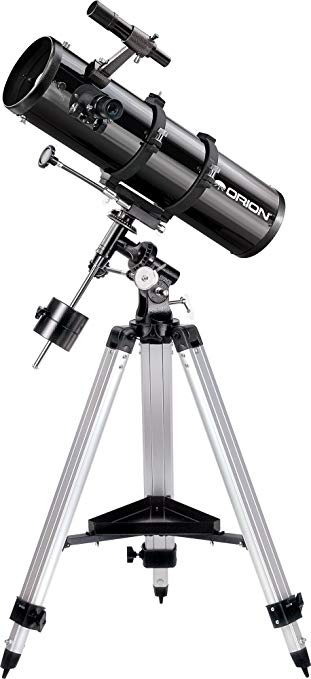
Reflecting telescopes use _______ to focus light.
Lenses
Flat mirrors
Curved Mirrors
A lens and lasers
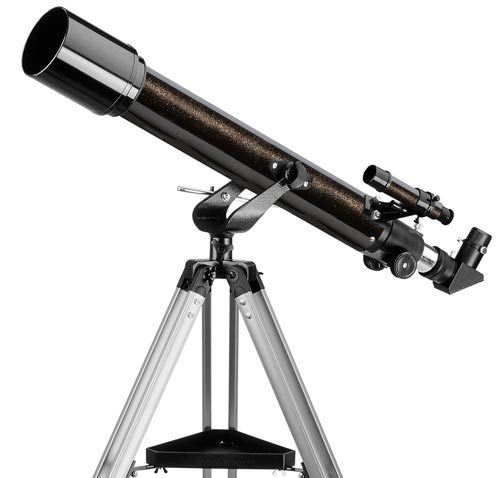
A refracting telescope uses _______ to focus light.
Lenses
Mirrors
Lasers
Water
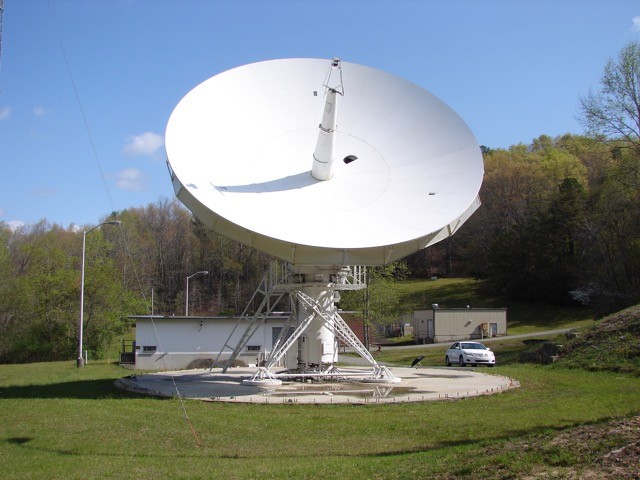
What type of telescope can work 24 hours a day and even be used in the rain?
Refracting Telescope
Radio Telescope
Newtonian Telescope
Solar Telescope

What is the major drawback of radio telescopes?
They can only be used at certain hours of the day
They are too small
They have a low resolution
They have complex mirror systems

The apparent shift in the position of an object when viewed from different locations is called
Parallelogram
Parallax
altitude
The average distance between the earth and the sun is the
astronomical unit
Light year
Standard Earth orbit
1 MILLION kilometers
A light year is the
distance that light travels in one year
Speed at which light travels
How much light we receive in 1 year
Pick the largest unit of measurement (of distance)
light year(Ly)
Astronomical unit(Au)
kilometer(km)
Solar unit(SU)

This pictures shows Parallax
This picture shows triangulation
This picture shows astronomy
The speed of light is
30,000 km/s
300,000 km/s
30,000 mi/ s
300,000 m/s
How does Newton's third law explain how a rocket will take off?
The rocket doesn't move until ignition
The more mass the rocket has the more force is needs to take off
Gas pushes down, the rocket goes up.
The force used to provide lift for the rocket is...
Weight
Control
Thrust
Inertia
What force is responsible for pulling objects back down to Earth?
Thrust
Gravity
Force
A(n) _ is a large artificial satellite on which people can live and work for long periods.
space station
satellite
space probe
rocket
A spacecraft that has various scientific instruments that can collect data but has no human crew is called a(n)
space station
satellite
space probe
rover
Some probes have small robots called that can move about on the surface of another planet or moon.
Wall-e
rovers
satellites
shuttles
A(n) ______is a spacecraft that can carry a crew into space, return to Earth, and then be reused for the same purpose.
satellite
space probe
space shuttle
rocket

What is Newton's 3rd Law
For every action, there is an equal and opposite reaction
For every action, something happens
For every action, there is a stronger action
The force of gravity
What does a rocket use for fuel?
gasoline
diesel
Liquid oxygen + Liquid hydrogen
Electricity
What is one alternative space propulsion system we talked about in class? (besides rocket engines)
(a)
What is the major drawback of radio telescopes?
They can only be used at certain hours of the day
They are too small
They have a low resolution
They have complex mirror systems

Which of these light types cannot be captured by a telescope?
Radio waves
Microwaves
Ultraviolet
All of them can be captured

