
 Worksheets
FTCE Science #3
Total questions: 111
Worksheet time: 2hrs 13mins
Name
Class
Date
1.
What type of rock would you most likely find a fossil inside of?
a)
sedimentary
b)
igneous
c)
metamorphic
d)
diamond
2.
What is Hardness?
a)
The tendency of a mineral to split easily along flat surfaces.
b)
A measure of how easily a mineral can be scratched.
c)
The way a mineral shines, or reflects light.
3.
What is Luster?
a)
The color of a mineral when it is ground into a powder.
b)
A measure of how easily a mineral can be scratched.
c)
The way a mineral shines, or reflects light.
4.
What is a Streak?
a)
The tendency on a mineral to split easily along flat surfaces.
b)
A measure of how easily a mineral can be scratched.
c)
The color of a mineral when it is ground into a powder.
5.
What is metamorphic rock?
a)
Rock that forms when melted, or molten rock from deep below Earth's surface cools and hardens.
b)
A solid material made up of one or more minerals.
c)
Rock that forms when existing rocks are changed by heat, pressure, or chemicals beneath the Earth's surface.
6.

This rock was found near the mouth of a volcano. What type of rock is this?
a)
Sedimentary
b)
Igneous
c)
Metamorphic
7.
In order for a metamorphic rock to form, _______ is needed.
a)
Pressure
b)
Heat
c)
Heat and Pressure
d)
Weathering
8.

This rock started as molten magma. What type of rock is this?
a)
Sedimentary
b)
Igneous
c)
Metamorphic
9.
_____ rock forms when magma ______ & solidifies.
a)
Sedimentary; thickens
b)
Igneous; thickens
c)
Metamorphic; deepens
d)
Igneous; cools
10.
Metamorphism is caused by intense _____ & _____.
a)
foliation & nonfoliation
b)
texture & composition
c)
cementation & compaction
d)
temperature & pressure
11.
A rock is a naturally-occuring solid mixture of one or more minerals and ___ matter.
a)
organic
b)
inorganic
12.

Sedimentary Rocks are often made up of other rocks and minerals.
a)
True
b)
False
13.
What are the 3 major types of rocks?
a)
Igneous, Metamorphic, Sedimentary
b)
Metamorphic, Igneous, Cementation
c)
Brown, Red, Gray
d)
Streak, Hardness, Breakage
14.

The thickest layer of Earth is the ___ where it is so hot that the rock there is soft.
a)
inner core
b)
crust
c)
outer core
d)
mantle
15.
What is the top layer of the Earth's surface called?
a)
Mantle
b)
Innercore
c)
Outercore
d)
Crust
16.
A dense ball of solid iron and nickel.
a)
crust
b)
inner core
c)
mantle
d)
outer core
17.
What is Pangaea?
a)
The name of a German Scientist
b)
the name of the supercontinent that existed millions of years ago
c)
another name for continental drift
d)
the name of an ancient fossil
18.
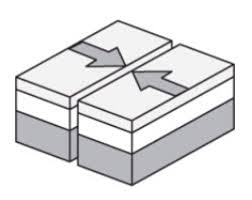
Name the boundary
a)
convergent boundary
b)
divergent boundary
c)
transform boundary
d)
sergent boundary
19.

Name the boundary
a)
convergent boundary
b)
divergent boundary
c)
transform boundary
d)
sergent boundary
20.
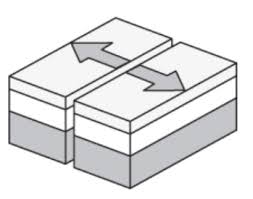
Name the boundary
a)
convergent boundary
b)
divergent boundary
c)
transform boundary
d)
sergent boundary
21.

Who is the person credited with developing the hypothesis of continental drift?
a)
Harry Hess
b)
Galileo
c)
Alfred Wegener
d)
Newton
22.
What does the theory of continental drift state?
a)
The continents were once joined in a super-continent and have moved over time
b)
Continents are stationary and do not move
c)
The Earth is broken into lithospheric plates that move due to convection currents
d)
none of the above
23.
The scientific theory that the Earth's crust is made of moving plates.
a)
quakes
b)
seismic
c)
plate tectonics
d)
rotation
24.
what are the three plate boundries
a)
Divergent convergent and transform
b)
convergent and transform
c)
Divergent and Convergent
d)
Divergent and transform
25.
What type of volcano has steep slopes made of alternating layers of ash and silica rich lava?
a)
Caldera
b)
Cinder Cone
c)
Composite Volcano
d)
Shield Volcano
26.
What type of volcano is made of lava fragments that have been ejected from a volcanic vent?
a)
Caldera
b)
Cinder Cone
c)
Composite Volcano
d)
Shield Volcano
27.
What type of volcano is Kilauea, which is located in Hawaii?
a)
Caldera
b)
Cinder Cone
c)
Composite Volcano
d)
Shield Volcano
28.
What type of volcano is Mount St. Helens?
a)
Caldera
b)
Cinder Cone
c)
Composite Volcano
d)
Shield Volcano
29.
What do you call a large crater formed by the collapse of a volcano?
a)
Caldera
b)
Cinder Cone
c)
Composite Volcano
d)
Shield Volcano
30.
Sediment deposited as fast-flowing river reaches a flatter area of land is
a)
river dleta
b)
floodplain
c)
alluvial fan
d)
oxbow lake
31.
When would a river form a delta?
a)
when the river meanders across a plain
b)
when the river leaves the mountains
c)
when it is in the mountain
d)
when it enters the ocean
32.
What is groundwater?
a)
any form of liquid water
b)
water that is not moving
c)
water on Earth's surface
d)
water below Earth's surface
33.
What is the place where land and a body of water meet?
a)
delta
b)
shoreline
c)
groundwater
d)
alluvial fan
34.
Which landform is formed because of the erosion of groundwater?
a)
valley
b)
canyon
c)
channel
d)
cavern
35.
What causes a valley to form first?
a)
earthquake
b)
running water
c)
landslide
d)
erosion by wind
36.
Why is a loess so valuable?
a)
Very difficult to find.
b)
Doesn't erode easily.
c)
Contains bits of rock.
d)
Rich in minerals.
37.
What is sediment?
a)
the process of rocks being broken down and carried away
b)
bits of rock, sand, and silt caused by the weathering of rocks
c)
the top layer of the soil
d)
decaying plant or animal material
38.
The process that breaks down rocks and other materials on Earth's surface is called
a)
weathering
b)
erosion
c)
soil conservation
d)
decomposition
39.
How does freezing water cause the weathering of rocks? The freezing water—
a)
keeps the rocks in place
b)
makes the rocks last longer
c)
expands cracks and breaks rocks
d)
causes rocks to fall in landslides
40.
What is the major cause of weathering and erosion to form canyons?
a)
wind
b)
ice
c)
glaciers
d)
moving water
41.
What is the correct order of the processes?
a)
they all happen at the same time
b)
erosion, weathering, deposition
c)
weathering, erosion, deposition
d)
weathering, deposition, erosion
42.
What is the water cycle?
a)
the 3 forms of water
b)
the movement of water on, above, or below the surface of the Earth
c)
when water melts
d)
when clouds form
43.

What part of the water cycle does this picture show?
a)
condensation
b)
precipitation
c)
evaporation
44.
Snow, sleet, hail, and rain are all examples of ________________.
a)
evaporation
b)
condensation
c)
accumulation
d)
precipitation
45.
When water _________, dew forms.
a)
Melts
b)
Evaporates
c)
Condenses
d)
Precipitates
46.
This type of weathering occurs when rock is physically broken down into smaller pieces of rock.
a)
mechanical weathering
b)
chemical weathering
c)
erosion weathering
d)
deposition
47.
This type of weathering occurs when rocks weaken then break down due to chemical changes in the composition of the rock.
a)
mechanical weathering
b)
chemical weathering
c)
erosion weathering
d)
deposition
48.
__________________is the time it takes for half of the radioactive atoms in an element to decay.
a)
dating range
b)
half life
49.
During ______________, the atoms of one element break down to form atoms of another element.
a)
radioactive decay
b)
potassium decay
50.
What is a mass extinction?
a)
When all the species in a particular area on earth suddenly go extinct
b)
When multiple species from all over the earth suddenly go extinct
c)
When one species goes extinct due to habitat changes
d)
When all life on earth is wiped out
51.
Where can the oldest layer be found?
a)
The top layer
b)
The middle layer
c)
They are all the same age
d)
The bottom layer
52.
How are fossils created?
a)
Traces of organisms get turned into stone.
b)
Dead organisms are quickly buried for millions of years.
c)
Animals get trapped.
d)
All of the above
53.

Which layer formed first?
a)
Rock Layer W
b)
Rock Layer X
c)
Rock Layer Y
d)
Rock Layer Z
54.
Coldest layer, meteors burn up in this layer
a)
troposphere
b)
stratosphere
c)
mesosphere
d)
thermosphere
55.
The coldest layer.
a)
troposphere
b)
thermosphere
c)
exosphere
d)
mesosphere
56.
As you go higher in the troposphere, the temperature _______________.
a)
decreases
b)
increases
c)
stays the same
d)
gets very hot
57.

This is the layer where most airplanes fly.
a)
Troposphere
b)
Stratosphere
c)
Mesosphere
d)
Thermosphere
58.
What happens to the density (thickness)/ air pressure of the air as you increase in altitude?
a)
density increases
b)
density decreases
c)
density stays the same
d)
density disappears
59.
The higher you go, the air becomes.......
a)
More dense
b)
Less dense
60.
Which is a main source of energy that drives the Earth system?
a)
energy of moving water
b)
oil from inside earth
c)
gases in the atmosphere
d)
heat from the sun
61.
The atmosphere keeps the Earth...
a)
Warm enough for life
b)
Too Cold for Life
c)
Spinning
d)
Orbiting the sun
62.
Where you will find the ozone layer.
a)
stratosphere
b)
thermosphere
c)
exosphere
d)
mesosphere
63.
Where weather occurs.
a)
stratosphere
b)
thermosphere
c)
troposphere
d)
mesosphere
64.

Where we live.
a)
stratosphere
b)
thermosphere
c)
troposphere
d)
mesosphere
65.
The hottest layer.
a)
troposphere
b)
thermosphere
c)
exosphere
d)
mesosphere
66.
Where satellites orbit.
a)
troposphere
b)
thermosphere
c)
exosphere
d)
mesosphere
67.

Where you will find Aurora Borealis (Northern Lights)
a)
troposphere
b)
ionsophere
c)
exosphere
d)
mesosphere
68.
The most common gas in the atmosphere (78%).
a)
Nitrogen
b)
Oxygen
c)
Carbon Dioxide
d)
Trace gases
69.

What is the function of the ozone layer?
a)
to allow UV rays to get to Earth
b)
to block UV rays from getting to Earth
c)
To keep oxygen in
d)
to allow meteors to get to Earth
70.

Which layer is the outermost layer?
a)
troposphere
b)
thermosphere
c)
exosphere
d)
mesosphere
71.
What is our atmosphere made of?
a)
All nitrogen
b)
All oxygen
c)
A mix of gases
d)
Water and air
72.

Which layer does weather occur in?
a)
thermosphere
b)
troposphere
c)
stratosphere
d)
ionosphere
73.
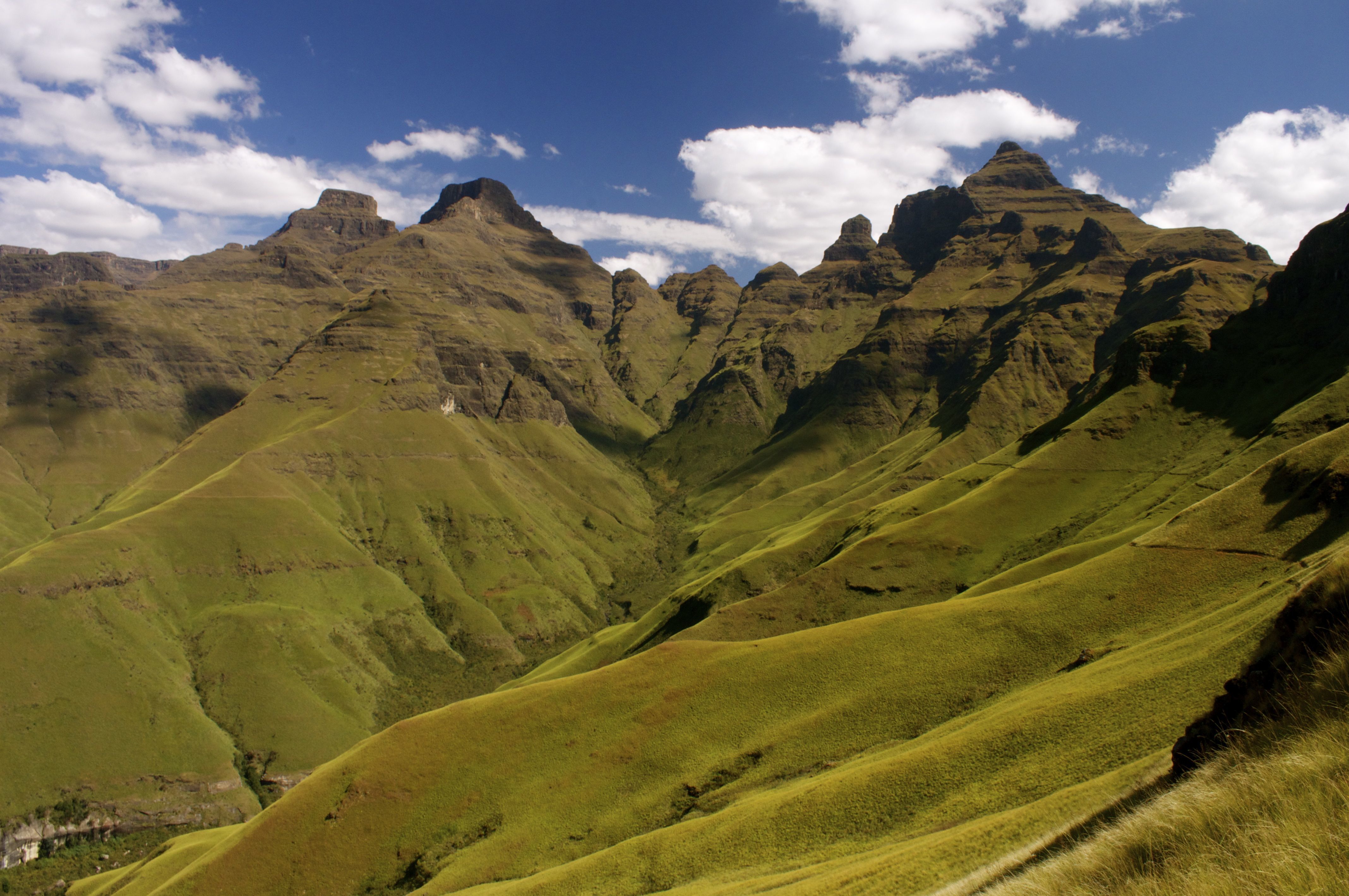
This sphere includes the continents, the ocean floor, all the rocks on the surface, and all of the sand in the deserts.
a)
Hydrosphere
b)
Biosphere
c)
Atmosphere
d)
Geosphere
74.

Composed of all the water on or near the earth
a)
Hydrosphere
b)
Biosphere
c)
Atmosphere
d)
Geosphere
75.

Body of air surrounding our planet.
a)
Hydrosphere
b)
Biosphere
c)
Atmosphere
d)
Geosphere
76.

This is part of the....
a)
Geosphere
b)
Hydrosphere
c)
Biosphere
d)
Cryosphere
77.

What sphere does a volcano belong too?
a)
Atmosphere
b)
Cryosphere
c)
Geosphere
d)
Hydrosphere
78.

How old is our solar system?
a)
4.6 billion years
b)
13.8 billion years
c)
6,000 years
d)
15,000 years
79.
A giant landmass that existed 200 million years ago
a)
Wegener
b)
Pangaea
c)
Archyopteryx
d)
Ammonite
80.
Why are there global winds?
a)
because the cold air sinkes from the poles to the equator
b)
because the earth is rotating from east to west
c)
because the sun heats the air at the equator more than anywhere else on earth
81.
Which way to the global winds blow in each hemisphere?
a)
east to west in Northern Hemisphere and west to east in the Southern Hemisphere
b)
west to east in Northern Hemisphere and east to west in Southern Hemisphere
c)
North to south in the Northern Hemisphere and south to north in Southern Hemisphere
d)
south to north in the Northern Hemisphere and north to south in the Southern Hemisphere
82.
What is the Coriolis Effect and how does it effect global winds?
a)
Curving of winds due to rotation of earth curves wind counterclockwise in Northern Hemisphere and clockwise in the Southern Hemisphere
b)
Movement of ocean currents caused by earth rotation' counterclockwise in Northern Hemisphere and clockwise in Southern Hemisphere
c)
curve of global winds caused by global rotation clockwise in Northern Hemisphere and counterclockwise in Southern Hemisphere
83.
Where do hurricanes form?
a)
In the pacific off South America
b)
In the Atlantic off South America
c)
In the Atlantic off Africa
d)
In the Gulf of Mexico
84.
How does the Coriolis Effect influence hurricanes and cyclones
a)
determines how powerful they will be
b)
determines where they will go
c)
determines where they form
d)
determines the direction of the wind rotation
85.
The two most important things to hurricanes are
a)
high pressure and cool water
b)
low pressure and cool water
c)
low pressure and warm water
d)
high pressure and warm water
86.
Differences in the moon's and sun's pull on different sides of the Earth cause _________.
a)
gravity
b)
lunar phases
c)
tides
d)
dabbing
87.
The bulge of water on the side of the Earth closest to the moon produces ___________.
a)
high tide
b)
low tide
c)
neap tide
d)
spring tide
88.
Water flows toward the high tides, halfway between them causing ____________.
a)
neap tide
b)
high tide
c)
spring tide
d)
low tides
89.
When humans burn fossil fuels, most of the carbon quickly enters the as carbon dioxide.
a)
Water
b)
Atmosphere
c)
Sun
d)
Air
90.
How do living organisms return carbon to the atmosphere in the carbon cycle?
a)
respiration and photosynthesis
b)
decomposition and respiration
91.

In the carbon cycle, producers take in the gas __
a)
carbon dioxide
b)
oxygen
c)
nitrogen
d)
carbon monoxide
92.
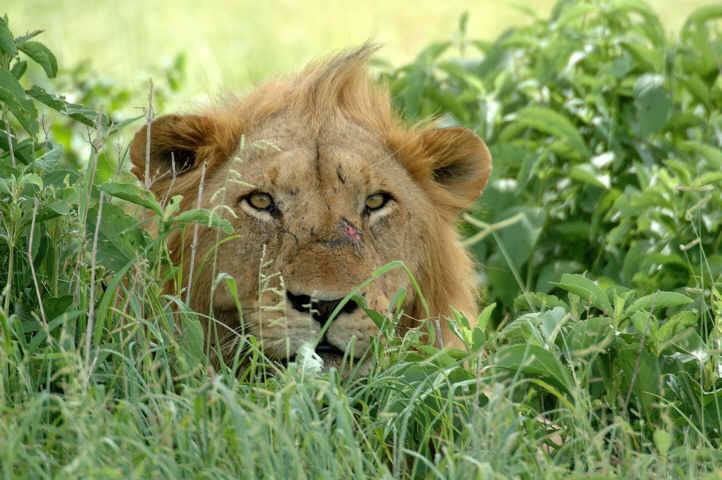
How does the carbon in grass become part of a lion?
a)
The lion eats the grass
b)
Carbon from grass doesn't end up in a lion.
c)
The carbon ends up in the lion's food chain.
d)
The lion breathes in carbon given out by the plant
93.
Which causes the subtropical jet stream to bring cold, wet winter weather to the southeastern United States?
a)
El Niño
b)
La Nina
c)
Coriolis effect
d)
Santa Anna Winds
94.
What is the cause of rising surface temperatures of the Pacific Ocean, drought in the western United States, and flooding on the Pacific coast of South America?
a)
the Gulf Stream
b)
the Jet Stream
c)
La Nina
d)
El Nino
95.
Which lists some effects of El Niño?
a)
warmer temperatures and more rain
b)
warmer temperatures and less rain
c)
cooler temperatures and less rain
96.
The Earth spins on a tilted angle called a (an)
a)
Axis
b)
Invert
c)
Revolution
d)
Bounce
97.
Rotation of the earth is what causes
a)
The seasons
b)
Day and night
c)
The tides
d)
A full moon
98.
Which happens in one year’s time?
a)
The moon makes one complete revolution around Earth.
b)
Earth makes one complete revolution around the sun.
c)
Earth makes one complete spin on its axis.
d)
The sun makes one complete spin on its axis.
99.
Which of the following best describes why the Earth has the four seasons?
a)
The sun is closer to the Earth during summer and farther away during winter
b)
The sun shines directly onto the equator all year long
c)
The tilt of the Earth is the primary reason for the seasons
100.

In this diagram, the motion of the Earth can best be described as -
a)
Rotation
b)
Revolution
101.
When I cold front is approaching, what happens?
a)
warm air is pushing under cold air causing humid weather and lower temperatures
b)
warm air is pushing under cold air causing humid weather and higher temperatures
c)
warm air rises, cools, and causes rain and thunderstorms
d)
cold air is pushed over warm air causing rain and thunderstorms
102.
When a warm front is approaching, what happens?
a)
advancing cold air pushes up and over retreating warm air causing warm temperatures and mild rain
b)
advancing warm air pushes up and over retreating cold air causing warm temperatures and mild rain
103.
A major difference between fronts is that
a)
in cold fronts, air masses are moving in the same direction
b)
in warm fronts, air masses are moving in opposite directions
c)
in cold fronts, air masses are moving in different directions
d)
air masses are moving against each other in both fronts
104.
The symbol on a weather map for a cold front is what?
a)
a line with triangles on it
b)
a line with semi-circles on it
c)
a line with squares on it
d)
a line with circles on it
105.
The symbol on a weather map for a warm front is what?
a)
a line with triangles on it
b)
a line with circles on it
c)
a line with semi-circles on it
d)
a line with circles on it
106.
If an air mass is rising, it must be
a)
cold and less dense
b)
cold and more dense
c)
warm and more dense
d)
warm and less dense
107.
If an air mass is sinking, it must be
a)
cold and less dense
b)
cold and more dense
c)
warm and more dense
d)
warm and less dense
108.
In a high pressure area, the weather will likely be
a)
warmer and clear skies
b)
warm but cloudy
c)
cold and rainy
d)
cold and clear
109.
In a high pressure area
a)
the winds will be moving clockwise
b)
the winds will be moving counter-clockwise
c)
the winds will be calm
d)
the air will be rising
110.
In a high pressure systems
a)
there are few clouds because the air in moving downward
b)
there are many clouds because the air is very humid
c)
there are few clouds because the air is moving outward
d)
there are many clouds because the air is moving upward
111.
A front is
a)
where warm air is cooling at earth's surface
b)
a line where hot and cold air are separating
c)
a line where two different air masses meet
d)
where cold air is rising and forming rain clouds
100 %

