Wayground logo

Free Printable Worksheets

Font size

S
M
L
XL
Worksheets

Covalent, Ionic, Metallic

Total questions: 23

Worksheet time: 16mins

Name
Class
Date
1.
Ionic bonds form between metals and ____.
a)
metalloids
b)
metals
c)
nonmetals
2.
What type of elements will form an ionic bond?
a)
Metals + Metals
b)
Nonmetals + Nonmetals
c)
Metals + Nonmetals
d)
None of the above
3.

CaBr2

a)

metal

b)

simple covalent molecule

c)

ionic compound

d)

giant covalent

4.
1.21 What type of bond is this?
a)
ionic
b)
covalent
5.
Definition: the electrostatic attraction between positive and negative ions in a compound
a)
chemical bond
b)
atomic bond 
c)
covalent bond
d)
ionic bond
6.

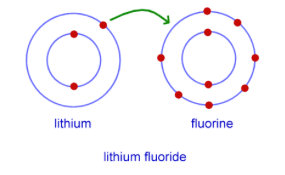
LiF

a)

ionic compound

b)

simple covalent molecule

c)

giant covalent

7.
How are covalent bonds explained?
a)
When one atom takes the other atom's electron
b)
When the atom shares an electron with an another atom
c)
When the two nucleus merge
d)
When the neutrons leave the nucleus
8.
What two types of atoms make a covalent bond?
a)
2 Nonmetals
b)
1 Nonmetal and 1 Metal
c)
2 Metals
d)
2 Noble Gases
9.
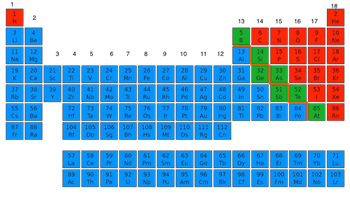
Where are the nonmetals located on the periodic table? 
a)
Blue
b)
Red
c)
Green
10.
What is the correct formula for this molecule?
a)
NH
b)
N3H
c)
NH3
d)
NH4
11.
Which of the following is NOT formed by a covalent bond?
a)
K2S
b)
H2O
c)
I2
d)
CO2
12.
Which of the following is a covalent compound?
a)
LiF - Lithium Fluoride
b)
NH3 - Ammonia
c)
NaBr - Sodium Bromide
d)
CuCl - Copper(I) Chloride
13.
Ionic or covalent?
H2O
a)
Ionic
b)
Covalent
14.

A bond between a metal and a nonmetal is called a(n)

a)

covalent bond

b)

ionic bond

c)

metallic bond

d)

transfer bond

15.

A bond between a nonmetal and a nonmetal is called a(n)

a)

covalent bond

b)

ionic bond

c)

metallic bond

d)

transfer bond

16.

What type of bond involves the sharing of electrons between atoms?

a)

covalent bond

b)

ionic bond

c)

metallic bond

d)

transfer bond

17.

Identify the following compound as ionic or covalent: MgO

a)

ionic

b)

covalent

18.

Identify the following compound as ionic or covalent: CF4

a)

ionic

b)

covalent

19.

Identify the following compound as ionic or covalent: SO2

a)

ionic

b)

covalent

20.

Identify the following compound as ionic or covalent: CO

a)

ionic

b)

covalent

21.
Which of the following is an example of an IONIC COMPOUND?
a)
NaCl
b)
H2O
c)
CO2
d)
NO
22.
Which of the following is an example of a COVALENT COMPOUND?
a)
H2S
b)
KI
c)
CaCl2
d)
MgO
23.

NaCl

a)

simple covalent

b)

ionic compound

c)

giant covalent

d)

metal