wayground logo

Free Printable Worksheets

Font size

S
M
L
XL
Worksheets

Force Energy Motion

Total questions: 70

Worksheet time: 2hrs 37mins

Name
Class
Date
1.
The distance something moves in a given amount of time is its ___________.
a)
speed
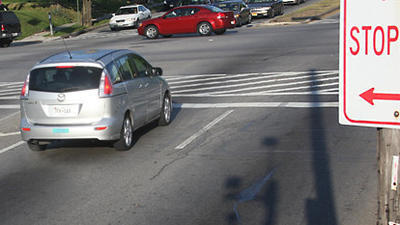
b)
force
c)
kinetic energy
d)
unbalanced force
2.
A distance/time graph is used to help determine
a)
velocity
b)
speed
c)
force
d)
motion
3.
The Law of Conservation of Energy states that
_____________________________________.
a)
All types of energy are the same.
b)
Once energy is used, it is gone.
c)
The rate of gravity on Earth stays the same.
d)
Energy can neither be created nor destroyed.
4.
The force of gravity will _____________as objects become farther apart.
a)
decrease
b)
increase
5.
When forces are acting on an object and it produces a net force of 0, you can say that the forces are _______________.
a)
balanced
b)
unbalanced
6.
Forces that produce a non-zero net force and change an object's motion are______________.
a)
balanced
b)
unbalanced
7.
Issac Newton's First Law of Motion states that...
a)
Objects in motion remain in motion.
b)
Force equals mass times acceleration.
c)
Every action has an equal and opposite reaction.
d)
Speed equals distance divided by time.
8.
The force of the Earth, moon or other large body that attracts other objects towards it is called________.
a)
friction
b)
electricity
c)
gravity
d)
speed
9.
Newton's 3rd Law of Motion states...
a)
Every action has an equal and opposite reaction.
b)
Force equals mass times acceleration.
c)
Objects in motion stay in motion.
d)
Speed equals distance over time.
10.
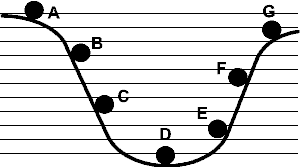
Between which 2 points on the graph is the object stopped?
a)
A and B
b)
B and C
c)
C and D
d)
A and D
11.
Between which 2 points is the object moving the fastest?
a)
A and B
b)
B and C
c)
C and D
d)
A and D
12.
What is the average speed of the object?
a)
45/8
b)
8/45
c)
6/15
d)
6/35
13.
Stored energy is called ______________.
a)
potential energy
b)
kinetic energy
14.
Velocity is an object's ________________.
a)
speed in a specific direction
b)
distance traveled in a certain amount of time
c)
unit of force measurement
d)
change in speed or direction
15.
Force is measured in _____________.
a)
pounds
b)
newtons
c)
grams
d)
meters
16.
When an object's speed increases it is called _____________________.
a)
velocity
b)
motion
c)
positive acceleration
d)
negative acceleration
17.
Newton's 2nd Law of Motion states...
a)
Force equals mass times acceleration.
b)
Objects in motion stay in motion unless acted upon by an outside force.
c)
Every action has an equal and opposite reaction.
d)
All objects are required to have a gravitational force.
18.
The term that describes a decrease in velocity is ________________.
Hint: Think about the car activity!
a)
vector
b)
positive acceleration
c)
magnetic force
d)
negative acceleration
19.
The speed over a period of time of an object that is not moving at a constant speed is its
___________________________. 
a)
rate of gravity
b)
average speed
c)
acceleration
d)
force
20.
Both of these are measured in Newtons
a)
Force and acceleration
b)
Force and weight
c)
Mass and weight
d)
Mass and acceleration
21.
What is the SI unit used to measure weight?
a)
Grams 
b)
Liters
c)
Pounds 
d)
Newtons 
22.
Which of the following is a unit of energy?
a)
Kilowatts
b)
Grams
c)
Meters per Second
d)
Joules
23.
What is the unit for mass?
a)
m/sec
b)
kg/sec
c)
kg
d)
kg m/sec
24.

Julio and Luis need to move a box that contains a 35 N TV. Julio pushes with 250 N, and Luis pushes with 100 N. If both boys are pushing in the same direction (and assuming no friction), what is the net force?

a)

250 N

b)

350 N

c)

135 N

d)

150 N

25.

The tendency of an object to resist a change in motion is know as...

a)

mass

b)

inertia

c)

force

d)

balance

26.

A teacher was discussing with the class that a bowling ball has more inertia than a basketball. Which physical property is most likely being compared?

a)

area

b)

mass

c)

weight

d)

volume

27.

Newton's first law of motion states that an object will keep a constant speed and direction unless acted upon by an unbalanced force.


To test this statement, Martin rolled a ball on a long, level street. The ball did not bump into any object, but it eventually came to a stop. How is this possible?

a)

Martin did not roll the ball hard enough, which caused the ball to eventually stop rolling.

b)

Newton's first law of motion only holds true in space, not on Earth.

c)

Every moving object must come to a stop because energy cannot be destroyed.

d)

The unbalanced force that caused the ball to stop was friction.

28.
What is the magnitude (size) and direction of the net force?
a)
21 N to the Left
b)
3 N to the Left
c)
21 N to the Right
d)
3 N to the Right
29.
What is the magnitude (size) and direction of the net force?
a)
10 N to the Right
b)
10 N to the Left
c)
0 N
d)
8 N to the Left
30.
What is the magnitude (size) and direction of the net force?
a)
14 N Down
b)
14 N Up
c)
6 N Up
d)
6 N Down
31.
A net force of 250 N is applied to an object that accelerates at a rate of 5 m/sec2.  What is the mass of the object?
a)
50 kg
b)
245 kg
c)
.02 kg
d)
25.5 kg
32.
What is the unit for velocity?
a)
m/sec
b)
kg/sec
c)
kg/m
d)
kg m/sec
33.
What is the unit for acceleration?
a)
m/s
b)
m/s2
c)
kg*m/s
d)
N
34.
An object with a mass of 2.0 kg accelerates 2.0 m/s2 when an unknown force is applied to it. What is the amount of the force?
a)
4 N
b)
0.4 N
c)
1 N
d)
0.1 N
35.
An object with a mass of 5.0 kg accelerates 8.0 m/s2 when an unknown force is applied to it. What is the amount of the force?
a)
40 N
b)
4 N
c)
10 N
d)
0.1 N
36.
An object with a mass of 6.0 kg accelerates 4.0 m/s2 when an unknown force is applied to it. What is the amount of the force?
a)
240 N
b)
24 N
c)
2.4 N
d)
0.24 N
37.
An object accelerates 3.0 m/s2 when a force of 6.0 newtons is applied to it. What is the mass of the object?
a)
2 N
b)
18 N
c)
0.5 N
d)
0.05 N
38.
An object accelerates 12 m/s2 when a force of 6.0 newtons is applied to it. What is the mass of the object?
a)
2 N
b)
18 N
c)
0.5 N
d)
0.05 N
39.
An object with a mass of 2.0 kg has a force of 4.0 newtons applied to it. What is the resulting acceleration of the object?
a)
2 N
b)
8 N
c)
0.5 N
d)
6 N
40.
An object with a mass of 5 kg has a force of 40 newtons applied to it. What is the resulting acceleration of the object?
a)
2 N
b)
8 N
c)
0.5 N
d)
6 N
41.

Calculate the potential energy of a car with a mass of 2,500 kg that is on a hill 100 meters above sea level.

a)

250,000 J

b)

2,450,000 J

c)

2,451,663 J

d)

248 J

42.

Alice kicks a soccer ball with a mass of 2.1 kg. The ball leaves the ground moving 30 meters per second. What is the kinetic energy of the soccer ball?

a)

567 J

b)

900 J

c)

945 J

d)

30 J

43.

Ty lifts a set of 1250kg weights a vertical distance of 2m in a weight lifting contest. What Potential Energy do the weights now possess?

a)

12,789 Joules

b)

24,500 Joules

c)

4,500 Joules

44.
Which point has the most potential energy?
a)
G
b)
f
c)
b
d)
a
45.

A 5 Kg body is having a Kinetic energy of 250 J. What is the velocity of the body?

a)

10 m/s

b)

15 m/s

c)

20 m/s

d)

40 m/s

46.

What is the mass of a ball that has a kinetic energy of 115 J and is traveling at 9 m/s?

a)

1035 kg

b)

23.5 kg

c)

12.8 kg

d)

2.84 kg

47.

A exercise ball is on a table 2.5 m above the ground. What is the mass of the ball if it has a GPE of 56.8 J?

a)

71 kg

b)

22.72 kg

c)

142 kg

d)

2.32 kg

48.

If you traveled from Point A to Point B to Point C, what would your DISPLACEMENT be?

a)

3 miles

b)

4 miles

c)

5 miles

d)

7 miles

49.

If you traveled 100 meters in 10 seconds going south, what would your speed be?

a)

100m per second

b)

10m per second south

c)

10m per second

d)

1000m per second

50.

A stopped car begins moving and reaches a speed of 25m/s in 5 seconds. What is its acceleration?

a)

+25m/s2

b)

-0m/s2

c)

+5m/s2

d)

5m/s

51.

A helicopter flies west 99 miles in 3 hours. What is its velocity?

a)

99 mph

b)

33 mph south

c)

99 mph south

d)

297 mph south

52.

A helicopter flies west 99 miles in 3 hours. What is its velocity?

a)

99 mph

b)

33 mph south

c)

99 mph south

d)

297 mph south

53.

Assume the letters label each point shown on the graph. The last point should be labelled F. Between which two letters is this object accelerating the most?

a)

A to B

b)

B to C

c)

E to F

d)

A to F

54.
Which of the following is a unit for acceleration?
a)
km/s
b)
m/s2
c)
mi/hr
d)
ft
55.
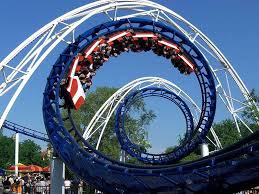
A roller coasters accelerates from an initial velocity of 6.0 m/s to a final velocity of 70 m/s over 4 seconds.  What's the acceleration?
a)
24 m/s2
b)
18 m/s2
c)
16 m/s2
d)
16 m/s
56.
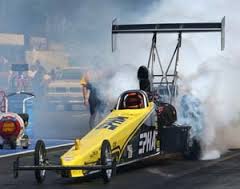
A drag racer accelerated from 0 m/s to 200 m/s in 5 s.  What was the acceleration?
a)
0 m/s
b)
40 m/s2
c)
-40 m/s2
d)
40 m/s
57.
a)
Object not moving
b)
Object accelerating
c)
Object slowing down
d)
Object at a constant speed
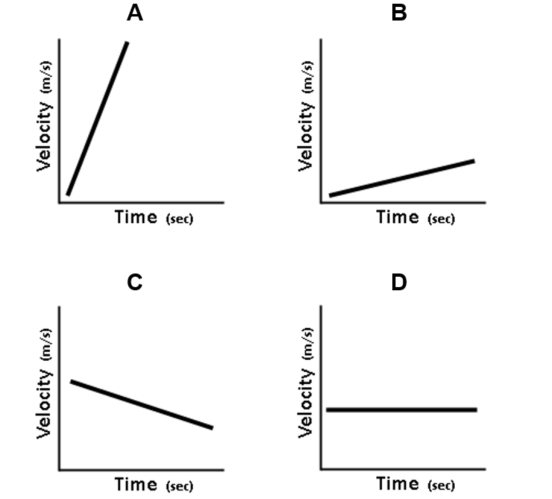
58.
Which graph shows: A car travelling at a constant speed.
a)
A
b)
B
c)
C
d)
D
59.
Which graph represents the greatest acceleration?
a)
A
b)
B
c)
C
d)
D
60.
What is the person doing from 5 seconds to 10 seconds?
a)
Walking 
b)
Running
c)
Standing Still 
d)
Walking Fast
61.
The reaction force of the table when you place your ISN on it is
a)
less than the weight of  your ISN.
b)
equal and opposite the weight of your ISN.
c)
determined by a variety of forces in multiple directions.
d)
varies depending on the material the table is composed of.
62.
According to Newton's law, an object that is in motion and not acted on by an unbalanced force will
a)
remain in motion.
b)
eventually come to a stop.
c)
change it's momentum.
d)
decelerate after awhile.
63.
Roller coasters 
a)
convert potential energy into kinetic energy.
b)
convert thermal energy into potential energy.
c)
convert kinetic energy into gravitational energy.
d)
convert gravitational energy into thermal energy.
64.

A 20 kg bike accelerates at 10 m/s2. What was the force?

a)

25 Newtons

b)

20 Newtons

c)

200 Newtons

d)

10 Newtons

65.

According to Newton’s first law of motion, an object that is not acted on by an unbalanced force will

a)

remain in motion.

b)

eventually come to a stop.

c)

stay at rest if at rest,

d)

accelerate.

66.
A 20 kg bike accelerates at 10 m/s2.  what was the force
a)
25
b)
200 N
c)
20 N
d)
10 N
67.
How can Newton's second law be represented  mathematically? 
a)
F=MA
b)
M= F/A
c)
A= F/M
d)
All are correct
68.
The ____________ acting on an object is equal to the ____________ of that object times its __________.
a)
mass, force, acceleration
b)
acceleration, mass, force
c)
force, acceleration, mass
d)
acceleration, force, mass
69.

Why does ot take more force to push full shopping cart than an empty one at the same speed?

a)

The empty shopping cart has more inertia

b)

The full shopping cart has more inertia

c)

The full shopping cart has more mass.

d)

The full shopping cart has more momentum to overcome to start it moving.

e)

The empty shopping cart has for acceleration

70.
What is the SI unit used to measure force? 
a)
pounds 
b)
grams 
c)
newtons 
d)
friction