
 Worksheets
Cell Unit Test
Total questions: 46
Worksheet time: 38mins
Name
Class
Date
1.

What organelle is responsible for digesting materials in the cell?
a)
lysosomes
b)
cytoplasm
c)
nucleus
d)
ribosomes
2.

What organelle contains DNA and controls the rest of the cell?
a)
nucleus
b)
lysosomes
c)
chloroplast
d)
cytoplasm
3.

What organelle is the site where photosynthesis occurs?
a)
chloroplast
b)
mitochondria
c)
nucleus
d)
lysosomes
4.

What organelle is the site of energy production and where cellular respiration takes place?
a)
mitochondria
b)
chloroplast
c)
lysosomes
d)
vacuoles
5.

What organelle is responsible for temporary storage inside a cell?
a)
Vacuole
b)
Lysosome
c)
Chloroplast
d)
Mitochondria
6.

What organelle is described as a gel-like fluid in which the organelles are embedded?
a)
Cytoplasm
b)
Cell Membrane
c)
Cell Wall
d)
Chloroplast
7.

What organelle is a flexible membrane surrounding the cell that determines what enters and leaves the cell?
a)
cell membrane
b)
cell wall
c)
nucleus
d)
mitochondria
8.

What organelle provides shape and support in a plant cell?
a)
cell membrane
b)
cell wall
c)
nucleus
d)
mitochondria
9.

When a cell divides and makes an exact copy of itself, this is called?
a)
mitosis
b)
photosynthesis
c)
cellular respiration
d)
waste elimination
10.

When plants use light energy to combine carbon dioxide and water to make simple sugar. This is called?
a)
photosynthesis
b)
cellular respiration
c)
mitosis
d)
waste elimination
11.

When a cell breaks down simple sugar into carbon dioxide and water, thus releasing energy for the cell. This is called?
a)
cellular respiration
b)
mitosis
c)
photosynthesis
d)
waste elimination
12.

When waste particles in a cell move from an area of high concentration to an area of low concentration, this is called?
a)
diffusion
b)
photosynthesis
c)
cellular respiration
d)
mitosis
13.

The diffusion of water across a selectively permeable membrane.
a)
osmosis
b)
diffusion
c)
mitosis
d)
photosynthesis
14.
Why is diffusion and osmosis important to cells?
a)
It allows them to take in materials without using energy.
b)
It allows them to reproduce.
c)
It allows them to absorb sunlight.
d)
It allows cells to use all energy.
15.
What are the products of photosynthesis?
a)
water and carbon dioxide
b)
oxygen and glucose
c)
oxygen and carbon dioxide
d)
oxygen and water
16.
What is the name of the simple sugar that is produced in photosynthesis?
a)
Sucrose
b)
Dextrose
c)
Glucose
d)
Lactose
17.
Which of the following is the correct equation for PHOTOSYNTHESIS?
a)
6CO2 + 6H2O --> 6O2 + C6H12O6
b)
6CO2 + C6H12O6 + 6H2O --> O2
c)
6O2 + 6H2O --> 6CO2 + C6H12O6
d)
C6H12O6 + 6O2 ---> 6H2O + 6CO2
18.
All living things do which of the following?
a)
Chemosynthesis
b)
Respiration
c)
photosynthesis
d)
all of the answers
19.
In what type of cells does cellular respiration take place?
a)
Plant cells
b)
Animal Cells
c)
Both plant and animal cells
d)
Red blood cells
20.
When cells divide they make two ____ cells.
a)
daughter
b)
son
c)
Mom
d)
Dad
21.

Which of the following is a way that bacteria are helpful?
a)
aid in digestion
b)
cause diseases
c)
food poisoning
d)
wheat blight
22.

Which of the following is a way that bacteria are harmful?
a)
aid in digestion
b)
cause diseases
c)
makes a variety of food
d)
decomposes dead organisms
23.

Which protist uses cilia for movement?
a)
amoeba
b)
paramecium
c)
euglena
24.

Which protist uses pseudopods to move?
a)
amoeba
b)
paramecium
c)
euglena
25.

Bacteria are what type of organisms?
a)
Prokaryotes
b)
Eukaryotes
26.

Protist are what type of organism?
a)
Prokaryotes
b)
Eukaryotes
27.
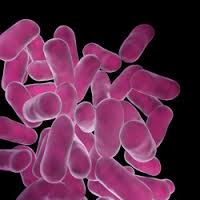
How are unicellular organisms different from multicellular organisms?
a)
There are no differences.
b)
They are made of many cells.
c)
They are only classified as prokaryotes.
d)
They are made of only one cell.
28.
Most organisms are classified as prokaryotes.
a)
True
b)
False
29.
Most organisms are classified as prokaryotes.
a)
True
b)
False
30.

What is a major difference between plant cells and animal cells?
a)
Plant cells contain mitochondria, but animal cells do not.
b)
Plant cells have a cell wall and chloroplast, but animal cells do not.
c)
Plant cells have a cell membrane, but animal cells do not.
d)
Plant cells contain a nucleus, animal cells do not.
31.

Protist are eukaryotic organisms.
a)
True
b)
False
32.

What type of organism is in the picture?
a)
Plant
b)
Animal
c)
Bacteria
d)
Protist
33.

What type of organism is in the picture?
a)
Plant
b)
Animal
c)
Bacteria
d)
Protist
34.

What type of organism is in the picture?
a)
Plant
b)
Animal
c)
Bacteria
d)
Protist
35.

What type of organism is in the picture?
a)
Plant
b)
Animal
c)
Bacteria
d)
Protist
36.

Which protist uses a flagellum to move?
a)
amoeba
b)
paramecium
c)
euglena
37.

What organelles are found in only photosynthetic cells?
a)
chloroplast and chlorophyll
b)
mitochondria and chloroplast
c)
nucleus and mitochondria
d)
nucleus and chlorophyll
38.

Bacteria that are round or spherical in shape.
a)
bacillus
b)
coccus
c)
spirilla
39.

Bacteria that are rod shaped.
a)
bacillus
b)
coccus
c)
spirilla
40.

Bacteria that are spiral in shape.
a)
bacillus
b)
coccus
c)
spirilla
41.

All cells come from pre-existing cells. This statement is part of cell theory.
a)
True
b)
False
42.

Which of the following is NOT a part of cell theory?
a)
All cells come from other cells.
b)
Cells are the basic unit of life.
c)
Living things are made of cells.
d)
Atoms are the basic unit of life.
43.

Which protist is capable of doing photosynthesis?
a)
euglena
b)
paramecium
c)
amoeba
44.

______________ are the basic unit of living things.
a)
Kittens
b)
Organisms
c)
Cells
d)
Organelles
45.

Bacteria
a)
are multicellular and have a nucleus
b)
are multicellular and don't have a nucleus
c)
are unicellular and have a nucleus
d)
are unicellular and don't have a nucleus
46.

Protist
a)
are multicellular and have a nucleus
b)
are multicellular and don't have a nucleus
c)
are unicellular and have a nucleus
d)
are unicellular and don't have a nucleus
100 %

