wayground logo

Free Printable Worksheets

NEW

Font size

S
M
L
XL
Worksheets

NGSS HS Life Science

Total questions: 24

Worksheet time: 30mins

Name
Class
Date
1.
Proteins are made up of long chains of ________________.
a)
Amino Acids
b)
Lipids
c)
Saccharides
d)
Polysaccharides 
2.

The sub units that make up lipids are __________________ and _____________.

a)

Saccharides, nucleotides

b)

Amino acids, glycerol

c)

Glycerol, saccharides

d)

Fatty acids, glycerol

3.

A(n) _______________ is a protein that facilitates chemical reactions.

a)

Muscle

b)

Ketone

c)

Alpha helix

d)

Enzyme

4.
Proteins are used for _________________.
a)
Energy storage
b)
Structures and enzymes
c)
Energy supply
d)
Information storage
5.
The building block of a nucleic acid is a ___________________.
a)
Amino acid
b)
Fatty acid
c)
Monosaccharide
d)
Nucleotides
6.
Organic molecules are from living things and always contain the _____________ atom.
a)
Iron
b)
Carbon
c)
Potassium
d)
Nitrogen 
7.

What is a building block in the formation of carbohydrates?

a)

Glycerol

b)

Sugar

c)

Amino Acids

d)

Dipeptide

8.

Starch is a ___________ because it is made of many sugars sub units

a)

Monosaccarhide

b)

Disaccarhide

c)

Polysaccharide

d)

Protein

9.

Name the bond formed between monosaccharides.

a)

Glycosidic bond

b)

Gliding bond

c)

Hydrolic bond

d)

Hydrogen bond

10.

Which of the following are the result of two monosaccharides linking together?

a)

Water and hydrogen

b)

Disaccharide and Water

c)

Disaccharide and Glucose

d)

Monosaccharides and Water

11.
__________________ may be fats, oils, or waxes. 
a)
Lipids
b)
Carbohydrates
c)
Proteins
d)
Nucleic Acids 
12.
What atoms make up all carbohydrates?
a)
Carbon, Sulfur, Hydrogen
b)
Carbon, Oxygen, Phosphorus
c)
Carbon, Oxygen, Nitrogen
d)
Carbon, Oxygen, Hydrogen
13.
How many sugar units make up polysaccharides?
a)
one
b)
two
c)
more than two
d)
zero
14.
What molecule is this
a)
sucrose
b)
protein
c)
glucose
d)
cellulose
15.
Amino Acids:
a)
are a type of marinade.
b)
help transport fats in the body.
c)
are the building blocks from which proteins are made.
d)
are only found in plants.
16.
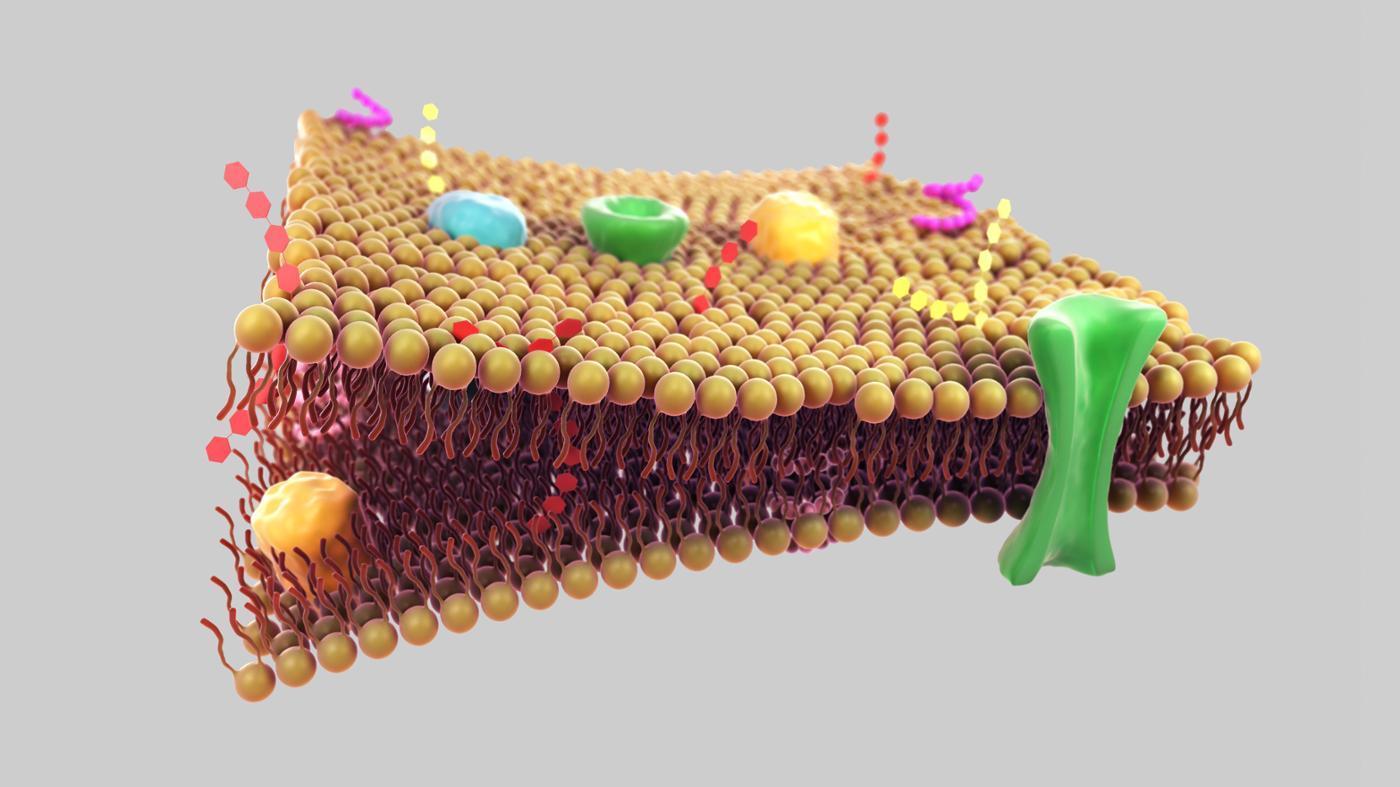
The phospholipid bilayer comprises what part of the cell?
a)
cytoplasm
b)
cell membrane
c)
cytoskeleton
d)
nuclear membrane
17.
What type of lipid is this?
a)
steroid
b)
cholesterol
c)
phospholipid
d)
triglyceride
18.
In the phospholipid, the polar head is considered what type of structure?
a)
hydrophobic
b)
insoluble
c)
hydrophilic
19.

Which of the following parts of the amino acid has the chemical formula -NH2?

a)

amino group

b)

carboxyl group

c)

functional group

d)

R-group

20.

Which of the following parts of the amino acid has the formula -COOH?

a)

amino group

b)

carboxyl group

c)

functional group

d)

R-group

21.

Which type of bond links amino acids together to form proteins?

a)

glycosidic

b)

peptide

c)

acidic

d)

atomic

22.

Which of the following is NOT part of a nucleotide?

a)

base

b)

ribose

c)

phosphate

d)

functional group

23.

Which of the following is a pentagonal monosaccharide?

a)

fructose

b)

glucose

c)

starch

d)

cellulose

24.

What is the approximate ratio of carbon to hydrogen to oxygen in carbohydrates?

a)

1:2:1

b)

1:2

c)

2:1

d)

2:1:2