

wayground logo

Free Printable Worksheets

NEW

Font size

S
M
L
XL
Worksheets

Nitrogen, Water, Carbon Cycles

Total questions: 26

Worksheet time: 2hrs 10mins
Name
Class
Date
1.
What is the energy source for the water cycle?
a)
the sun
b)
the earth
c)
water
d)
the moon
2.
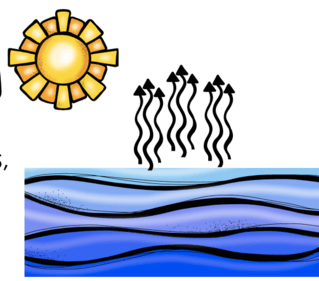
What part of the water cycle does this picture show?
a)
condensation
b)
precipitation
c)
evaporation
3.
Where is most water found on the Earth? 
a)
In Glaciers
b)
In Lakes
c)
In Rivers
d)
In the Ocean
4.
What is water doing when it is changed to water vapor? 
a)
Evaporating
b)
Condensing
c)
Precipitating
5.
On which kind of day would you expect the most evaporation from the surface of a pond? 
a)
cold, rainy
b)
cold, sunny
c)
warm, rainy
d)
warm, sunny
6.
The sum total of all the water on earth and in its atmosphere is known as
a)
Biosphere
b)
Atmosphere
c)
Hydrosphere
d)
Ionosphere
7.
When humans burn fossil fuels, most of the carbon quickly enters the                       as carbon dioxide.
a)
Water
b)
Atmosphere
c)
Sun
d)
Air
8.
All of the carbon in existence is continually recycled in the carbon cycle
a)
True
b)
False
9.
Which of the following removes carbon from the atmosphere?
a)
Combustion
b)
Respiration
c)
Photosynthesis
d)
Death
10.
If the plant population decreased, the amount of carbon would _________.
a)
Stay the same
b)
Increase
c)
Decrease
11.
Carbon dioxide is produced by the burning of fossil fuels
a)
True
b)
False
12.
How much of the atmosphere is composed of nitrogen gas?
a)
87%
b)
38%
c)
78%
d)
21%
13.
Which of the following describes the role of nitrogen-fixing bacteria in the nitrogen cycle? Nitrogen-fixing bacteria convert
a)
nitrates intro nitrogen gas
b)
ammonia into proteins
c)
nitrogen gas into ammonia
d)
proteins into nitrates
14.
Animals obtain the nitrogen they need directly from the
a)
soil in their habitat
b)
air they breathe
c)
plants they eat
d)
bacteria living within them
15.
Plants and animals cannot use nitrogen directly from the air.
a)
True
b)
False
16.
What converts nitrogen into a useable form for plants and animals?
a)
bacteria
b)
fungi
c)
rain
17.
Organisms that need nitrogen to survive
a)
only plants
b)
only animals
c)
only bacteria
d)
all living organisms
18.
How nitrogen is "fixed" into useable form for plants
a)
through action of bacteria
b)
through lightning
c)
through action of bacteria & lightning
d)
through photosynthesis
19.
What is one of the most important processes that removes carbon from the atmosphere? 
a)
photosynthesis
b)
cellular respiration
c)
erosin
d)
soil respiration
20.

When water vapor in the atmosphere cools and changes into water droplets that form clouds

a)

Accumluation

b)

Condensation

c)

Evaporation

d)

Precipitation

21.

Water droplets fall from the atmosphere in the form of rain, snow, sleet, or hail

a)

Accumluation

b)

Condensation

c)

Evaporation

d)

Precipitation

22.

The water cycle never stops

a)

True

b)

False

23.

Jim is a long-distance runner. After one of his workouts, drenched in sweat, he headed back to his house to eat lunch. After lunch he noticed that he was completely dry. Which of the following terms explains the part of the water cycle that Jim experienced between the end of his run and after lunch?

a)

Evaporation

b)

Precipitation

c)

Condensation

d)

Decomposition

24.

According to the _____ , there is a fixed amount of nitrogen on Earth.

a)

Law of Conservation of Energy

b)

Law of Conservation of Mass

25.

Ally is a junior high student who has just learned about the carbon cycle in school. She is concerned about the environment and decides to construct a model of the carbon cycle in her community.


What could both add and remove carbon from the atmosphere in the model?

a)

a car

b)

a deer

c)

an insect

d)

a tree

26.

Ally is a junior high student who has just learned about the carbon cycle in school. She is concerned about the environment and decides to construct a model of the carbon cycle in her community.

Ally wants to reduce the amount of carbon dioxide in her local area. What are two different things that Ally could do to reduce the amount of carbon dioxide in the atmosphere?

a)

cut down trees and plant some flowers

b)

walk instead of drive and burn trash

c)

plant more trees and hang laundry outside

d)

car pool to work and keep all of the lights on at home
