
NEW
Font size
 Worksheets
Kinetic Molecular Theory and States of Matter
Total questions: 22
Worksheet time: 22mins
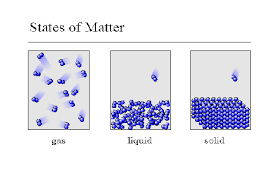
At higher temperatures
particles in an object have less kinetic energy
particles in an object move faster
a gas contracts
Thermal energy is...
heat energy
the energy of motion
energy of nuclear processes.
an indication of physical change.

Which state of matter has particles that are somewhat close together and have enough kinetic energy to slide past each other?
solid
liquid
gas
A physical change from gas to liquid is called....
expansion
evaporation
condensation
sublimation
Convert -89 oC to K
184K
362K
-362K
-184K

This most widely used temperature scale is based on the freezing and boiling points of water.
Celsius
Fahrenheit
Kelvin
All of them
On this temperature scale, "zero" represents the temperature at which molecules have the lowest energy possible
Fahrenheit Scale
Celsius Scale
Kelvin Scale
Which of the following states of matter has the LOWEST level of kinetic energy?
Solid
Liquid
Gas
Plasma
Which of the following states of matter can easily be compressed (made to fit into a small volume)?
Solid
Liquid
Gas
On this temperature scale, there can NEVER be negative numbers
Celsius
Fahrenheit
Kelvin
Which state of matter have the weakest intermolecular forces (attraction between the different particles)?
solid
liquid
gas
The coldest anything can get. Ever.
In Celsius it's -273 degrees.
Wicked cold
Kelvin
Absolute zero
Icey
The state of matter with definite (fixed) volume but not definite (fixed) shape.
solid
liquid
gas
Temperature is a measure of a substance's average
kinetic energy
heat
density
electrostatic force
"Kinetic" refers to
motion
heat
density
forces
The kinetic theory of matter states that all particles are constantly
growing
contracting
reacting
moving

Two identical beakers each contain water. The temperature of each is 20oC. Which one has more heat energy and why?
They both have the same amount of heat energy because the temperature is the same
The one on the right has more heat energy because there is more water
The one on the left has more heat energy because there is less water.
Evaporation is what kind of change and WHY?
Endothermic because it requires energy
Exothermic because it requires energy
Endothermic because it releases energy
Exothermic because it requires energy

