
 Worksheets
Waves and Info
Total questions: 104
Worksheet time: 3hrs 34mins

To transmit means to
go to lunch
send
go west
call
Amplitude is the distance between
the crest and the trough
each wave
the middle point of a wave and the clouds
the crest or trough and the middle point of the wave
The distance from one crest to the next crest in a wave is
wavelength
crest
trough
amplitude
To put information in digital code form is to
computerize
scramble
GPS
digitize
The trough is the
highest point in a wave
the wavelength
lowest part of a wave
the distance between each crest
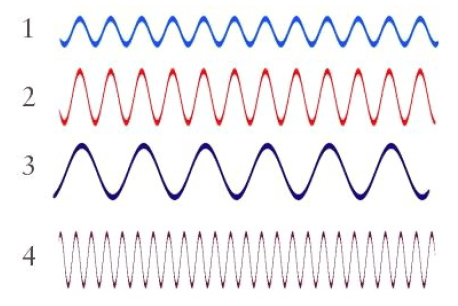


As the ___________ of a wave increases, the _____________ of a waves decreases.
amplitude; crest
frequency; wavelength
wavelength; crest
frequency; amplitude

Based on the evidence from the wave patterns, what will most likely happen if Tia moves the ruler up and down at a slower pace?
The amplitude will increase.
The wavelength will increase.
The frequency will increase.
The crests will increase.

Choose two places where the bird could see its own reflection.
window
lawn
birdbath
feeder
nest
Tanner is creating a prism model. What two things should the model be able to do for it to function correctly as a prism?
change white light into waves
increase the frequency of light
refract white light
separate white light into colors
Which two devices receive and transmit digital signals?
prism
computer
cell phone
violin
The ________________ of a sound wave can be _________________ and sent long distances with radio waves.
pattern; converted to digital code
medium; hard to interpret
color; changed with lasers
speed; detected by the ear
Which statement best describes the impact that digital technology has had on communication?
Digital technology has increased the time and direction of communication.
Digital technology has increased the distance and speed of communication.
Digital technology has decreased the space and distance of communication.
Digital technology has decreased the distance and speed of communication.

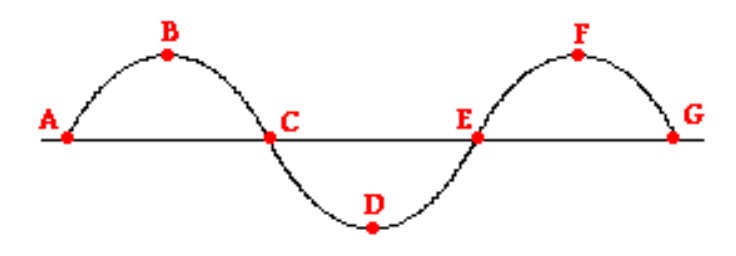
Figure 1 represents _______________ signal.
analog
digital

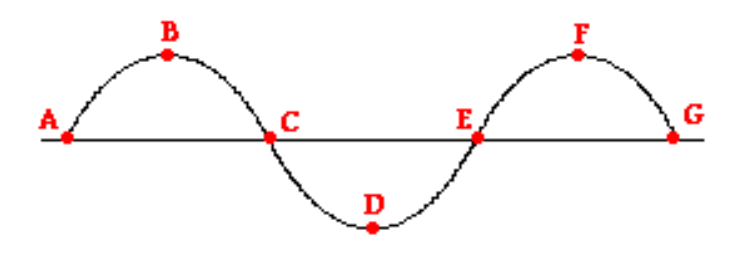
Figure 2 represents ______________ signal.
analog
digital

A __________ can hear a smaller range of frequencies than a ___________.
bird; human
bat; snake
porpoise; cricket
bird; snake

Select two receivers in the system.
The TV network satellite uplink and the repeater tower
Both mobile TV phones
The repeater tower and one mobile TV phone
Both repeater towers

Which part of the diagram is the antenna?
Mobile TV phone
TV network satellite uplink
Repeater tower
Satellite relay

What interaction happens at the satellite relay?
The digital information is decoded and changed into TV pictures and sound.
The code is received by the network and sent to the receiver.
The digital code is received by satellite and transmitted to a network.
Pictures and sound are changed into a digital code.
What interaction happens at the repeater tower?
The digital information is decoded and changed into TV pictures and sound.
The code is received by the network and sent to the receiver.
The digital code is received by satellite and transmitted to a network.
Pictures and sound are changed into a digital code.
What interaction happens at the TV network satellite uplink?
The digital information is decoded and changed into TV pictures and sound.
The code is received by the network and sent to the receiver.
The digital code is received by satellite and transmitted to a network.
Pictures and sound are changed into a digital code.
What interaction happens at the mobile TV phone?
The digital information is decoded and changed into TV pictures and sound.
The code is received by the network and sent to the receiver.
The digital code is received by satellite and transmitted to a network.
Pictures and sound are changed into a digital code.

How is the flag system like a radio system?
Both systems use digital signals in a short range from an antenna.
Both systems send signals that are decoded by a receiver.
Both systems receive sound waves converted into a signal.
Both systems change digital signals into analog information.
Are radio waves used by several current communication devices?
Yes
No
A sound wave with a high frequency has _____________.
more wavelengths in a given amount of time
fewer wavelengths in a given amount of time
tall waves
short waves
A sound wave with a high pitch will have a low frequency.
Yes
No
Sound energy travels in ________.
strings
beams
pulses
waves
The reason sounds are not heard in space are because ________
space is too cold
there is too much matter
space is a vacuum with few particles
energy cannot move in space
What is the height of a sound wave called?
amplitude
altitude
fequency
length
The pitch of a sound is found by measuring the ________.
crest height
distance
trough depth
frequency
What is frequency?
the loud and quiet
the number of vibrations in second
the height of the wave
the high and the low
A type of communication that uses short and long signals to represent letters is called _____________.
Morse code
echolocation
computer programming
binary code
What is amplitude?
the distance from the beginning of one part of a wave to the same spot on the next wave
the height of a wave
energy
How do you find a waves wavelength?
the height of a wave
the distance from the beginning of one part of a wave to the same spot on the next wave
use a ruler
Do waves carry energy?
No, you CAN NOT see objects moving on a wave.
Yes, you CAN see the objects moving on a wave.
What type of device was Morse Code invented for?
cellphones
the internet
telegraph
What is needed to start a wave?
water
energy
a slinky
How could a flashlight be used to communicate?
by flashing the light on and off using a code
it can't be used to communicate
by flashing it
How could a drum be used to communicate?
it can't
by hitting it
by tapping or banging on it using a code
How do cell phones work?
a phone uses code to translate the information being sent or received
using morse code
using sound waves

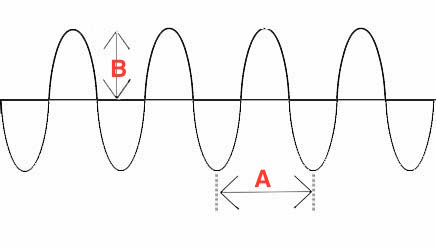
Does this picture correctly identify the amplitude and wavelength of the wave?
Yes
No
True or False: The crest of a wave is the highest point of the wave.
True
False
True or False: The trough is the lowest point of a wave.
True
False

Sound can't move where there is no matter, such as in outer space.
True
False
______________ is a form of energy produced by vibrating objects.
Mechanical energy
Light energy
Sound energy
Kinetic energy
The speed of sound is the same no matter what medium it travels though.
True
False

The bending of light as it moves from one material into another is called
reflection.
rarefaction.
refraction.
A ________ is a curved piece of glass or plastic that bends light rays.
concave lens
convex lens
hand lens
lens
The bouncing back of light from a surface is called
rarefaction.
reflection.
refraction.
Light rays bounce off a mirror at the ___________ angle they hit the mirror.
same
opposite
different

When light is ______________, it passes through an object.
absorbed
reflected
refracted
transmitted

You can create a rainbow by shining white light through a glass bar called a
pyramid.
triangle.
prism.
When light is _______________, it is taken in by an object.
transmitted
absorbed
reflected
refracted
Only ____________ objects transmit the light that hits them.
colored
clear
The colors of the rainbow are
G, B, Y, O, R, V, I
R, O, Y, G, I B, V
B, V, R, Y, O, I, G
R, O, Y, G, B, I, V
As waves become shorter, their frequency
decreases.
increases.
remains the same.
The number of waves that move past a point in a certain amount of time is called
energy.
electromagnetic spectrum.
frequency.
amplitude.
Light waves, x-rays, gamma rays, radio waves are examples of a group of wave found in the electromagnetic spectrum.
True
False
The distance between 2 crests or 2 troughs is known as a wavelength.
True
False
Very short waves include gamma rays, ultraviolet rays, and
x-rays.
microwaves.
radio waves.
Light cannot travel though empty space where there is no air.
True
False
_____________waves travel through some sort of medium.
Electromagnetic
Mechanical
Radio waves and microwaves are examples of _____________ waves.
mechanical
electromagnetic
Transverse waves are the transfer of energy in a motion that is _____________ to the direction the wave is traveling.
parallel
perpendicular
A boat riding the waves of the ocean is an example of a
longitudinal wave.
transverse wave.
Transverse and longitudinal waves are examples of
electromagnetic waves.
mechanical waves.
In a __________ wave, particles of the medium are moved in a direction parallel to energy transport.
longitudinal
transverse

Microphones work by converting _________ waves into electrical energy which can move through electrical wires.
electrical
chemical
sound
kinetic

What two things are used to form patterns representing letters and numbers in Morse code?
dots
dashes
colors
sounds

What two symbols do computers use to form patterns and code information?
0's
100's
1's
A's
B's

What are the THREE colors of light that make up pixels on a screen to create colors?
Blue
Green
Yellow
Red
Puple

Information is stored on CD's using holes burned with lasers.
true
false

How does a 3-D printer know what to print?
Instructions from the computer are sent to the printer as patterns of 1's and 0's
a photo is sent to the printer and the printer prints a picture that matches that photo
you upload a blueprint, the computer reads the blueprint then uses those instructions to print whatever was in the blueprint

What does a TV remote control send to the TV?
the channel you want to watch
dots and dashes that tell the TV what to do
patterns of light pulses
sound waves

What was a key discovery in the advancement of early information transfer?
morse code
light bulb
newspapers
telephone

If you want to have a higher definition image, you need more of what?
dots
1's
electricity
pixels

Before information was transferred electronically, how did people share information? (Select all that apply)
Books
computers
newspapers
telephone

