
 Worksheets
Endosymbiotic Theory Review
Total questions: 18
Worksheet time: 11mins
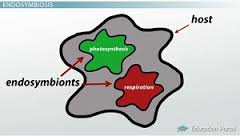
"Endosymbiosis" means
Living together
Entering together
Living separately
Joining together
The theory of Endosymbiosis explains
The origin of eukaryotes
How bacteria live
How species develop
Why cells rely on one another
____________ & _________________ are organelles that definitely arose from endosymbiosis.
Nucleus and cell membrane
Chloroplast and mitochondria
Mitochondria and nucleus
Cell wall and chloroplast
What are evidence to support endosymbiotic theory?
Mitochondria is found outside the cells
Mitochondria and chloroplast can divide independently
Mitochondria and chloroplast have their own cell membrane
Mitochondria and chloroplast have their own genetic material
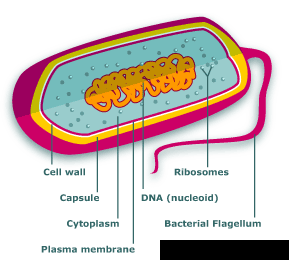
Bacteria are an example of a _________ cell.
Eukaryotic
Prokaryotic
animal
plant
A process by which organisms create carbohydrates from sunlight, carbon dioxide, and water is called -
photosynthesis
cellular respiration
Why type of cell does not contain membrane bound organelles?
Animal Cells
Prokaryotic Cells
Eukaryotic Cells
Plant Cells
Which of the following characteristics make mitochondria and chloroplasts different from other organelles?
They are much bigger
The are found in both prokaryotic and eukaryotic cells.
They both make ATP
They were once free-living prokaryotes
Which of the following is evidence to support the endosymbiotic theory?
Prokaryotes have the same number and types of enzymes as eukaryotes.
Mitochondria and chloroplasts have their own DNA, which is similar to prokaryotic DNA.
All eukaryotic cells have a double-layered membran composed of phosplipids and proteins.
Fossil evidence shows that the first forms of life were prokaryotic cells.
Which of the following is evidence to support the endosymbiotic theory?
Prokaryotes have the same number and types of enzymes as eukaryotes.
Mitochondria and chloroplasts have their own DNA, which is similar to prokaryotic DNA.
All eukaryotic cells have a double-layered membran composed of phosplipids and proteins.
Fossil evidence shows that the first forms of life were prokaryotic cells.
The theory of Endosymbiosis explains
The origin of eukaryotes
How species develop
How bacteria live
The origin of multi-cellular life
Humans can live long, normal lives without their mitochondira.
true
false
The mitochondria in yours cells have DNA that matches yours.
true
false

