
 Worksheets
Newton's Law of Universal Gravitation
Total questions: 47
Worksheet time: 28mins
If I double the mass of one object, but don't change anything else... What happens to the gravitational force between two objects?
Doubles
Quadruples
Cut in Half
4x Smaller
If I double the distance between two objects, what happens to their gravitational Force?
4 x bigger
4 x smaller (or 1/4 x)
2 x bigger
2 x smaller (or 1/2 x)
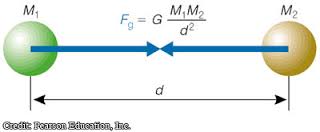


The graphical relationship between Fg of Earth on a man and distance between Earth and man is:


The graphical relationship between Fg of Earth on another planet and the mass of the planet is:


Newton said that any two masses will...
combine into a larger mass.
attract each other.
create gravitational fields.
push each other apart.
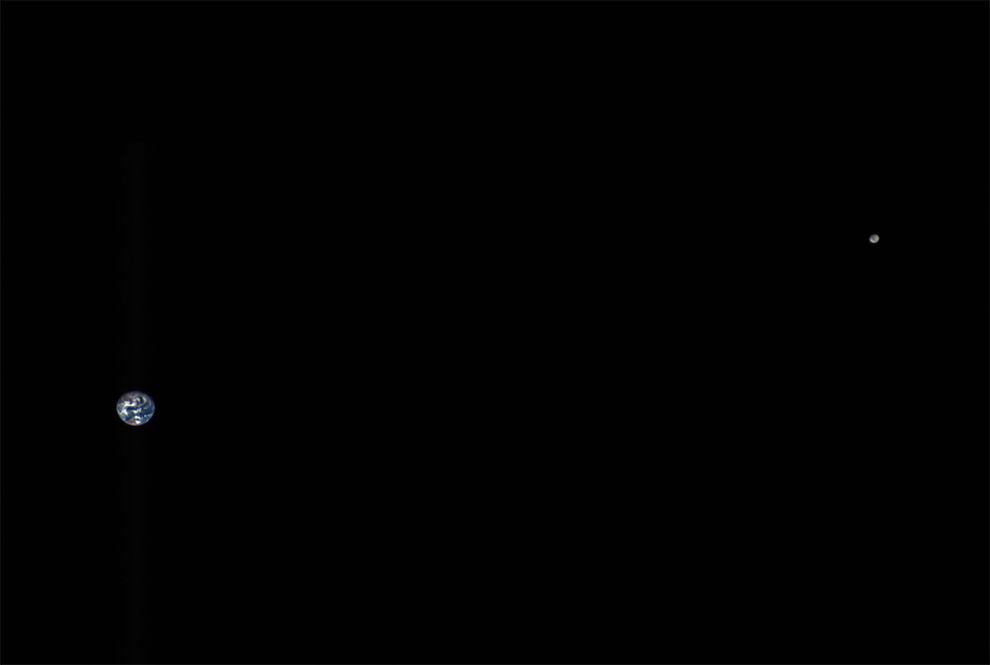
According to Newton's law of gravitation, the Earth and the Moon are gravitationally attracted to each other. The more massive Earth attracts the Moon with...
a stronger force than the Moon attracts the Earth.
a weaker force than the Moon attracts the Earth.
the same force as the Moon attracts the Earth.
a force that is sometimes stronger and other times weaker than the Moon attracts the Earth.

Which of the following best explains why a person has less weight on top of a mountain?
They are closer to space.
The atmosphere is lighter.
The mountain adds more mass.
The mountain adds more distance.

The picture shows three objects gravitationally interacting with each other. Which object exerts the greatest force on object B?
Object A
Object C
A and C exert an equal force on B
Cannot be determined

The picture shows three objects gravitationally interacting with each other. Which object exerts the greatest force on object B?
Object A
Object C
A and C exert an equal force on B
Cannot be determined
A massive object and a less massive object exert a gravitational force on each other. Which of the following picture correctly shows the magnitude and direction of the forces involved in this interaction?


The gravitational force in the previous interaction was 20 N. Determine the gravitational force in the new situation where the second mass is doubled.
10 N
20 N
40 N
80 N

The distance between the two masses in the previous situation is halved. Determine the gravitational force in this new situation.
20 N
40 N
80 N
160 N

The picture shows two identical satellites, A and B, in circular orbits around the Earth. Upon which satellite does the Earth exert a stronger gravitational force?
Satellite A
Satellite B
Equal on both
Cannot be determined

The Earth exerts a gravitational force of 12 N upon satellite B. Satellite A is twice as far away from the Earth as satellite B. Determine the gravitational force the Earth exerts on satellite A.
3 N
6 N
12 N
24 N

A third identical satellite, C, is placed in orbit at half the distance from the Earth as satellite B. Determine the gravitational force the Earth exerts on satellite C.
6 N
12 N
24 N
48 N

The picture shows two situations of two objects gravitationally attracting each other. What is the proportional change in the second mass of situation 2 as compared to situation 1?
1/2
1
3
6
The picture shows two situations of two objects gravitationally attracting each other. What is the proportional change in distance of situation 2 as compared to situation 1?
1/2
1
2
4
The picture shows two situations of two objects gravitationally attracting each other. What is the proportional change in the gravitational force in situation 2 as compared to situation 1?
1/4
1/2
1
2

The picture shows three bodies (A, B, and C) that gravitationally attract each other. Between which two bodies is the force of gravity the strongest?
A and B
A and C
B and C
Equal for all

The picture shows the gravitational field in the space surrounding the Earth. What is creating this gravitational field?
The gravitational force.
The mass of the Earth.
The distance of the Earth.
The universal gravitational constant.

The figure shows the gravitational field surrounding the Earth. Which of the following explains why the field lines point towards the Earth?
Gravity is an attractive force.
The force of gravity points towards the center of the Earth.
Falling bodies accelerate towards the center of the Earth.
All of the above.

An apple is placed in the Earth's gravitational field. Which of the following best explains why the apple falls to the ground?
The field exerts a gravitational force upon the apple.
The Earth exerts a gravitational force upon the apple.
Masses attract each other.
On Earth, all objects fall with acceleration 9.8 m/s².
Which of the following statements is correct with respect to G and g?
G is a fundamental constant, whereas g is a physical quantity and subject to change.
Both G and g can change, but g can only change if you go to a different planet.
G and g are both constant, but g is determined by the mass and radius of the Earth.
The strength of G is determined by g.

The surface gravity on Earth is approximately 10 N/kg. What would the surface gravity be if the Earth contained twice as much mass?
5 N/kg
10 N/kg
20 N/kg
40 N/kg

Suppose an exoplanet is found that has the same mass as the Earth, but is slightly larger than the Earth. What would be the surface gravity on this planet?
less than 10 N/kg
equal to 10 N/kg
more than 10 N/kg
cannot be determined

A newly discovered exoplanet has triple the mass and double the radius as compared to Earth. What is the approximate surface gravity on this exoplanet?
1.5 N/kg
7.5 N/kg
15 N/kg
60 N/kg

The picture shows two exoplanets, b and c. The mass and radius of each planet is given in terms of M and r. What is the surface gravity on planet-c if the surface gravity on planet-b is 4 m/s2?
2 m/s2
4 m/s2
8 m/s2
32 m/s2

The mass and radius of four exoplanets are shown in terms of the Earth's mass and radius. On which of these planets will the surface gravity be greater than on Earth?
planet-b
planet-c
planet-d
planet-e

