
 Worksheets
Global Warming and Carbon Cycle
Total questions: 82
Worksheet time: 1hrs 5mins
Name
Class
Date
1.
When humans burn fossil fuels, most of the carbon quickly enters the as carbon dioxide.
a)
Hydrosphere
b)
Atmosphere
c)
Biosphere
d)
Geosphere
2.
Which one of these does not add CO2 to the atmosphere?
a)
cooking with gas
b)
planting trees
c)
burning wood
d)
riding in a bus
3.
How do living organisms return carbon to the atmosphere in the carbon cycle?
a)
respiration and photosynthesis
b)
decomposition and respiration
4.
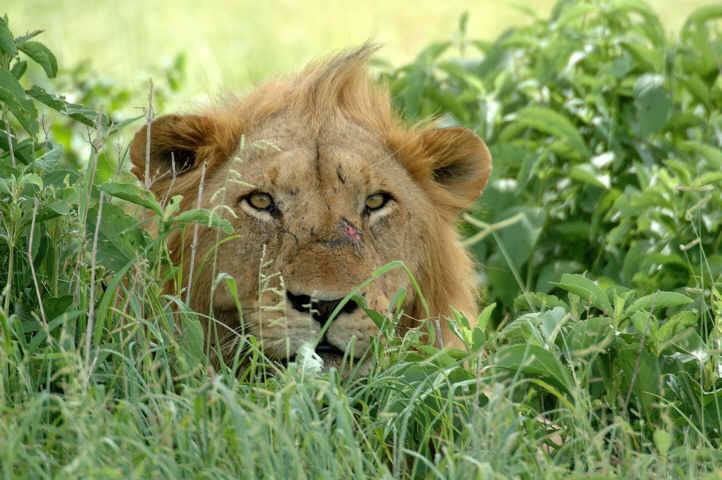
How does the carbon in grass become part of a lion?
a)
The lion eats the grass
b)
Carbon from grass doesn't end up in a lion.
c)
The carbon ends up in the lion's food chain.
d)
The lion breathes in carbon given out by the plant
5.

Define the process shown here:
a)
Carbon Cycle
b)
Respiration
c)
Photosynthesis
d)
Decomposition
6.

What does this image mean?
a)
Sugar
b)
Carbon dioxide
c)
Water
d)
Methylbromine
7.
True or False: All of the carbon in existence is continually recycled in the carbon cycle.
a)
True
b)
False
8.
True or False: Animals decomposing into the ground increases the amount of carbon in the soil.
a)
True
b)
False
9.
The global carbon cycle involves which factors?
a)
the flow of carbon matter and energy from one reservoir to another
b)
the natural processes of photosynthesis and respiration
c)
a holding place for carbon, including the ocean, terrestrial living organisms, soils, sediments and atmosphere
d)
all of the above
10.
Which natural process breaks down dead matter into its chemical and mineral components that can be used by other organisms?
a)
photosynthesis
b)
respiration
c)
decomposition
d)
greenhouse effect
11.
True or False: Deforestation can hurt the carbon cycle.
a)
True
b)
False
12.
How are burning of fossil fuels and volcanic eruptions similar with respect to their effects on the carbon cycle?
a)
Both remove carbon from the atmosphere.
b)
Both add carbon to the atmosphere.
c)
Both add carbon to the lithosphere.
d)
Both remove carbon from the lithosphere.
13.

What number would represent photosynthesis in this diagram?
a)
1
b)
2
c)
3
d)
4
14.
The movement of carbon, in its many forms, between the atmosphere, hydrosphere, biosphere, and geosphere is:
a)
The carbon cycle
b)
The greenhouse effect
c)
Photosynthesis
d)
Weathering
15.
The flow of carbon from the biosphere to the atmosphere would be slowed by reducing the
a)
amount of fertilizer applied to fields.
b)
number of size of forest fires
c)
buildup of carbonate rocks
d)
amount of rain water used for irrigation
16.

What number represents combustion in this diagram?
a)
1
b)
2
c)
3
d)
4
17.
Carbon is stored in
a)
Trees and other living things
b)
Oceans
c)
Underground in soil and fossil fuels
d)
All are correct
18.
Carbon is stored in many areas in the carbon cycle. Select the one location carbon is NOT stored.
a)
fossil fuels
b)
water
c)
atmosphere
d)
sunlight
19.
Which is the greatest carbon reservoir?
a)
Atmosphere
b)
Hydrosphere
c)
Geosphere
d)
Biosphere
20.
Carbon is stored in
a)
Trees and other living things
b)
Oceans
c)
Underground in soil and fossil fuels
d)
All are correct
21.
Examples of fast track carbon cycling are...
a)
diffusion and dissolving
b)
cellular respiration
c)
photosynthesis
d)
all of the above
22.
True or False: Combustion and forest fires also moves carbon from one reservoir to another.
a)
True
b)
False
23.
Carbon in the slow track carbon cycle takes between ______ to move from one reservoir to another.
a)
15-30 days
b)
75-100 years
c)
100-200 billion years
d)
1-2 minutes
24.
Examples of slow track carbon cycling are...
a)
weathering and erosion
b)
fossil fuel formation
c)
decomposition
d)
both weathering and erosion and fossil fuel formation
25.
Carbon is released into the atmosphere through all of the following ways except:
a)
respiration
b)
cow flatulence
c)
photosynthesis
d)
burning fossil fuels
26.
Which of the following are examples of human activities that can alter the global carbon cycle?
a)
planting forests
b)
cutting down forests
c)
plowing up soil during farming
d)
all of the above
27.
Why is the carbon cycle important?
a)
It continuously reuses and recycles carbon in the ecosystem
b)
It helps animals to digest food
c)
It takes nitrogen and oxygen out of the atmosphere
28.

What is happening in step 1?
a)
Animals are decomposing and realizing carbon into the soil.
b)
Animals are releasing energy into the environment and storing carbon.
c)
Animals are turning carbon dioxide from the atmosphere into organic molecules.
d)
Animals are breaking down organic molecules and releasing carbon dioxide into the atmosphere.
29.
Fast track carbon cycling happens within the ___.
a)
atmosphere
b)
biosphere
c)
geosphere
d)
hydrosphere
30.
A carbon "sink" is best described as:
a)
a reservoir that readily releases carbon to another reservoir
b)
a carbon reservoir that stores more carbon that it is releasing
c)
something that causes carbon to leak out to the atmosphere
d)
a carbon reservoir that is releasing more carbon than it is taking in
31.
What role do the oceans play in the carbon cycle?
a)
They have no role
b)
They are a major absorber (sink of carbon dioxide)
c)
both a and b
d)
neither a nor b
32.
Carbon dioxide is created by
a)
Burning fossil fuels
b)
Cellular respiration
c)
Decomposing organic matter
d)
All answers are correct
33.
During photosynthesis, carbon moves from______ to _______.
a)
plant; sky
b)
sky; plant
c)
animal; sky
d)
animal; plant
34.
During respiration, carbon moves from ________ to ________.
a)
plant; animal
b)
plant; sky
c)
animal; sky
d)
sky; animal
35.
Greenhouse gases....
a)
make plants green
b)
increase the temperature of the earth
c)
produce oxygen
d)
decrease the temperature of the earth
36.
What do greenhouse gases do in our atmosphere?
a)
They absorb radiation given off by the Earth
b)
They block harmful radiation from reaching the Earth
c)
They keep all the air within the Earth
d)
They make the Earth cooler
37.
What do scientists think the effect will be of having more greenhouse gases in our atmosphere?
a)
More warming of the atmosphere
b)
More cooling of the atmosphere
c)
More air in the atmosphere
d)
Less air in the atmosphere
38.
True or False: All of the radiation from the Sun is absorbed by the Earth.
a)
True
b)
False
39.
What type of waves get trapped inside the greenhouse?
a)
Sunlight
b)
Ultraviolet
c)
Microwaves
d)
Infrared
40.
Which is a greenhouse gas?
a)
Methane (CH4)
b)
Oxygen (O2)
c)
Hydrogen (H2)
d)
Ammonia (NH3)
41.
If the Earth's atmosphere had no greenhouse gases present in its atmosphere, the temperature of Earth would __.
a)
decrease
b)
increase
c)
remain the same
42.
True or False: Human activity is adding additional greenhouse gases to the amount that are in the atmosphere naturally.
a)
True
b)
False
43.
Which of the following human activities contribute to an increased greenhouse effect?
a)
Harvesting energy from the sun.
b)
Deforestation
c)
Walking to work.
d)
Switching to geothermal powered electricity
44.
True or False: Greenhouse gases, in moderate amounts, keep the Earth's temperature stable.
a)
True
b)
False
45.
Why is the increase of greenhouse gases a big issue?
a)
It causes climate change and increase in the global temerature
b)
It can lead to a major increase in Greenhouses
c)
It leads to more factories
d)
It causes a major decrease in people
46.
As greenhouse gases increase, oceans are becoming _____.
a)
clearer
b)
saltier
c)
more acidic
d)
muddier
47.
Deforestation contributes to greenhouse gases by
a)
loss of trees that would otherwise remove carbon dioxide from the air
b)
as trees are cut, they release carbon dioxide
c)
increasing the amount of oxygen in the air
48.
If you took away the atmosphere’s natural greenhouse effect, and everything else stayed the same, Earth’s temperature would be
a)
10-20°F warmer
b)
30-40°F warmer
c)
10-20°F cooler
d)
50-60°F cooler
49.
True or False: The greenhouse effect is a natural process that allows life to exist on earth.
a)
True
b)
False
50.
Why do greenhouse gases absorb heat?
a)
They consist of only one specific molecule and are rigid in structure all heat to be absorbed.
b)
They consist of 2 or more molecules which makes them rigid in structure allowing heat to bounce off.
c)
They consist of one type of molecule making it flexible allowing heat to be absorbed.
d)
They consist of 2 or more molecules making them flexible and allowing them to absorb heat.
51.
Overall, the concentration of greenhouse gases in the atmosphere has...?
a)
Increased
b)
Decreased
c)
Stayed the same
52.
How are humans making greenhouse gases of our own?
a)
with large-scale agriculture
b)
burning forests
c)
burning fossil fuels in our cars
d)
all of the above
53.

By what amount did carbon dioxide in Earth's atmosphere increase between 1960 and 2000?
a)
40 -50 ppm
b)
60 -70 ppm
c)
110 -120 ppm
d)
360 -370 ppm
54.
This process keeps Earth's temperature suitable for life.
a)
Convection Currents
b)
Greenhouse Effect
c)
Albedo Effect
d)
Water Cycle
55.
The main human activity that releases greenhouse gases is
a)
using bottled water
b)
burning fossil fuels
c)
texting on cellphones
d)
eating meat
56.
Things you can do to help decrease global warming include:
a)
Eat more ice cream.
b)
Keep your freezer door open.
c)
Keep your air conditioner on high.
d)
Turn off your lights when you’re not using them.
57.
Which one of the choices below is NOT a cause of global warming?
a)
Having too many farm animals
b)
Burning Fossil Fuels
c)
Planting new trees
d)
Volcanic eruption
58.
How is the burning of fossil fuels related to global warming?
a)
Photosynthesis
b)
Fuels are hot
c)
Greenhouse effect
59.
The average temperature of the surface of Earth has increased approximately 1°C in the past century. Which reason best explains this increase in temperature?
a)
lower levels of ozone in the atmosphere
b)
lower levels of nitrogen in the atmosphere
c)
higher levels of carbon dioxide in the atmosphere
d)
higher levels of oxygen in the atmosphere
60.
Worldwide, temperatures have been increasing for more than 100 years. Is this evidence of global warming?
a)
yes
b)
no
61.

The graph below shows CO2 emissions and temperatures from 1909 to 1949. What conclusion is best supported by the graph?
a)
There is no relationship between carbon dioxide concentrations and temperatures
b)
As carbon dioxide concentrations increase, temperatures increase
c)
As carbon dioxide concentrations increase, temperatures decrease
d)
As carbon dioxide concentrations decrease, temperatures increase
62.
Climate change may have an impact on the following:
a)
Energy and human health
b)
Air quality, oceans, and coastal zones
c)
Agriculture
d)
All of the above
63.

Why does too much carbon dioxide in the atmosphere cause climate change?
a)
It cools down our planet
b)
It blocks out UV rays
c)
It traps heat and warms up our planet
d)
It lets sunlight escape
64.
If the climate becomes warmer, sea levels will _____________.
a)
rise, but this will have no impact on humans
b)
fall, which will increase the amount of available land
c)
rise, causing some pacific islands to disappear
d)
fall, which will have no impact on humans
65.
What is the average weather for a particular time and region called?
a)
drought
b)
weather
c)
emissions
d)
climate
66.
Which of the following is NOT an affect of Global Warming?
a)
Rain
b)
Disease Spread
c)
Flooding
d)
Heat
67.
Which of the following is NOT an effect of Global Warming?
a)
Polar ice caps will melt.
b)
Coastal regions will be covered with rising sea levels.
c)
Some areas will experience serious droughts
d)
The Earth's rotation will slow down and eventually stop
68.
What is something that you can do to decrease the carbon dioxide in the environment?
a)
Tear down trees
b)
Recycle
c)
Carpool
d)
Start forest fires
69.
Changes in temperature are expected to be greatest _____.
a)
near the equator
b)
near the poles
70.
How do changes in the ocean affect coral reefs?
a)
Warm, acidic water causes coral to bleach and then die
b)
Coral reefs grow faster in warmer water
c)
Warmer water supports fish that like to eat coral, destroying the reefs
d)
Coral reefs aren't affected by changes in temperature and acidity
71.
It was hot all week last week. Is this a sign of climate change?
a)
Yes
b)
No
72.
Melting of glaciers and polar ice caps....
a)
will result in cooler temperatures in the Arctic
b)
will result in sea-levels rising
c)
will have no effect on ecosystems
d)
None of the above
73.
Which of the following is a way that polar bears will be impacted by climate change?
a)
Melted ice will make hunting easier.
b)
Polar bears will face less competition as the climate warms, grizzly bears will stop traveling north.
c)
Increasing numbers and strength of spring rainstorms can cause bear dens to collapse.
d)
Climate change will result in less pollution.
74.
True or False: Melting ice caps have caused sea levels in the north to rise. For the first time in hundreds of years, ships can pass through the fabled Northwest Passage above North America.
a)
True
b)
False
75.
How can tree rings be used to tell what the climate was like in the past?
a)
Pollen found within the rings are indicators of past plant life.
b)
Wider annual rings imply warmer, wetter years.
c)
Gas bubbles within the rings are records of past temperature.
d)
Wider annual rings indicate dry years.
76.
True or False: Industrialization is a contributing factor to climate change.
a)
True
b)
False
77.
Climate change causes extreme weather conditions such as:
a)
excessive heat
b)
drought
c)
extreme storms
d)
all of these
78.
Some of the Earth's most fragile ecosystems that could be greatly impacted by climate change live in the
a)
tropical rainforest
b)
tundra
c)
oceans
d)
African Sahara desert
79.
The goal of mitigation strategies is to
a)
reduce the amount of greenhouse gas emissions
b)
do nothing
c)
increase the amount of greenhouse gas emissions
d)
adjust to the effects of climate change.
80.
Which of the following is an example of a mitigation strategy?
a)
using renewable resources
b)
using non-emissions energy sources
c)
using energy efficient products
d)
all of them
81.
True or False: Climate change can cause increases in asthma, allergies and heart disease.
a)
True
b)
False
82.
How do scientists collect evidence about climate?
a)
using remote sensing from space with satellites
b)
by ground-based measurements of surface temperatures, carbon dioxide concentration and sea level
c)
by collecting “proxy data” from tree rings, ice cores, and historical records
d)
all of the above
100 %

