wayground logo

Free Printable Worksheets

NEW

Font size

S
M
L
XL
Worksheets

Science 14 Unit D Review

Total questions: 77

Worksheet time: 45mins

Name
Class
Date
1.
What property or quality of a substance gives the substance the ability to move, do work, or cause changes?
a)
Energy
b)
Photosynthesis
c)
Glucose
d)
Work
2.
During which process do green plants capture light energy from the Sun?
a)
cellular respiration
b)
photosynthesis
c)
growth
d)
chemical energy
3.
During cellular respiration, ___________ and ___________ are changed into carbon dioxide, water,and energy.
a)
sugar and nitrogen
b)
energy and oxygen
c)
glucose and oxygen
d)
glucose and nitrogen
4.
In a pyramid of energy, how much energy is lost from one level to the next?
a)
50%
b)
90%
c)
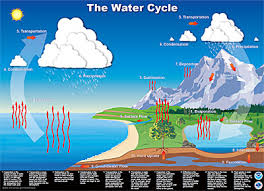
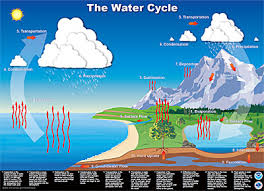
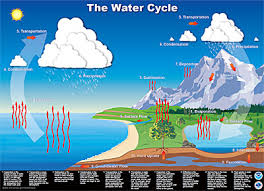
75%
d)
10%
5.
What is one of the main sources of chemical energy for both plants and animals?
a)
carbon dioxide
b)
water
c)
fertilizer
d)
glucose
6.
Which of the following is an example of a decomposer?
a)
worm
worm
b)
rabbit
c)
grass
d)
coyote
7.
Which of the following is an example of a primary consumer?
a)
worm
b)
rabbit
c)
grass
d)
coyote
8.
A food chain is shown in the diagram. For the food chain shown, which of the following changes would have the most severe consequences?
Grasses --> Crickets --> Mice --> Hawks
a)
A drastic decrease in rainfall, causing  drought.
b)
The poaching of predatory hawks by game hunters.
c)
The introduction of a second predator that eats field mice.
d)
A parasitic infestation that reduces the cricket  population.
9.
Grass is consumed by both deer and cows. This is an example of
a)
a food chain
b)
a food web
c)
a trophic level
d)
a decomposer
10.
The concentrations of chemicals (such as DDT) are found to be greater in animals that are higher onthe food chain. What is this called?
a)
biological magnification
b)
poisoning
c)
chemical movement
d)
biological destruction
11.

An organism that can make its own food

a)

decomposer

b)

producer

c)

consumer

12.

Breaks down and feeds on the remains of other organisms

a)

decomposer

b)

consumer

c)

producer

13.

Interacting food chains found in an ecosystem

a)

food web

b)

food chain

c)

predator

14.

An animal that hunts and eats other animals for energy

a)

prey

b)

predator

c)

decomposer

15.

Choose the producer.

a)

rock

b)

tree

c)

cow

d)

bird

16.
A living thing that makes its own food from the sun is a what?
a)
producer
b)
consumer
c)
decomposer
d)
herbivore
17.
An organism that eats both plants and animals is called a what?
a)
herbivore
b)
carnivore
c)
omnivore
d)
decomposer
18.

This an image of what?

a)

mushrooms

b)

decomposers

c)

worms

d)

bacteria

19.
This is the branch of biology that deals with the relations of organisms to one another and to their physical surroundings.
a)
Physics
b)
Ecology
c)
Chemistry
d)
Psychology
20.
It is a biological community of interacting organisms and their physical environment.
a)
Ecosystem
b)
Biotic System
c)
Abiotic System
d)
None of the choices
21.
What is the term used to describe all living things in an ecosystem?
a)
Biotic Factors
b)
Abiotic Factors
c)
Environmental Factors
d)
Population
22.
What is the term used to describe all non-living things in an ecosystem?
a)
Biotic Factors
b)
Abiotic Factors
c)
Environmental Factors
d)
Population
23.
When a plant is eaten by a grasshopper, the grasshopper is called
a)
Producer
b)
Primary consumer
c)
Secondary consumer
d)
Tertiary consumer
24.
When a plant is eaten by a caterpillar and the caterpillar is eaten by a frog, the frog belongs to
a)
Producer
b)
Primary consumer
c)
Secondary consumer
d)
Tertiary consumer
25.
When a plant is eaten by a caterpillar and the caterpillar is eaten by a frog, and the frog is eaten by a snake, the snake belongs to
a)
Producer
b)
Primary consumer
c)
Secondary consumer
d)
Tertiary consumer
26.
When the animal dies, what do you call those organisms that break them down?
a)
Producers
b)
Decomposers
c)
Consumers
d)
None of the choices
27.

In a food web, each ____________ depends on the trophic level below it for energy.

a)

consumer

b)

producer

c)

decomposer

d)

detritivore

28.

What happens to the amount of available energy in the pyramid as it moves up through the different levels?

a)

it increases

b)

it decreases

c)

it remains the same

d)

it decreases, then increases

29.

All of the factors listed are abiotic factors of this underwater ecosystem EXCEPT the

a)

sunlight

b)

water currents

c)

fish population

d)

water temperature

30.

Look at the diagram of the food web. The arrows means “eaten by.”


What will happen if the number of snakes goes down?

a)

The owl will eat the grass

b)

The number of frogs will go down

c)

The hawk and owl will have less food

d)

The number of mice and grasshoppers will go up.

31.

Which organisms would be the energy for the hawk?

a)

rabbit, shrew, and snake

b)

rabbit, snake, and grasshopper

c)

shrew, snake, and insect eating bird

d)

grass, rabbit, and insect eating bird

32.

What happens to the amount of available energy in the pyramid as it moves up through the different levels?

a)

it increases

b)

it decreases

c)

it remains the same

d)

it decreases, then increases

33.

What would happen to the bird if the green fish died out?

a)

the bird population would grow

b)

the bird population would die out

c)

the smaller fish will die out

34.

What is the bottom layer of the an energy pyramid?

a)

producer

b)

tertiary consumer

c)

Secondary consumer

d)

primary consumer

35.

the top layer of an energy pyramid a primary consumer?

a)

true

b)

false

36.

What does an energy pyramid show?

a)

Energy flow in a community

b)

Longest lifespans

c)

The stronger animal the higher it is on the pyramid

37.

What would happen if their were no producers?

a)

Every population would grow larger

b)

Everything would die out

c)

The animals would make their own food

38.

Only eats plants

a)

Herbivore

b)

Carnivore

c)

Omnivore

d)

Decomposer

39.

Only eats meat

a)

Herbivore

b)

Carnivore

c)

Omnivore

d)

Producer

40.

Process through which plants make their own food

a)

Photosynthesis

b)

Autotroph

c)

Biomass

d)

Trophic

41.

What is a food chain?

a)

The flow of energy from one thing to another

b)

The way animals eat each other

c)

The way the sun makes everything

d)

How the plants grow

42.
What animal is on the top of the food chain? 
*Remember Humans are on the top of all food chains because we do not get hunted. 
a)
Grass
b)
Grasshopper
c)
Mouse
d)
Owl
43.
Where does the energy start in this food chain?
a)
Plant
b)
Sun
c)
Deer
d)
Wolf
44.
Which of these organisms would receive energy from the snake?
a)
Plant
b)
Rabbit
c)
Mouse
d)
Hawk
45.
True/False
Food webs show you everything an animal eats. Food chains show you one thing.
a)
True
b)
False
46.
Use the diagram answer the question.
What is a fitting description for this diagram?
a)
A Food Chain
b)
An Ecosystem
c)
A Food Web
d)
Biotic and Abiotic Factors
47.
Use the diagram to answer the question.
The Mayfly is a food source for which 3 organisms?
a)
Frog, Dragon Fly and snake
b)
Frog, trout and dragon fly
c)
Frog, salamander and trout
d)
Frog and phytoplankton
48.
The direction of the flow of energy in a food web is represented by ___.
a)
Light bulbs
b)
Dotted Lines
c)
Arrows
d)
Bubbles
49.
Which of the following is NOT a consumer
a)
grass
b)
dog
c)
shark
d)
fish
50.
A frog eats a fly. The frog and fly are demonstrating ________.
a)
mutualism
b)
competition
c)
predator/prey
d)
parasitism
51.
What percentage of energy is passed on to each tropic level?
a)
10%
b)
50%
c)
90%
d)
100%
52.

Which example is a form of precipitation?

a)

Dew

b)

Fog

c)

Frost

d)

Hail

53.

In which area would the rate of evaporation be the lowest?

a)

Over the ocean

b)

Over the mountains

c)

Over the rainforest

d)

Over the desert

54.

The image shows various stages in the water cycle. During which stage does water flow back towards the sea as runoff?

a)

W

b)

X

c)

Y

d)

Z

55.
What is it called when plants give off water vapor as a waste product?
a)
condensation
b)
evaporation
c)
sublimation
d)
transpiration
56.
During which stage do clouds form?
a)
condensation
b)
evaporation
c)
precipitation
57.
Which stages does liquid water from the ocean turn into water vapor?
a)
condesantion
b)
evaporation
c)
precipitation
d)
run off
58.
Which stage does ground water try to return to the ocean or soak into the ground?
a)
condensation
b)
evaporation
c)
precipitation
d)
run off
59.
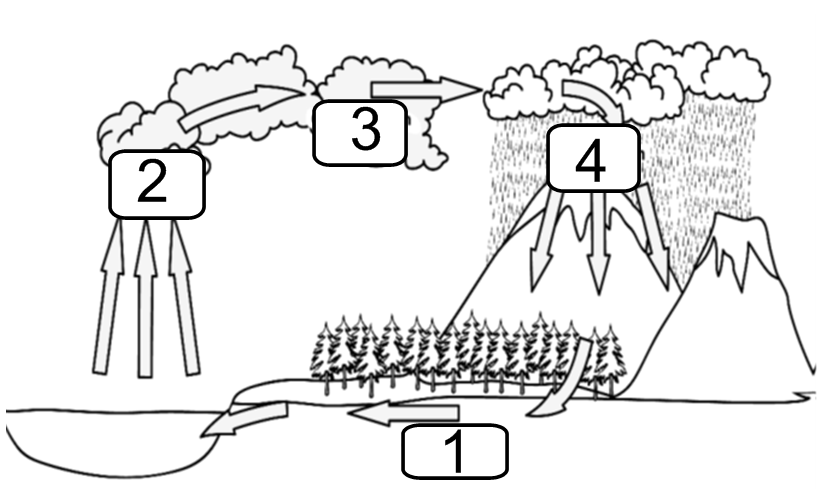
Which stage does the #2 show in the diagram?
a)
condensation
b)
evaporation
c)
precipitation
d)
run off
60.
Which stage does the #3 show in the diagram?
a)
condensation
b)
evaporation
c)
precipitation
d)
run off
61.
what does the #4 show in the diagram?
a)
condensation
b)
evaporation
c)
precipitation
d)
run off
62.
Organisms that break down dead plants & animals and release nitrogen back into atmosphere...
a)
bacteria
b)
plants
c)
animals
d)
producers
63.
Organisms that need nitrogen to survive
a)
only plants
b)
only animals
c)
only bacteria
d)
all living organisms
64.
Plants and animals cannot use nitrogen directly from the air.
a)
True
b)
False
65.
What happens when organisms die and decay? 
a)
Their bodies are lifted up
b)
Their nitrogen returns to the soil
c)
they keep their nitrogen
d)
They stay on earth forever
66.
Nitrification happens in the ______
a)
Air 
b)
Soil 
c)
Ground Water 
d)
Plants 
67.

Temperature is a _________factor

a)

Biotic

b)

Abiotic

c)

living

d)

cool

68.

Over time a parasite will weaken or sicken the host.

a)

True

b)

False

69.
 What is the reference point used to measure elevation?
a)
lake level
b)
sea level
c)
zero
d)
elevation
70.
What are the two main factors that determine the climate of an area?
a)
precipitation and humidity
b)
temperature and air pressure
c)
wind conditions and humidity
d)
temperature and precipitation
71.
What are the surface features of an area called?
a)
latitude
b)
longitude
c)
topography
d)
elevation
72.
What is the measure of distance in degrees north and south from the equator?
a)
latitude
b)
longitude
c)
elevation
d)
topography
73.
What is the height of an area above sea level?
a)
elevation
b)
topography
c)
latitude
d)
longitude
74.
What is this biome?
a)
Coniferous Forest
b)
Desert
75.
What is this biome?
a)
Grassland
b)
Desert
76.

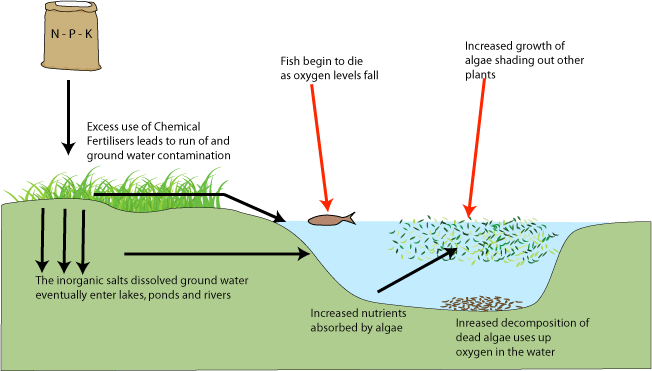
An increase in the amount of nutrients in a lake is known as

a)

calcification

b)

cellular respiration

c)

eutrophication

d)

photosynthesis

77.

Which organism in the food web shown to the right would

contain the highest concentration of chemical pollutants?

a)

Producers

b)

Primary consumers

c)

Secondary consumers

d)

Tertiary consumers