wayground logo

Free Printable Worksheets

NEW

Font size

S
M
L
XL
Worksheets

Earth's Rock Cycle

Total questions: 27

Worksheet time: 1hrs 5mins

Name
Class
Date
1.
Occurs when rock particles or sediments are pressed together or packed down by gravity and the pressure of overlying rock layers.
a)
Compaction
b)
Ocean trench
c)
Rock cycle
d)
Plate tectonic theory
e)
Earth's evolution
2.
Occurs when compacted sediments stick together and turn into rock.
a)
Cementation
b)
Magma
c)
Volcanic eruption
d)
Metamorphic rock
e)
Compaction
3.
The process by which gravity, water, wind, and ice deposit weathered and relocated sediment.
a)
Deposition
b)
Sedimentary rock
c)
Ocean trench
d)
Magma
e)
Erosion
4.

The process by which water, ice, wind, and gravity remove and transport sediment from one place to another.

a)

Erosion

b)

Heat and pressure

c)

Igneous rock

d)

Mineral composition

e)

Sedimentary rock

5.
Changing variables due to the weight of overlying rocks, causing changes to rock characteristics and mineral composition, thus forming metamorphic rocks.
a)
Heat and pressure
b)
Volcanic eruption
c)
Earth's evolution
d)
Compaction
e)
Sedimentary rock
6.
Formed when lava or magma cools and solidifies. Lava cools quickly and forms rocks with small crystals, while magma cools more slowly and forms rocks with larger crystals.
a)
Igneous rock
b)
Plate tectonic theory
c)
Deposition
d)
Erosion
e)
Plate tectonic theory
7.
Metamorphic rock is formed deep underground where heat and pressure cause existing rocks to be changed in both mineral composition and structural characteristics.
a)
Metamorphic rock
b)
Weathering
c)
Sedimentary rock
d)
Volcanic eruption
e)
Mineral composition
8.
Earth's rocks change from one type into another over time due to various Earth processes. Changes occur in mineral compositions and physical structures.
a)
Rock cycle
b)
Igneous rock
c)
Mineral composition
d)
Sedimentary rock
e)
Weathering
9.
Forms when particles of other rocks are deposited in layers and are compacted (crushed together), and cemented (binding of the sediments).
a)
Sedimentary rock
b)
Cementation
c)
Plate tectonic theory
d)
Mountain
e)
Rock cycle
10.
The mechanical or chemical processes that break rocks into smaller pieces, and sometimes change the chemical composition.
a)
Weathering
b)
Earth's evolution
c)
Erosion
d)
Cementation
e)
Deposition
11.

What happens to a rock when it is weathered?

a)

It is broken into smaller pieces.

b)

It is moved by wind, air, or water.

c)

It comes to rest at the end of a river.

d)

It is changed into another type of rock.

12.

Identify two processes labeled in this rock cycle that must occur in order to change any rock into an igneous rock.

a)

heat and/or pressure

b)

weathering and erosion

c)

melting and solidification

d)

deposition and cememtation

13.

Identify two processes labeled in this rock cycle that change igneous rock into sediments.

a)

heat and/or pressure

b)

melting and solidification

c)

deposition and cementation

d)

weathering and erosion

14.

Identify two processes required for the formation of a sedimentary rock.

a)

heat and/or pressure

b)

melting and solidification

c)

deposition and cementation

d)

weathering and erosion

15.

What type of rock forms directly from magma?

a)

Igneous Rock

b)

Sedimentary Rock

c)

Metamorphic Rock

16.

What type of rock forms directly from heat and/or pressure?

a)

Igneous Rock

b)

Sedimentary Rock

c)

Metamorphic Rock

17.

What type of rock forms directly from Deposition, Compaction, and Cementation?

a)

Igneous Rock

b)

Sedimentary Rock

c)

Metamorphic Rock

18.

According to this diagram, metamorphic rock is formed by

a)

melting and solidification

b)

burial and compaction

c)

weathering and erosion

d)

heat and pressure

19.

Which letter on the diagram shows pieces of igneous rock are compressed and glued together to form a sedimentary rock.

a)

A

b)

B

c)

C

d)

D

20.

Which letter on the diagram shows metamorphic rock becomes liquid and crystallizes to form igneous rock.

a)

E

b)

F

c)

G

d)

H

21.

Which letter on the diagram shows sedimentary rock is broken down into sediments and transported by a stream.

a)

A

b)

B

c)

C

d)

D

22.

Rocks formed under great pressure but no heat are _____.

a)

igneous

b)

metamorphic

c)

sedimentary

d)

sediment

23.

A rock that has cooled fast and may look like glass.

a)

igneous

b)

metamorphic

c)

sedimentary

d)

sediment

24.
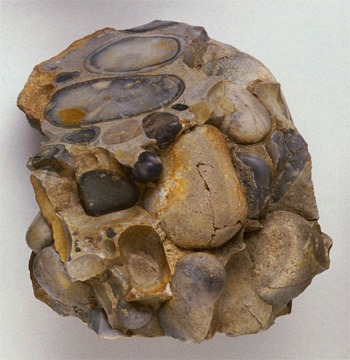
This rock was formed by smaller pieces of rock that settled at the bottom of a lake millions of years ago. What type of rock is this?
a)
Sedimentary
b)
Igneous
c)
Metamorphic
25.
Which type of rock results from melting and cooling of magma?
a)
Igneous
b)
Metamorphic
c)
Sedimentary
d)
Extrusive
26.
A metamorphic rock changes into an igneous rock by what two processes?
a)
Melting and cooling
b)
Extreme heat and pressure
c)
Compaction and cementation
d)
Weathering and erosion
27.
The name rock is given when it is broken down into smaller pieces.
a)
texture
b)
weathering
c)
sediment
d)
erosion