
 Worksheets
Hieroglyphs and Papyrus
Total questions: 200
Worksheet time: 5hrs 25mins

Solve this picture puzzle
Eye bug green you
I believe you
Eye beegreen you
See believe you

Solve this picture puzzle
Foot Key Oh Japan
Foot Keyoh Jametal
Toe Keyoh Jacook
Tokyo Japan
Say this abbreviation out loud :
"mtn"
What word does it sound like?
moving
maintain
mountain
moon
Say this abbreviation out loud :
"blvd"
What word does it sound like?
boulevard
building
blood
blurred
In which direction(s) did the ancient Egyptians read hieroglyphics?
✳️ Select all that apply ✳️
Left to right
Right to left
How did the Egyptians know the direction in which they should read hieroglyphics?
They used trial by error
They looked at the direction that human an animal symbols faced
They always read from left to right
They always read from right to left
TRUE or FALSE: Hieroglyphics could be written in rows and columns.
TRUE
FALSE
Which statement below best describes hieroglyphics?
A type of art using letters and sounds
A form of writing using picture symbols
A fancy way of writing the Greek alphabet
A type of writing similar to cursive
Who were the people that were specially trained to read and write hieroglyphics?
Pharaohs
Priests
Scribes
Accountants
True or False: Most of the Egyptian people were taught to read and write.
True
False
What type of plant did the Egyptians use to make their paper?
Papyrus
Wheat
Lotus
Palm leaves
What was special about the Rosetta Stone?
It had all of the hieroglyphic symbols written in one place
It described how to tell which direction hieroglyphics were written
It gave a detailed history of the early formation of the Ancient Egyptian civilization
It had the same message written in both the Greek language and hieroglyphics
How was hieroglyphics different from the way we write today?
It can be written in any direction
A symbol can represent a full word or a sound
There is no punctuation
All of the above
Who was the famous scribe who also architected the first pyramid?
Menes
Djoser
Tutankhamun
Imhotep
Why would someone in Ancient Egypt want to become a scribe?
Because it was a good job
Scribes did not have to pay taxes
Scribes did not have to join the army
All of the above
How long ago did the Egyptians invent hieroglyphic writing?
Around 2000 years ago
Around 3000 years ago
Around 4000 years ago
Around 5000 years ago
What is it called when a letter or symbol represents a picture or concept rather than a sound?
An ideogram
A gramophone
Calligraphy
A phonogram
Which choice best describes the evolution of hieroglyphic writing?
Pictographs, cuneiform, ideographs
Ideographs, pictographs, phonograms
Pictographs, Ideographs, latin
Pictographs, ideographs, phonographs
The final evolution of Egyptian Hieroglyphics represent
Phonographs
Ideographs
Pictographs
Cuneiforms

This image is an example of a ________ hieroglyph
This hieroglyphic represents a skunk
Pictogram
Ideogram
Phonogram
Why was the Rosetta Stone important?
It was a stone with the Egyptians’ first laws
It was a stone that had a message written on it in both Latin and Egyptian hieroglyphics, and scholars could read Latin which allowed scholars to interpret the hieroglyphics
It was a stone that had a message written on it in both Greek and Egyptian hieroglyphics, and scholars could read Greek which allowed scholars to interpret the hieroglyphics
It is a stone with the names of all Old Kingdom Pharaohs

This image is an example of a __________ hieroglyph
This hieroglyphic represents the b sound as in bear
pictograph
ideograph
phonograph

This image is an example of a _________ hieroglyph
This hieroglyphic represents lazy
pictograph
ideograph
phonogram

This image is an example of
Cuneiforms
Hieroglyphics
Sanskrit
Characters

This image is an example of
Hieroglyphics
Cuneiforms
Sanskrit
Latin

This is the writing system of which ancient civilization?
Greeks
Romans
Egyptians
Mesopotamians

This is the writing system of which ancient civilization?
Greeks
Romans
Egyptians
Mesopotamians

This image is
Ziggurat
Great Pyramid in Giza
Temple of Re
Step Pyramid in Saqqara

What was this image used for
A tomb to store the pharaoh's body and possessions
A temple to worship the Pharaoh Khufu
A temple built to honor Hatshepsut
To help the Egyptians identify the star Sirius

This was built for...?
Djoser
Tutankhamen
Khufu
Hatshepsut

This image is
Ziggurat
Griffin
Sirin
Sphinx

What was the purpose of this image? ( 2 answers)
It is a great example of Ancient Egyptian engineering abilities.
It was built to scare away grave robbers
To symbolize the power of the people of Egypt
To make the pharaohs look more powerful

This was built for...?
Khufu
Ramses II
Djoser
Tutankhamen

This is located in......
Cairo
Karnak
Saqqara
Giza

This is located in .........
Giza
Cairo
Saqqara
Thebes

What is this image called?
Step Pyramid
Sphinx
Mastaba
Pyramid

This image is
Temple of Hatshepsut
Temple of Amun-Re
Pyramid
Palace of Ramses II

This image is of
cotton
linen
papyrus
flax

What was this image used for?
A floor mat to wipe off your feet on
A piece of linen cloth to make clothes out of
To record information & communication
A piece of cotton cloth to make clothes out of
Which stone included a Greek translation that enabled our understanding of hieroglyphics?
Nicea
Cairo
Rosetta
The Ancient Egyptians believed that hieroglyphics were create by
(a)

What writing is this?
Alphabet
Rome's writing
Hieroglyphic writing
What is the hieroglyphics written on?
Papyrus
Rosetta stone
Paper

What letter is this in hieroglyphics?
C
Z
A
B
Q
The phonetic hieroglyphics alphabet is the alphabet that most closely resembles the
Rome alphabet
English alphabet
Latin alphabet
Hieroglyphics are found on
Seals, plaques, tombs, pottery and walls
Furniture
Pyramids
Hieroglyphics provide information on
Machinery
Beliefs, Gods, Clothing, everyday life and culture
Food
Hieroglyphics was a writing system that involved at least...
200 glyphs
500 glyphs
700 glyphs
3000 glyphs
What direction were hieroglyphics written in?
left to right
right to left
top to bottom
any direction
Which of the following was NOT a benefit of being a scribe?
Scribes were some of the only Egyptians that knew how to read and write hieroglyphics.
Scribes didn't have to pay taxes.
Scribes didn't have to serve in the army.
Scribes had easy jobs.
What was the paper that Ancient Egyptians wrote on?
papyrus
hieroglyphics
cartouche
glyph
What was a cartouche?
Egyptian writing
an oval with pictures of important events
a giant statue honoring the gods
an ancient Egyptian hieroglyphic name plate
Why did Egyptians believe that they should mark their tomb and/or coffin with their cartouche?
So that people could honor them
So that their two souls could meet back at the body in the afterlife
To show that they were wealthy
To display their favorite pictures
The meaning of hieroglyphics was a mystery for approximately ________ years.
1500
1799
3000
30
Why was the Rosetta Stone so important?
It was beautiful.
It told the story of a powerful king.
It taught modern people how to read hieroglyphics.
It was found by a French soldier.
Which language was NOT on the Rosetta Stone?
hieroglyphics
demotic
Greek
Latin
_________________ is the person credited with deciphering the Rosetta Stone, and ________________ helped in this effort by recognizing famous cartouches on the stone.
Jean-Francois Champollion; Thomas Young
Jean-Francois Champollion; King Ptolemy
Queen Berenice; Thomas Young
King Ptolemy; Queen Berenice
What is the written language used by Egyptians called?
cuneiform
hieroglyphics
script
cursive
What direction were hieroglyphics written in?
left to right
right to left
top to bottom
any direction
Hieroglyphics had no punctuation.
True
False
Hieroglyphics were expected to be _______________, as well as to be a tool for ________________.
ugly, communication
beautiful, talking
beautiful, communication
ugly, talking
Which of the following was hieroglyphics NOT written on?
papyrus
cave walls
tablets
tombs
Which shape was a cartouche?
circle
triangle
oval
rectangle
The magical rope at the bottom of the cartouche protected who?
gods
pharaohs
king
the persons who name was on it
The cartouche was believed to be a _______________.
protective symbol
afterlife symbol
written document
warning to evil
What type of informational text is this?
Technical
Scientific
Historical
Informational
Which detail from the text supports your answer to question 1?
Hieroglyphics is a language from ancient Egypt and the text discusses the history of Egypt.
The text teaches me how to read Hieroglyphics.
The text has pictures that show me what Hieroglyphics looked like.
The text tells me about the life of the inventor of Hieroglyphics.
Which of the following briefly explains the actions that led to hieroglyphics being translated?
Scribes were the only people thoroughly trained in how to write hieroglyphics. These people went to special schools for many years t o practice the art of hieroglyphics.
Hieroglyphics were pictures, so everyone could read them easily.
There are over 700 hieroglyphics. They can be written in any direction and do not have vowels. There also was not any punctuation or spaces.
In 1799 the Rosetta Stone was found. It was one passage written in three languages. In 1822 Jean-Francois Champolion used the Demotic and Greek parts to help him translate the part with hieroglyphics.
What did Pharaohs believe was the effect of having their names written in their tombs?
They would be remembered, thus surviving in the afterlife.
They thought it was bad luck and did not want their names written.
They thought no one would be able to read their names if they were written in hieroglyphics.
They thought it would cause them to become wealthy.
Which of the following explains the concepts behind only having scribes trained in how to write hieroglyphics?
Since scribes were the only ones trained in how to write hieroglyphics the Egyptians thought their language would never be able to be translated.
The Pharaohs wanted the scribes to be the only ones who were able to write hieroglyphics.
Scribes were usually wealthy. Since many people weren't able to do it, it kept the position of a scribe well respected and wanted. It may have also been a way for royalty to keep their secrets safe from others.
The scribes were the only people who were smart enough to understand how to properly write the hieroglyphics.
What do you think happened to this language? Use the text to help you infer these ideas.
The language is still around and used today.
The language was too complicated so they decided to use English instead.
The Egyptians decided to use emojis and that is why we use them today.
Since very few people knew the language it probably died off.
Which of the following do the pictures in hieroglyphics represent?
Objects
Actions
Sounds
Words
All of the above
How were hieroglyphics read?
Left to right
Right to left
Top to bottom
Depended on the pictures
In which of the following places were Hieroglyphics NOT found:
Tombs
Papyrus
Carved into stone
Written on mummies
Today, scholars are able to understand hieroglyphics because of the:
Rosetta Stone
Internet
Demotic
Scribes
The __________ is carved into the Rosetta stone three times.
name of the pharaoh
history of ancient Egypt
same passage of writing
name of the author of the Rosetta stone
The word hieroglyph means:
picture writing
holy writing
animal writing
ancient writing
Scribes were very ___________ in ancient Egypt.
common
rare
respected
well dressed
B and C
How long did it take to become a scribe?
five years
one year
700 days
ten to twelve years
Scribes wrote in which of the following languages?
hieroglyphics
hieratic
demotic
all of the above
The language of the common people was:
hieroglyphics
hieratic
demotic
none of the above
Which of the following did scribes NOT do?
record everyday events
record important events
keep accounts
document oral traditions
invent new hieroglyphs

The Ancient Egyptians had no separate word for “art”, their word for “art” was the word for“ ___________”.
music
writing
legal
cooking

This Egyptian “alphabet” was made up of about 800 ___________-symbols called Hieroglyphics .
picture
music
numerical
historical

The word Hieroglyphics means “___________ writing” and the Egyptians believed that they conveyed the words of the gods.
important
regular
sacred
unimportant

Hieroglyphics also helped to ____________ the memory of deceased people.
forget
praise
preserve
picture
The Hieroglyphics writing system was created to help ______________ keep track of government records, taxes and the passage of time.
Mesopotamians
Celtics
Irish
Egyptians

Papyrus is the earliest form of paper and was made from the papyrus _________ that grew in the Nile.
seed
bush
roots
reed

The reeds would be crisscrossed and ___________ down to a paper-like thickness.
grinded
pounded
torn
stretched
Only Scribes could read or write _______________, they were the Pharaoh’s record keepers and were very Educated in reading, writing & math.
Hieroglyphics
French
Celt
Cuneiform

Much like in Mesopotamia, scribes were highly respected and only boys could become ____________.
merchants
engineers
entertainers
scribes
Scribes started training at the age of 10 and wrote on rolls of _____________.
papyrus
linen
clay
stone

Hieratic: The form of script writing that the ___________ people of Egypt used.
common
elite
powerful
unknown

Eventually, the responsibility of reading & interpreting the HIEROGLYPHS fell to the __________.
farmers
engineers
priests
tailors
True or False-Even SCRIBES lost the ability to read the ancient symbols.
True
False

By _______ AD, no one could read the HIEROGLYPHS anymore.
2000
400
600
70

The ____________ Stone was the key that unlocked the mysteries of Egyptian hieroglyphics.
Cuneiform
Power
Key
Rosetta

True or False-Napoleon's troops discovered the Rosetta Stone in 1999.
True
False

The inscription on the Rosetta Stone is written on the stone three times, once in _______________, once in hieratic, and once in Greek.
hieroglyphic
English
German
Sumerian

Jean Francois Champollion, a French Egyptologist, _______________ the hieroglyphic and hieratic texts by comparing them with the known Greek text.
copied
erased
presented
deciphered

What Egyptian Hieroglyph does the 2nd picture signify?
B
C
A
Q
Draw the hieroglyph letter 'Z' above.

What are hieroglyphs?
They are drawings.
They are nothing.
They are alphabets.
They are Egyptian alphabets.

What alphabet does the 21st picture describe?
U
B
S
T

Which alphabet does the last (26th) picture describe?
S
B
D
None

From what letter does your name start? Write the picture Number in the section below. (In the format:
"Q= Picture no. 17.")
Honest feedback.
How was our quiz and PPT?

What is the meaning of this ancient Egyptian symbol?
the key to the Underworld
the key to life
the key to the heavens
the symbol of truth

What is the meaning of this ancient Egyptian symbol?
the symbol of truth and balance
the symbol of life and death
the symbol of power and protection
the symbol of power and truth

What is the meaning of this ancient Egyptian symbol?
the symbol of death
the symbol of sleep
the symbol of water
the symbol of the heavens

What is the meaning of this ancient Egyptian symbol?
the symbol of death
the symbol of life
the symbol of strength
the symbol of the heavens

What is the meaning of this ancient Egyptian symbol?
It is the symbol of a person's personality, remaining with its body after death.
It is the symbol of a person's inner spirit.
It is the symbol for a person's soul that is created at birth.
It is the symbol for a person's spirit that travels to the Duat.
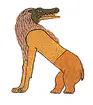
What is the meaning of this ancient Egyptian symbol?
It is the soul-eater.
It is the one who judges the dead.
It is the one that protects the pharoahs.
It is the one who protects the dead.

What is the meaning of this ancient Egyptian symbol?
the symbol of strength
the symbol of the inner soul and spirit
the symbol of the pharaoh's power
the symbol of creation and rebirth

What is the meaning of this ancient Egyptian symbol?
It is the symbol of protection for a name.
It is the symbol of power.
It is the symbol for the judgment of the dead.
It is the symbol of healing and protection.

What is the meaning of this ancient Egyptian symbol?
It is the symbol of the dying body.
It is the symbol of creation and rebirth.
It is the symbol of the rising sun.
It is the symbol of the dying sun.

What is the meaning of this ancient Egyptian symbol?
It is the symbol of a person's spirit that remains with the body after death.
It is the symbol of the first spirit that is named at creation.
It is the symbol of the eternal spirit that travels to the Duat.
It is the symbol of the pharaoh's power and protection.

What is the meaning of this ancient Egyptian symbol?
It is the symbol of truth and balance.
It is the symbol of life after death.
It is the symbol of a pharaoh's power.
It is the symbol of the heavens.

What is the meaning of this ancient Egyptian symbol?
It is the symbol of the Duat (Underworld).
It is the symbol of a pharaoh's power.
It is the symbol of eternity.
It is the symbol of protection for a name.
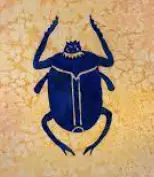
What is the meaning of this ancient Egyptian symbol?
It is the symbol of power.
It is the symbol of immortality.
It is the symbol of death.
It is the symbol for the soul-eater.

What is the meaning of this ancient Egyptian symbol?
It is the symbol for the Duat / Underworld.
It is the symbol of a pharaoh's protection.
It is the symbol of the heavens of immortality.
It is the symbol for the pharaoh's eternal rule.

What is the name for this ancient Egyptian symbol?
the ka
the ba
the ankh
the akh

What is the name for this ancient Egyptian symbol?
ammut
ankh
udjat
sesen

What is the name for this ancient Egyptian symbol?
ka
ankh
akh
amenta

What is the name for this ancient Egyptian symbol?
ammut
sesen
amenta
shabti
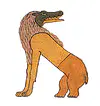
What is the name for this ancient Egyptian symbol?
pet
amenta
ammut
udjat

What is the name for this ancient Egyptian symbol?
akh
ankh
ka
ba

What is the name for this ancient Egyptian symbol?
ammut
udjat
shen
cartouche

What is the name for this ancient Egyptian symbol?
shen
ma'at
sesen
udjat

What is the name for this ancient Egyptian symbol?
pet
akh
ka
ba

What is the name for this ancient Egyptian symbol?
pet
ankh
amenta
ammut
Title used by Egyptian rulers
pharaoh
Ka
dynasty
obelisk

On what continent is Egypt?
Asia
Africa
Europe
North America

A plant that grew thickly in the marshes of Egypt & was used for making paper.
reed
bamboo
papyrus
cattail

What is the ancient Egyptian form of writing?
cuneiform
hieroglyphics
Sanskrit
Greek

What was papyrus used for?
wrapping mummies
building coffins
making clay
to write on
What is polytheism?
belief in 1 god
belief in female gods
belief in only a male god
belief in more than 1 god

What is the object seen in the picture?
pyramid
Rosetta Stone
sphinx
mummy's sarchopahgus

What are hieroglyphs?
Text messages that Egyptians would send
A set of pictures and symbols used for writing
Art the ancient Egyptians used to make
cave drawings

What is the rosetta stone?
a stone that has writing in hieroglyphics and Greek that helps us understand Ancient Egyptian writing
a big rock
a place to eat
a stone the ancient Egyptians used play games with


A plant that grew thickly in the marshes of Egypt & was used for making paper.
reed
bamboo
papyrus
cattail
What is the ancient Egyptian form of writing?
cuneiform
hieroglyphics
Sanskrit
Greek
What was papyrus used for?
wrapping mummies
building coffins
making clay
to write on
What are hieroglyphs?
Text messages that Egyptians would send
A set of pictures and symbols used for writing
Art the ancient Egyptians used to make
cave drawings

Can you identify this hieroglyph?
A
B
C
D

Can you identify this hieroglyph?
M
N
O
P

What is the English equivalent for this Egyptian hieroglyph?
O
S
T
R

What is the English equivalent for this Egyptian hieroglyph?
J
U
F
Ch

What is the English equivalent for this Egyptian hieroglyph?
A
E
O
L

What is the English equivalent for this Egyptian hieroglyph?
M
S
L
P

What is the English equivalent for this Egyptian hieroglyph?
Z
B
Kh
M

What is the English equivalent for this Egyptian hieroglyph?
H
O
N
B

What is the English equivalent for this Egyptian hieroglyph?
M
K
E
N

What is the English equivalent for this Egyptian hieroglyph?
S
F
K
J

What is the English equivalent for this Egyptian hieroglyph?
B
L
P
A

What is the English equivalent for this Egyptian hieroglyph?
B
O
X
M

What is the English equivalent for this Egyptian hieroglyph?
S
Sh
P
L

What is the English equivalent for this Egyptian hieroglyph?
A
T
D
U

What is the English equivalent for this Egyptian hieroglyph?
K
N
B
T

What is the English equivalent for this Egyptian hieroglyph?
O
P
H
S

What is the English equivalent for this Egyptian hieroglyph?
X
Ch
Sh
Kh

What is the English equivalent for this Egyptian hieroglyph?
V
B
M
A

What is the English equivalent for this Egyptian hieroglyph?
G
P
S
H

What is the English equivalent for this Egyptian hieroglyph?
Sh
K
Kh
Ch

What is the English equivalent for this Egyptian hieroglyph?
P
T
M
C

What is the English equivalent for this Egyptian hieroglyph?
N
Y
U
J

What is the English equivalent for this Egyptian hieroglyph?
100
1,000
10,000
100,000

What is the English equivalent for this Egyptian hieroglyph?
10
100
1,000
10,000

What is the English equivalent for this Egyptian hieroglyph?
100
1,000
10,000
100,000

What is the English equivalent for this Egyptian hieroglyph?
100
1,000
10,000
1,000,000

What is the English equivalent for this Egyptian hieroglyph?
1,000
10,000
100,000
1,000,000

What is the English equivalent for this Egyptian hieroglyph?
10
100
1,000
10,000
What were the symbols used in ancient Egyptian writing called?
Hieroglyphs
Alphabets
Phonetics
Pictograms
What does the word 'hieroglyphs' mean?
Egyptian symbols
God's language
Sacred carving
Ancient writing
What was the purpose of the Rosetta stone?
To translate hieroglyphs into Greek
To decipher the hieroglyphic code
To record ancient Egyptian laws
To preserve ancient Egyptian language
Who were the people responsible for writing hieroglyphs?
Pharaohs
Scribes
Priests
Scholars
How many different signs did hieroglyphs include?
1000
700
500
300
What inspired the first alphabets, including the Latin alphabet?
Symbols
Phonetics
Pictograms
Hieroglyphs
In what directions could hieroglyphs be written?
Left to right and right to left
Clockwise and counterclockwise
Vertically and horizontally
Top to bottom and bottom to top
What shape did the ancient Egyptians use to write the names of gods and royal people?
Square
Circle
Oval
Triangle
Where are hieroglyphics found on ancient Egyptian remains?
Walls and papyrus
All of the above
Tombs and pottery
Seals and plaques
What do hieroglyphics tell us about ancient Egypt?
All of the above
Culture and written records
Clothing and everyday life
Beliefs and gods
What did the ancient Egyptians use to record laws, taxation, and government business?
Hieroglyphs
Papyrus and writing boards
Seals and plaques
Tombs and pottery
What information do written records of ancient Egypt provide?
Information about the beginning of history
Information about Stonehenge
Information about ancient Greek
Information about ancient Rome
What is the closest version of the ancient Egyptian alphabet to our modern English alphabet?
Pictorial hieroglyph alphabet
Phonetic hieroglyph alphabet
Symbolic hieroglyph alphabet
Greek hieroglyph alphabet
What did the oval shape used for writing names represent?
An ancient Egyptian god
A sacred carving
A rope with special powers
An evil spirit
What did the ancient Egyptians not have symbols for in their alphabet?
Punctuation marks
Consonants
Vowels
Numbers

