
 Worksheets
CHAPTER REVIEW : Human Circulatory System
Total questions: 70
Worksheet time: 1hrs 10mins
What are the four main chambers of the heart?
right atrium, right atrium, left ventricle, left ventricle
upper chamber, lower chamber, left chamber, right chamber
aorta, pulmonary artery, left atrium, right ventricle
right atrium, right ventricle, left atrium, left ventricle
What is the primary function of the heart?
To pump blood throughout the body.
To digest food and absorb nutrients.
To produce hormones for growth and metabolism.
To filter waste from the blood.
Name the three types of blood vessels.
arteries, veins, lymphatics
arteries, capillaries, plasma
veins, capillaries, red blood cells
arteries, veins, capillaries
What is the role of arteries in the circulatory system?
Arteries transport oxygenated blood from the heart to the body.
Arteries help in the absorption of nutrients.
Arteries carry deoxygenated blood to the heart.
Arteries are responsible for filtering blood.
How does hypertension affect the circulatory system?
Hypertension negatively impacts the circulatory system by increasing arterial pressure, damaging blood vessels, and raising the risk of heart disease and stroke.
Hypertension only affects the respiratory system, not the circulatory system.
Hypertension has no effect on blood vessels or heart health.
Hypertension improves blood flow and reduces heart strain.
What are the main components of blood?
Red blood cells, white blood cells, platelets, and plasma.
Plasma, electrolytes, and enzymes.
Red blood cells, white blood cells, and hormones.
Muscle cells, nerve cells, and connective tissue.
What is the function of red blood cells?
Store nutrients in the body.
Fight infections and diseases.
Transport oxygen and carbon dioxide in the body.
Regulate body temperature.
How is oxygen transported in the blood?
Oxygen is dissolved in plasma and transported directly to tissues.
Oxygen is carried by white blood cells throughout the body.
Oxygen is stored in the liver and released into the bloodstream as needed.
Oxygen is transported in the blood mainly by hemoglobin in red blood cells.
Describe the process of circulation in the body.
The heart only pumps deoxygenated blood to the body.
Oxygen-rich blood is sent directly to the lungs without passing through the heart.
Blood circulates through the body without the heart's involvement.
The circulation process involves the heart pumping oxygen-rich blood to the body and returning deoxygenated blood to the lungs.
What is the difference between systemic and pulmonary circulation?
Systemic circulation is responsible for gas exchange in the lungs.
Pulmonary circulation carries oxygen-rich blood to the body.
Systemic circulation involves the body, while pulmonary circulation involves the lungs.
Systemic circulation only occurs during exercise.
What is the function of veins in the circulatory system?
Veins filter toxins from the blood before they reach the heart.
Veins are responsible for pumping blood throughout the body.
Veins carry oxygenated blood away from the heart.
The function of veins is to return deoxygenated blood to the heart.
How do capillaries facilitate nutrient exchange?
Capillaries facilitate nutrient exchange through their thin walls, allowing diffusion of nutrients and waste between blood and tissues.
Capillaries are thick-walled vessels that prevent nutrient exchange.
Nutrient exchange occurs primarily in the heart, not in capillaries.
Capillaries only transport oxygen and do not facilitate nutrient exchange.
What lifestyle changes can help prevent circulatory diseases?
Ignore regular health check-ups
Adopt a balanced diet, exercise regularly, avoid tobacco, manage stress, and maintain a healthy weight.
Engage in sedentary activities
Consume high amounts of sugar

Based on the picture, the vena cava and aorta are shown by numbers ....
2 and 6
2 and 7
4 and 6
4 and 7
Which type of blood vessel carries blood away from the heart?
Lymph vessel
Artery
Vein
Capillary

What does the heart do in the double circulatory system?
Taking oxygen-rich blood to the lungs
Taking oxygen-poor blood to the body
Pumping blood with oxygen to the whole body
Pumping blood with carbon dioxide to the whole body

Our heart is made up of heart muscles, which allow it to pump blood to all parts of our body continuously.
True
False
The pulmonary circulation means that the blood from the right ventricle is pumped to the lungs.
True
False
When testing blood type, if a person's blood is dripped with anti-A and clots occur (penggumpalan), and if it is dripped with anti-B there are also clots (penggumpalan), then that person's blood type is
A
B
AB
O
From which chamber of the heart does blood leave to go to the lungs?
Right ventricle
Left ventricle
Right atrium
The correct steps of the pulmonary circuit are...
Right atrium - pulmonary artery - capillaries in the lungs - pulmonary vein - left ventricle
Right ventricle - pulmonary artery - capillaries in the lungs - pulmonary vein - left atrium
Left ventricle - aorta - capillaries in the body - vena cava - right atrium
Left ventricle - vena cava - capillaries in the body - aorta - right atrium
What type of blood is the universal donor?
O
AB

Blood type is determined by the antigens present on the surface of RBCs.
True
False
If your blood type is Rh+ (such as A+) then you have _____ on your red blood cells.
antibodies
Rh antigens
no Rh antigens
multiple alleles
The correct steps of systemic circuit are...
Right atrium - pulmonary artery - capillaries in the lungs - pulmonary vein - left ventricle
Right ventricle - pulmonary artery - capillaries in the lungs - pulmonary vein - left atrium
Left ventricle - aorta - capillaries in the body - vena cava - right atrium
Left ventricle - vena cava - capillaries in the body - aorta - right atrium
Which component of the blood is responsible for the blood clotting process?
Red blood cell
White blood cell
Platelets
Blood Plasma
A condition that develops when your blood lacks enough healthy red blood cells.
Thalassemia
Anemia
Leukemia
Leukopenia

The part of the heart that contains only oxygen-rich blood is...
1 and 2
1 and 3
2 and 4
2 and 3
What factors affect someone's heart rate?
Emotions
Weather
Medications
Body size
Why do athletes have a lower heart rate?
their heart is more efficient at pumping blood around the body
their lungs have a greater air capacity
because they don't need oxygen as much as people who don't work out
they have bigger muscles than average people
The heart is about the size and shape of your . . .
head
fist
hand
foot
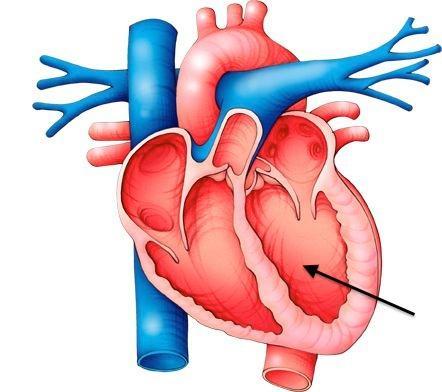
What part is pointed to by the arrow?
Left atrium
Right atrium
Left ventricle
Right ventricle
What are white blood cells?
They are the same as red blood cells, but white.
They fight off disease and infection.
They carry food to your muscles.
They activate when you exercise.
Causes an overproduction of white blood cells that crowd the blood.
leukemia
heart disease
hemophilia
sickle-cell anemia
Cholesterol and plaque build up on vessel walls and cause heart attacks and strokes.
leukemia
atherosclerosis
hemophilia
sickle-cell anemia
A hereditary disease where blood does not clot to stop bleeding.
hemophilia
heart disease
sickle-cell anemia
leukemia

name of the valve that separates right atrium from right ventricle.
tricuspid
aortic
mitral

The largest artery in the body is the:
Aorta
Pulmonary Artery
Carotid Artery
Brachiocephalic Artery
What is the strongest (thickest) part of the heart?
right atrium
right ventricle
left ventricle
left atrium
What is leukemia?
A viral infection
Cancer of the body's blood-forming tissues
A bone disease
A type of blood pressure
Where does leukemia occur in the body?
In the lungs
In the muscles
In the bone marrow and the lymphatic system
In the heart
Which cells are primarily involved in leukemia?
Muscle cells
White blood cells
Platelets
Red blood cells
How can leukemia be discovered?
Through genetic testing only
Through a routine physical exam
During blood tests for some other condition
By a sudden increase in energy
What is hemophilia?
Blood does not clot properly
Fear of blood
Blood clots quickly
Too much blood
What causes hemophilia?
Normal genes
Mutation in one of the genes
Catching it from someone else
Combination of cells
Where are genes located?
On ribosomes
On the skin
On Proteins
On chromosomes
How do you treat hemophilia?
Drain all blood and replace with new blood
Put the person in a bubble
Medication
Inject clotting factor protein
What is the meaning of atherosclerosis?
The buildup of fats, cholesterol in artery walls (plaque), which can restrict blood flow
The buildup of blood accumulated out of sudden in the artery
The name of the damaged hole of the septum in heart
The equipment used in the bypass surgery
What happens when the blood could not supply to the heart as there is a blockage in the coronary arteries?
(You can choose multiple answers)
The muscle cell at the heart will die
The person will probably get a stroke
Can cause a heart attack
The person does not feel anything
Stenting procedure is
The insertion of wire mesh to open up the blockage artery
An expanded balloon to opening up the blood vessel
An open surgery that takes another artery from the other part of the body
The insertion of a catheter into the blood vessel


What is the main feature of aplastic anemia?
Low levels of white blood cells
Failure of bone marrow to produce adequate blood cells
High levels of red blood cells
Increased platelet count
Which type of anemia is caused by too little iron in the body?
Iron deficiency anemia
Aplastic anemia
Thalassemia
Sickle cell anemia
What are possible symptoms of anemia?
Tiredness, weakness, shortness of breath
Fever, cough, sore throat
Joint pain, muscle aches, fatigue
Nausea, vomiting, stomach pain
What nutrient is needed to make enough healthy red blood cells?
Vitamin A
Vitamin D
Vitamin C
Folate
Which of the following best describes the shape of red blood cells in sickle cell anemia?
Round
Oval
Sickle-shaped
Square
Thrombin acts as an enzyme and catalysis the conversion of fibrin to fibrinogen.
True
False

The table show a process of blood clotting. the correct contents of R, S, and T orderly are ....
fibrin; thrombin; vitamin K
thrombin; vitamin K; fibrin
vitamin K; thrombin; fibrin
fibrinogen; prothrombin; vitamin K

Bleeding from a small cut soon stops due to the release of enzymes from
platelets
activated antibodies
hemoglobin
white blood cells

Name the valve that separates right atrium from right ventricle.
tricuspid
aortic
pulmonary
bicuspid

If you're looking for your heart, you can find it beneath and to the left of what "bone?"
rib
sternum
clavicle
diaphragm

