
 Worksheets
Stages of Meiosis Review
Total questions: 15
Worksheet time: 15mins
A cell containing 20 chromosomes (diploid) at the beginning of meiosis would, at its completion, produce cells containing how many chromosomes?
10
5
40
20
The end result of meiosis is...
4 identical cells
4 genetically different cells
2 identical cells
2 genetically different cells

What process is represented in this diagram and what are the resulting daughter cells produced?
mitosis, gametes
mitosis, body cells
meiosis, gametes
meiosis, body cells

What phase is shown in the diagram?
anaphase I
anaphase II
metaphase I
metaphase II

What phase of meiosis is shown?
metaphase I
metaphase II
prophase I
prophase II

What phase is shown in the diagram?
prophase I
prophase II
metaphase I
metaphase II

What phase is represented?
prophase I
prophase II
telophase I
telophase 2
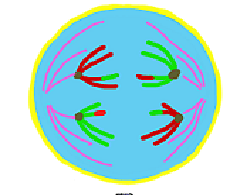
what phase am I?
Prophase 1
Metaphase 1
Anaphase 1
Telophase 1
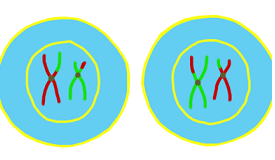
what phase am I?
Prophase II
Metaphase II
Anaphase II
Telophase II
Which stage of meiosis involves the pairing of homologous chromosomes?
Prophase I
Metaphase I
Anaphase I
Telophase I
During which phase of meiosis do homologous chromosomes separate?
Prophase I
Metaphase I
Anaphase I
Telophase I
What is the main purpose of crossing over during meiosis?
To increase genetic diversity
To reduce chromosome number
To replicate DNA
To separate sister chromatids
In which stage of meiosis do sister chromatids separate?
Prophase II
Metaphase II
Anaphase II
Telophase II
How many cells are produced at the end of meiosis?
1
2
3
4
Which of the following best describes the cells produced by meiosis?
Diploid and identical
Diploid and genetically different
Haploid and identical
Haploid and genetically different

