
 Worksheets
Sol Biology
Total questions: 25
Worksheet time: 25mins
The process of cell division is called ________.
Mitosis
Meiosis
Cell cycle
How many chromosomes must be copied exactly before the cell can divide?
23
46
92
12
An ALLELE is:
A type of gene
One of two or more alternative forms of a specific gene
A type of chromosome
A genetic disorder

This picture shows which process?
mitosis
meiosis
the cell cycle
Making RNA from DNA is called ________.
Transcription
Translation
Making proteins from mRNA is called ________.
Translation
Transcription
Which of the following is NOT a step in mitosis?
Prophase
Metaphase
Anaphase
Interphase
What is the basic unit of heredity?
Gene
Chromosome
DNA
Allele
Who crossed peas to develop the genetic theory we still use?
Charles Darwin
Gregor Mendel
James Watson
Francis Crick
The physical appearance of the gene is called:
Genotype
Phenotype

Which variable appears to control leaf production in these plants?
the temperature
the relative humidity
the amount of water
the number of daylight hours
Orchids were studied to determine if the amount of humidity affected the flowering of these plants. Which of these was the independent variable in this study?
the amount watered
the percentage of humidity
the number of flowers on each plant
the length of time required for flowering

What can you infer about the temperature for E.coli bacterial growth?
E. coli does not grow well at low and high temperatures.
E coli will continue to grow at very high temperatures.
E.coli grows best at very low temperatures
E.coli grows best at very high temperatures.
An experiment is performed on plants to see how different liquids affect plant growth. Each plant in the experiment is given a different liquid; water, apple juice, or milk. Each plant has the same amount of soil, sunlight, and listens to the same music. In this investigation, what are the controlled variables?
Type of plant, amount of music, and sunlight
Water, apple juice, milk
Plant growth

Which data point on the graph is probably invalid?
1
2
3
4

The data show the growth of two bean plants over several weeks using four different fertilizers. The experimental data would be more valid if which of the following variables was included in the experiment?
The plants were grown at variable temperatures.
A fifth fertilizer was tested.
A control without fertilizer was included for each plant.
Only one plant was tested.

The dependent variable in this experiment is -
Number of Bacteria
Time of Incubation
Culture Number
Type of Bacteria
The shape of the DNA molecule is a double __________________?
S
helix
rope
curve
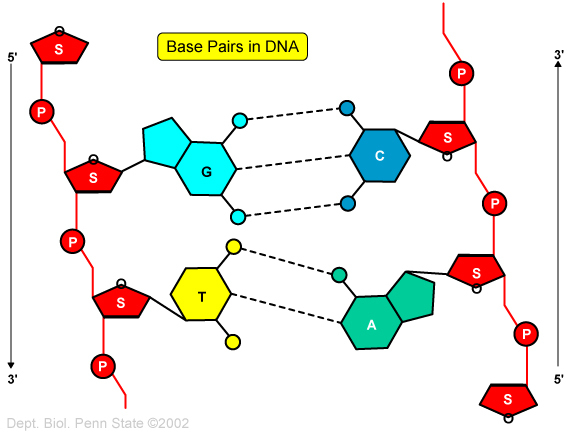
Nitrogenous bases are joined by which type of bond?
polar bonds
ionic bonds
covalent bonds
hydrogen bonds
Which part of the cell is responsible for energy production?
Nucleus
Mitochondria
Ribosome
Chloroplast
What is the primary function of chlorophyll in plants?
Absorb water
Absorb sunlight
Store nutrients
Protect from pests
Which process is used by plants to convert sunlight into chemical energy?
Respiration
Photosynthesis
Transpiration
Fermentation
What is the role of ribosomes in a cell?
Protein synthesis
DNA replication
Lipid storage
Cell division
Which of the following is a characteristic of prokaryotic cells?
Presence of nucleus
Lack of membrane-bound organelles
Multicellular
Large size
What is the main component of the cell membrane?
Proteins
Lipids
Carbohydrates
Nucleic acids

