
 Worksheets
Plant Tissues
Total questions: 25
Worksheet time: 25mins
A region of plant cells that are capable of dividing and developing into specialized plant tissues.
Phloem
Stomata
Tropism
Meristems
What is the function of xylem tissue?
Transports water and minerals salt
Control the opening and closing of stoma
Carry out photosynthesis
Provide support for young plant
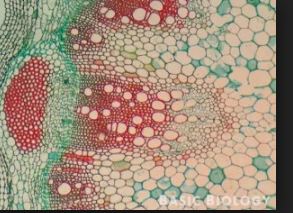
is a vascular tissue that carries sugars and other foods throughout a plant.
stems
phloem
roots
xylem
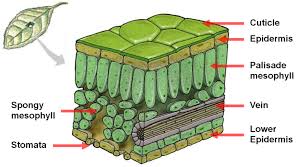
Which part of the leaf are tubes that bring water from the roots
epidermis tissue
palisade mesophyll
spongy mesophyll
xylem
Which part of the leaf has air spaces to allow carbon dioxide to flow through the leaf and diffuse into cells.
epidermis tissue
palisade mesophyll
spongy mesophyll
xylem
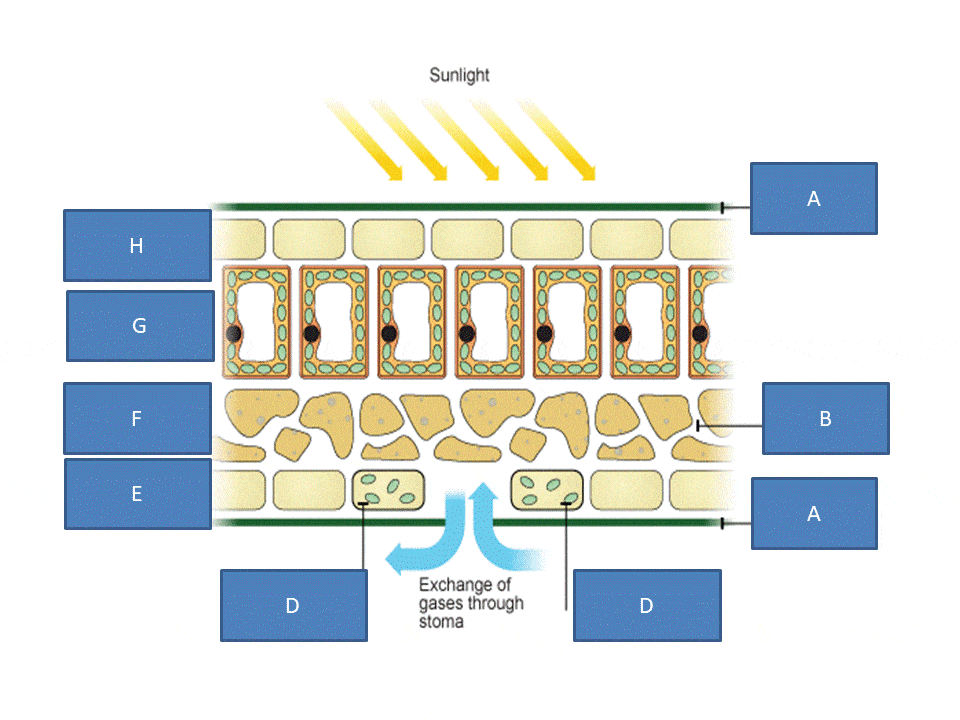
What is the name of the elongated, packed cells (part G) directly under the upper epidermis?
Palisade cells
Guard cell
Spongy layer
Lower epidermis
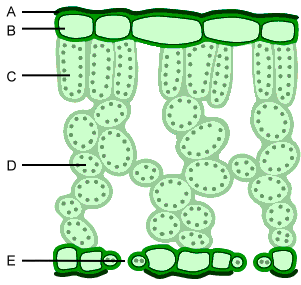
What is letter "D" pointing to?
upper epidermis
palisade mesophyll
spongy mesophyll
bundle sheath
Which two layers of the plant contain chloroplasts?
xylem and phloem
upper and lower epidermis
cuticle and upper epidermis
palisade and spongy mesophyll
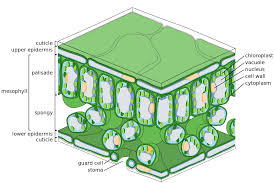
what is the function of cuticle?
protects the underlying tissues
transport water
transport mineral and nutrients
reduce loss of water through transpiration
___ open and close the stomata.
Guard cells
Xylem
Roots
Phloem
This part of the plant is packed with chloroplasts
Dermal tissue
Chlorophyll
Sapwood
Mesophyll
Which part of the leaf has most chloroplasts
epidermis tissue
palisade mesophyll
spongy mesophyll
xylem
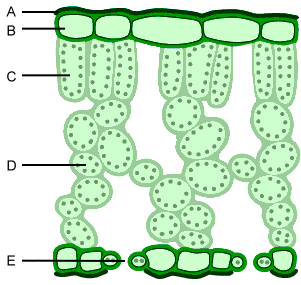
What is letter "A" pointing to?
cuticle
upper epidermis
lower epidermis
palisade mesophyll
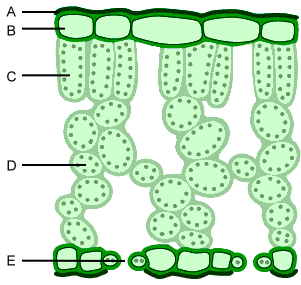
Which of the following is pointing to the "guard cell"?
B
C
D
E
The outermost layer of CELLS of the leaf is the
cuticle
epidermis
spongy mesophyll
bundle sheath
Which of the following structures allows for gas exchange between a leaf and the atmosphere?
Cuticle
Phloem
Stomata
Xylem
Which of the following terms refers to the waxy coating on the outside of leaves?
Cuticle
Phloem
Stomata
Xylem
Which gas needed for photosynthesis enters the leaf through the stomata?
oxygen
nitrogen
carbon dioxide
hydrogen

Which tissue provides flexibility to the plants?
Sclerenchyma tissue
Collenchyma tissue
Parenchyma tissue
None of the above

Which tissue is responsible for the secondary growth of plant's stem?
Apical Meristem
Intercalary Meristem
Lateral Meristem
All of the above
Which type of plant tissue is responsible for the transport of nutrients and sugars produced by photosynthesis?
Xylem
Phloem
Epidermis
Cortex
What is the primary function of the epidermal tissue in plants?
Photosynthesis
Water transport
Protection
Nutrient storage
In an experiment, a plant is placed in a dark room. Which plant tissue will be least affected by the lack of light?
Palisade mesophyll
Spongy mesophyll
Xylem
Phloem
Which plant tissue is mainly involved in the process of photosynthesis?
Xylem
Phloem
Palisade mesophyll
Cortex
How do guard cells regulate the opening and closing of stomata?
By changing their shape due to water pressure
By producing chlorophyll
By transporting nutrients
By dividing rapidly

