
Font size
 Worksheets
Organism
Total questions: 25
Worksheet time: 25mins
Which is the smallest level of an ecosystem?
organism
population
community
ecosystem
A producer?
Eats other plants and animals
Makes its own food
Eats dead plants or animals
Makes toys for kids
A decomposer?
Eats dead plants or animals and breaks down to put nutrients in the soil
Eats plants or other animals for food
Makes its own food
Machine that gathers trash

The frog is a?
Producer
Consumer
Decomposer

living things, such as plants, animals, and bacteria are called (a)
organisms
organ systems
organ music
organizations
What are TWO likely reasons why the striped skunk has a much greater population in the wild than the giant panda?

We are raising (a) trout in our tank.
Rainbow
Brown
Golden
Brook

Bacteria is an example of a
producer
consumer
decomposer
Which includes an order of organization of multicellular organisms from smallest to largest?
tissues, cells, organs, organ systems, organism
cell, tissue, organs, organ systems, organism
organism, cells, tissues, organ systems, organism
tissues, cells, organs, organ sytems, organism
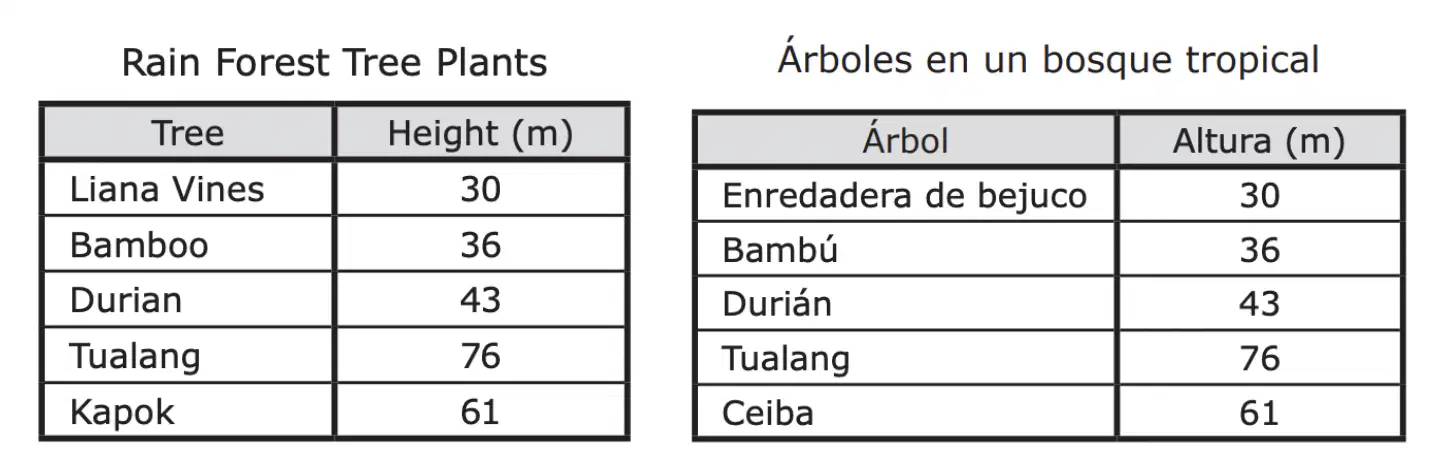
Trees in a rainforest are dependent on many nonliving resources for srvival. The table shows the heights of several trees found in a rainforest ecosystem.
The nonliving resource the trees are most likely competing for is...
Los árboles en un bosque tropical dependen de muchos recursos no vivos para sobrevivir. La tabla muestra las alturas de varios árboles encontrados en un ecosistema de bosque tropical.
El recurso no vivo por el cual es mas probable que compitan los árboles es... (a)
Sunlight/Luz del sol
Food/Alimento
Wind/Viento
Water/Agua
Match the words to the photo
*not all words will be used!
Ecosystem
Community
Population
Organism
Biome
Biosphere

The fungi is a?
Producer
Consumer
Decomposer

The pine tree is a?
Producer
Consumer
Decomposer
A consumer that hunts is called:
a producer.
an omnivore.
a predator.
a herbivore.
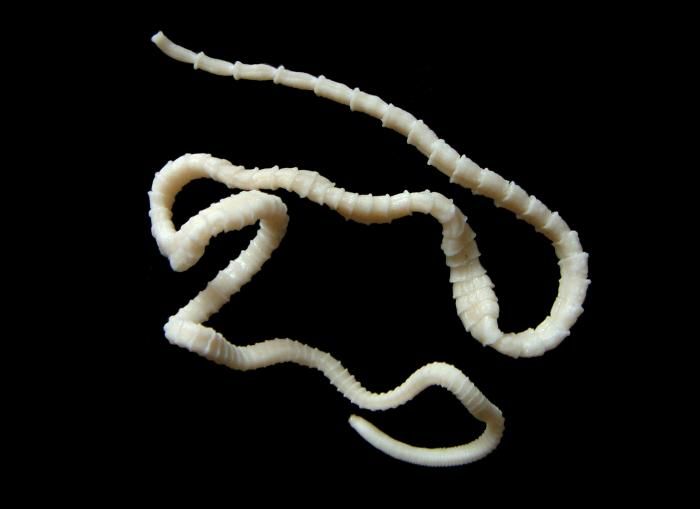
A tapeworm and a cat have this type of relationship.
mutualism
parasitism
commensalism
competition
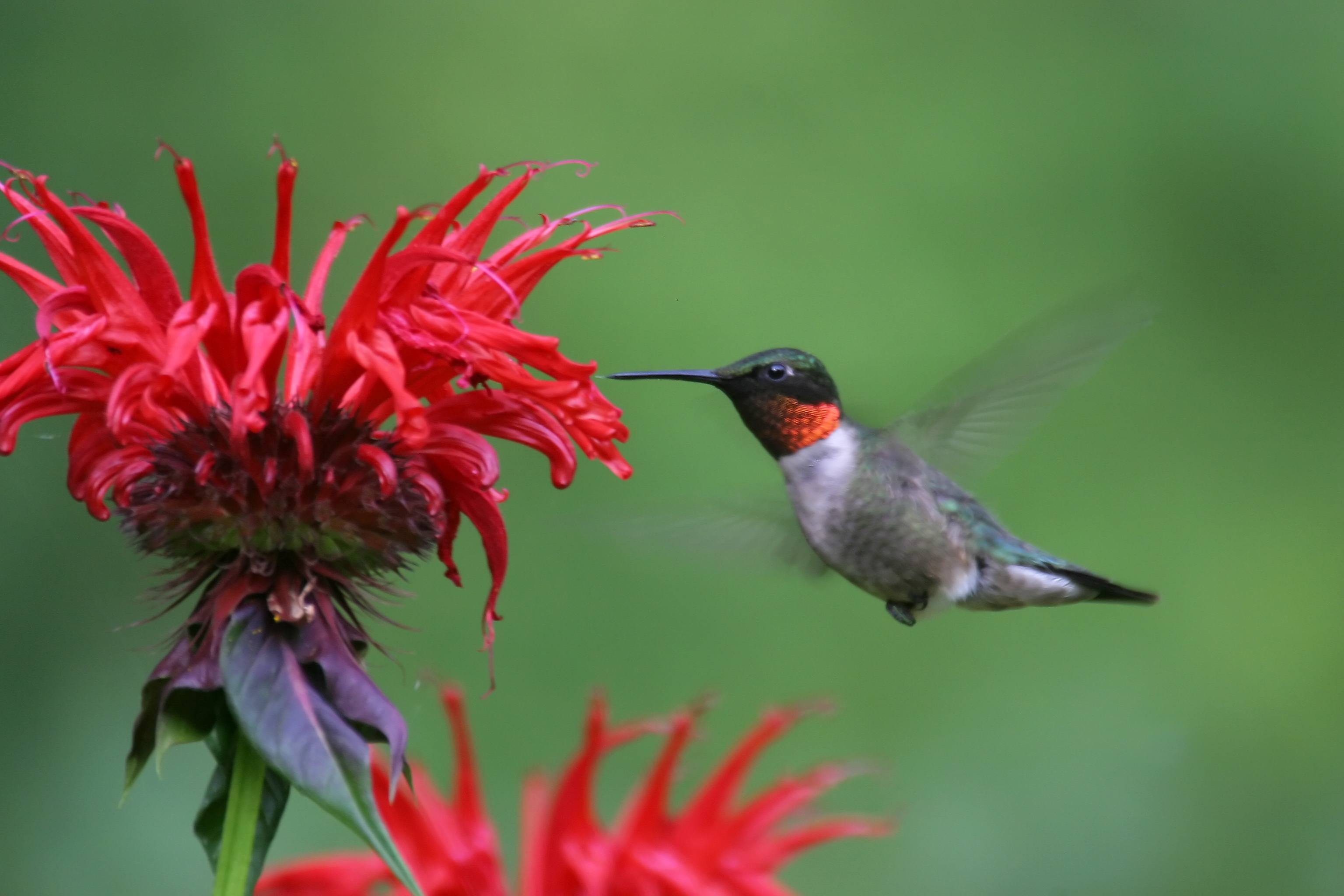
What type of symbiosis? Hummingbirds feed on nectar from flowers. The flowers are pollinated by hummingbirds as they move from flower to flower.
commensalism
mutualism
parasitism
predation

Remoras attach themselves to a shark’s body. They then travel with the shark and feed on the leftover food scraps from the shark’s meals. The relationship neither harms nor benefits the shark.
parasitism
commensalism
mutualism
A relationship between two organisms in which both organisms benefit.
Mutualism
Competition
Parasitsm
Commensalism

Use the diagram answer the question.
What is a fitting description for this diagram?
Food Chain
Ecosystem
Food Web
Biotic and Abiotic Factors

Use the diagram to answer the question.
The Mayfly is a food source for which 3 organisms?
Frog, Dragon Fly and snake
Frog, trout and dragon fly
Frog, salamander and trout
Frog and phytoplankton

How many predators does the Grasshopper have?
1
2
3
4
What is the basic unit of life in all living organisms?
Cell
Tissue
Organ
Organism
Which of the following is an example of a unicellular organism?
Human
Dog
Amoeba
Tree
In a food chain, which organism is typically at the top?
Producer
Primary Consumer
Secondary Consumer
Apex Predator
Which process do plants use to convert sunlight into energy?
Respiration
Photosynthesis
Digestion
Transpiration

