
 Worksheets
Workplace Safety 10S & 10M February 2025
Total questions: 47
Worksheet time: 40mins
The top priority of every workplace inspection is to ___________ the hazard.
1. eliminate
2. control
all of the above
Which of these are useful inspection tools? [Choose all that apply]
time
camera
manuals
site plan
training
Awkward postures are an example of ____________ hazard.
biological
physical
ergonomic
safety
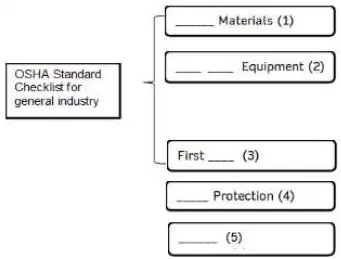
To help improve the safety of hte workplace, complete this chart:
5 __________
Hazardous
Personal Protective
Aid
Fire
Electrical
A safety checklist is useful because (check best answers):
It makes employees aware of safety hazards
It can be used by various departments to audit general safety procedures
It can be incorporated into security patrol procedures
All of the above
A healthy work environment include all except....
Smoke-free environment
Noisy
Remove obstacles/tripping
Prevent visual distractions
Where can accidents happen?
Anywhere
In the classroom
In the hallway
Outside
Electricity presents a shock hazard when not properly grounded.
True
False
Which image shows the proper way to sit at a computer desk?


What is a common reason why workplace accidents occur
unsafe environments
human error
inexperience
poor training
Which of the following actions must a young worker (18 or older) NOT perform while operating tractors or industrial trucks?
Operate tractors without receiving proper training and pre-operational service checks
Follow all the instructions given in the operator’s manual
Wear PPE wherever required
Slow down on a rough or muddy surface while taking turns and crossing slopes
What is the primary goal of workplace safety?
To increase productivity
To ensure the health and well-being of employees
To reduce company expenses
To improve customer satisfaction
What term describes an unexpected event that results in injury or damage?
Hazard
Incident
Accident
Risk
What is the study of designing workplaces and tools to fit the worker’s needs called?
Ergonomics
Compliance
Regulation
Training
What is a potential source of harm or adverse health effect on someone?
Risk
Hazard
Incident
Injury
What is an occurrence that can lead to or has led to an accident or injury?
Emergency
Procedure
Incident
Regulation
What term describes harm or damage inflicted on the body due to an accident or exposure to a hazard?
Risk
Injury
Compliance
Training
What is a serious, unexpected situation requiring immediate action to prevent harm or danger?
Incident
Emergency
Procedure
Regulation
What is a set of established methods or steps to follow to ensure safety and efficiency?
Training
Regulation
Procedure
Compliance
What is the purpose of training in a workplace safety context?
To provide immediate assistance to injured workers
To educate and practice workers to help them perform their tasks safely and effectively
To document accidents or near-miss events
To examine equipment and work areas
What is a documented account of an accident or near-miss event used to analyze and prevent future occurrences?
Emergency
Incident Report
Training
Regulation
What is immediate assistance given to someone who is injured or ill before professional medical help arrives?
First Aid
Personal Protective Equipment (PPE)
Compliance
Procedure
What does Personal Protective Equipment (PPE) refer to?
Official rules or laws for workplace safety
Clothing or equipment worn to protect individuals from workplace hazards
The process of examining work areas
A documented account of an accident
Which of the following extinguishers would you NOT use on an electric fire?
CO2
Dry Powder
Water
How do you lift safely?
Straight back, bend knees
Just grab the object and lift it
Bend back, straight knees
Electricity presents a shock hazard when not properly grounded.
True
False
Which of these are useful inspection tools? [Choose all that apply]
time
camera
manuals
site plan
training
How should you sit in your chair while keying?
Feet flat on floor
Legs stretched out
Chair pulled out from table
Feet crossed in a "X" position
95% of all work related accidents are caused by human error.
True
False
A healthy work environment include all except....
Smoke-free environment
Noisy
Remove obstacles/tripping
Prevent visual distractions
Where can accidents happen?
Anywhere
In the classroom
In the hallway
Outside

How can you prevent injuries at the workplace shown above?
Throw the stapler higher to prevent it from hitting someone
Use a ladder instead of a chair when arranging books in cabinet
Pour water over the coffee spillage to prevent slipping

Which of the following describes the signage shown?
A cap must be worn in the area
Safety helmet must be worn in the area
It is optional to wear head protection

Which of the following best describes the signage shown?
The place to gather during an emergency
Assembly point every morning
Place for emergency vehicles to park

Which of the following best describes the signage shown?
Count the number of steps you take
Look ahead while walking
Be careful while walking
What is a safety manual?
Instructions for the operation of a device
Instructions on safety precautions to take
Instructions on troubleshooting a device

Which of the following are hazards shown in the picture?
Woman standing on a chair
Man throwing a stapler
Stressed worker
Coffee spillage
How can you prevent injuries at the workplace shown above?
Throw the stapler higher to prevent it from hitting someone
Use a ladder instead of a chair when arranging books in cabinet
Pour water over the coffee spillage to prevent slipping
Why is it important to follow safety regulations?
To prevent injuries
To get more salary
To be promoted
What should i do if i see someone not following safety regulations?
Ignore as it is not my job
Do not report it if it seems like a faster way to complete the job
Report to supervisor immediately
Where should you aim the fire extinguisher while trying to put out a fire?
Base of fire
Highest flames
From top to bottom
Whatever is not burning to keep it from burning
With the PASS method, What does the P stand for?
Point the nozzle
Port the tube
Pick up the extinguisher
Pull the pin
With the PASS method, What does the A stand for?
Assess the fire
Aim the nozzle
Accelerate toward fire
Access the extinguisher
With the PASS method, What does the first S stand for?
Squeeze the handle
Spray the area
Soak the fire
Smell the smoke
With the PASS method, What does the Second S stand for?
Squeeze the handle
Spray the area
Sweep side to side
Shower the fire
What is the correct picture/accronym for using a portable fire extingusiher?



