
 Worksheets
Unit 5 Semester Test
Total questions: 70
Worksheet time: 1hrs 10mins
Name
Class
Date
1.
Which of the following is not a major function of the nervous system?
a)
Sensory input
b)
Detect impulses
c)
Hormone secretion
d)
Motor response
2.
What is not an organ of the nervous system?
a)
Brain
b)
Muscles
c)
Senses
d)
Nerves
3.
Which division of the peripheral nervous system controls involuntary muscle functions?
a)
Somatic
b)
Sympathetic
c)
Parasympathetic
d)
Sensory
4.
What is the name of the structure that covers and insulates the axon of a neuron?
a)
Cell membrane
b)
Dendrites
c)
Myelin sheath
d)
Node of Ranvier
5.
What is the role of neuroglia in the central nervous system?
a)
Provide immune response
b)
Secrete cerebrospinal fluid
c)
Provide myelin insulation
d)
All of the above
6.
What is the name of the space between two neurons at a synapse?
a)
Axon terminal
b)
Synaptic vesicle
c)
Synaptic cleft
d)
Dendrite
7.
Which of the following is not one of the three layers of connective tissue that protect the central nervous system?
a)
Dura mater
b)
Arachnoid mater
c)
Pia mater
d)
Meninges
8.
Which lobe of the cerebrum is responsible for motor functions and decision-making?
a)
Frontal lobe
b)
Parietal lobe
c)
Occipital lobe
d)
Temporal lobe
9.
What is the name of the bundle of nerve fibers that connects the two hemispheres of the cerebrum?
a)
Corpus callosum
b)
Midbrain
c)
Medulla oblongata
d)
Pons
10.
Which region of the brainstem is responsible for controlling breathing and heart rate?
a)
Midbrain
b)
Pons
c)
Medulla oblongata
d)
Cerebellum
11.
What is the main function of the cerebellum?
a)
Coordinating the movements directed by the cerebrum
b)
Processing of sensory information
c)
Control of autonomic functions
d)
Regulation of emotions
12.
Which type of neuron has the highest number of processes extending from the cell body?
a)
Unipolar
b)
Bipolar
c)
Multipolar
d)
Afferent
13.
Which of the following is a function of the parasympathetic division of the autonomic nervous system?
a)
Increased heart rate
b)
Increased blood pressure
c)
Increased metabolism
d)
Increased digestion
14.
What is the name of the fluid that protects the brain and spinal cord?
a)
Blood
b)
Lymph
c)
Cerebrospinal fluid
d)
Plasma
15.
What is the name of the region in the brain that relays sensory information to the cerebral cortex?
a)
Hypothalamus
b)
Thalamus
c)
Pineal gland
d)
Medulla oblongata
16.
Which division of the peripheral nervous system controls voluntary muscle movement?
a)
Sympathetic
b)
Parasympathetic
c)
Sensory
d)
Somatic
17.
Which part of the brain is responsible for coordinating memory and emotional associations?
a)
Frontal lobe
b)
Parietal lobe
c)
Occipital lobe
d)
Temporal lobe
18.
What is the name of the process where a nerve impulse is passed from one neuron to the next at a synapse?
a)
Depolarization
b)
Repolarization
c)
Neurotransmitter
d)
Action potential
19.
Which lobe of the cerebrum is responsible for processing visual information?
a)
Frontal lobe
b)
Parietal lobe
c)
Occipital lobe
d)
Temporal lobe
20.
Which part of the brain is responsible for regulating basic life functions like breathing and heart rate?
a)
Cerebellum
b)
Cerebrum
c)
Midbrain
d)
Medulla oblongata
21.
What is the role of the cerebellum in the brain?
a)
Processes sensory information
b)
Controls voluntary movement
c)
Regulates emotions
d)
Stores long-term memories
22.
Which lobe of the cerebrum is involved in speech, language, and communication?
a)
Frontal lobe
b)
Parietal lobe
c)
Temporal lobe
d)
Occipital lobe
23.
What is the name of the structure that connects the two hemispheres of the cerebrum?
a)
Optic chiasm
b)
Corpus callosum
c)
Pons
d)
Hypothalamus
24.
Which part of the brain processes and interprets visual information?
a)
Frontal lobe
b)
Parietal lobe
c)
Temporal lobe
d)
Occipital lobe
25.
What is the name of the region in the brainstem that relays sensory information to the cerebral cortex?
a)
Midbrain
b)
Pons
c)
Medulla oblongata
d)
Thalamus
26.
Which lobe of the cerebrum is responsible for processing and interpreting auditory information?
a)
Frontal lobe
b)
Parietal lobe
c)
Temporal lobe
d)
Occipital lobe
27.
What is the name of the region in the brain that is associated with memory formation and emotional processing?
a)
Hippocampus
b)
Amygdala
c)
Hypothalamus
d)
Basal ganglia
28.
Which part of the brain is involved in coordinating voluntary movements and maintaining balance and posture?
a)
Cerebrum
b)
Cerebellum
c)
Brainstem
d)
Parietal lobe
29.
What is the function of the midbrain in the brainstem?
a)
Regulates sleep and wakefulness
b)
Processes visual and auditory information
c)
Coordinates voluntary movement
d)
Connects the cerebrum to the lower brain regions
30.
Which lobe of the cerebrum is responsible for higher-order cognitive functions like problem-solving and decision-making?
a)
Frontal lobe
b)
Parietal lobe
c)
Temporal lobe
d)
Occipital lobe
31.
What is the name of the fluid that surrounds and protects the brain and spinal cord?
a)
Cerebrospinal fluid
b)
Synovial fluid
c)
Interstitial fluid
d)
Plasma
32.
Which part of the brain is responsible for regulating body temperature, appetite, and other homeostatic functions?
a)
Hypothalamus
b)
Basal ganglia
c)
Amygdala
d)
Pituitary gland
33.
What is the role of the pituitary gland in the brain?
a)
Produces hormones that regulate growth and development
b)
Processes sensory information from the body
c)
Coordinates voluntary muscle movements
d)
Stores long-term memories
34.
Which part of the brain is responsible for integrating and processing different types of sensory information?
a)
Frontal lobe
b)
Parietal lobe
c)
Temporal lobe
d)
Occipital lobe
35.
Which part of the brain is primarily responsible for regulating balance and coordination?
a)
Cerebellum
b)
Cerebrum
c)
Brainstem
d)
Thalamus
36.
What is the main function of the frontal lobe?
a)
Processing visual information
b)
Regulating emotions
c)
Controlling voluntary movements and decision-making
d)
Interpreting sensory information
37.
Which part of the brain is involved in the formation of new memories?
a)
Hippocampus
b)
Amygdala
c)
Cerebellum
d)
Hypothalamus
38.
What role does the thalamus play in the brain?
a)
Regulates sleep cycles
b)
Processes and relays sensory information
c)
Controls heart rate
d)
Coordinates motor control
39.
Which structure connects the left and right hemispheres of the brain?
a)
Corpus callosum
b)
Cerebellum
c)
Pons
d)
Medulla oblongata
40.
What is the primary function of the occipital lobe?
a)
Processing auditory information
b)
Controlling motor functions
c)
Processing visual information
d)
Regulating emotions
41.
Which part of the brainstem is responsible for regulating heart rate and breathing?
a)
Midbrain
b)
Pons
c)
Medulla oblongata
d)
Cerebellum
42.
What is the function of the amygdala?
a)
Regulating sleep
b)
Processing emotions
c)
Controlling voluntary movements
d)
Coordinating balance
43.
Which part of the brain is responsible for higher cognitive functions such as reasoning and problem-solving?
a)
Frontal lobe
b)
Parietal lobe
c)
Temporal lobe
d)
Occipital lobe
44.
What is the role of the hypothalamus?
a)
Regulating body temperature and hunger
b)
Processing visual information
c)
Controlling motor functions
d)
Relaying sensory information
45.
Which lobe of the brain is primarily involved in processing auditory information?
a)
Frontal lobe
b)
Parietal lobe
c)
Temporal lobe
d)
Occipital lobe
46.
What is the primary role of the brainstem?
a)
Higher cognitive functions
b)
Basic life functions such as breathing and heart rate
c)
Memory formation
d)
Sensory processing
47.
Which part of the brain is involved in regulating emotions and forming memories?
a)
Cerebellum
b)
Amygdala
c)
Thalamus
d)
Hippocampus
48.
What is the function of the parietal lobe?
a)
Processing sensory information
b)
Controlling voluntary movements
c)
Regulating emotions
d)
Coordinating balance
49.
Which part of the brain is responsible for the coordination of complex motor tasks?
a)
Cerebellum
b)
Frontal lobe
c)
Brainstem
d)
Thalamus
50.
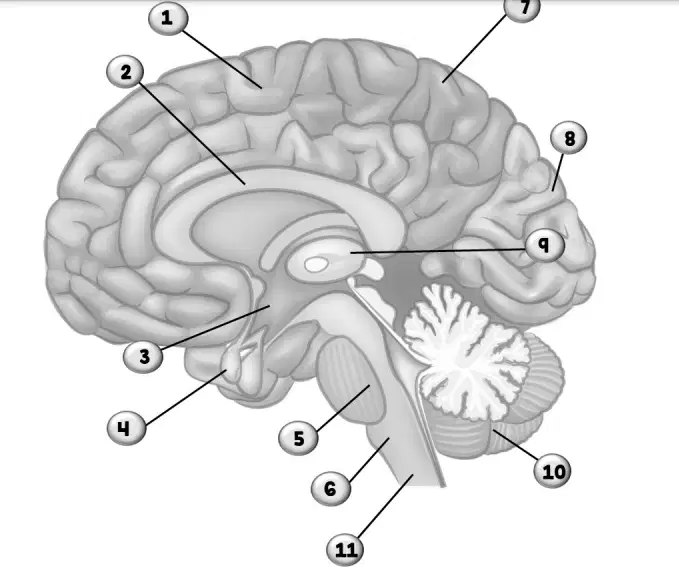
Label 1
a)
Frontal lobe
b)
Parietal Lobe
c)
Hypothalamus
d)
Pituitary gland
e)
Thalamus
51.
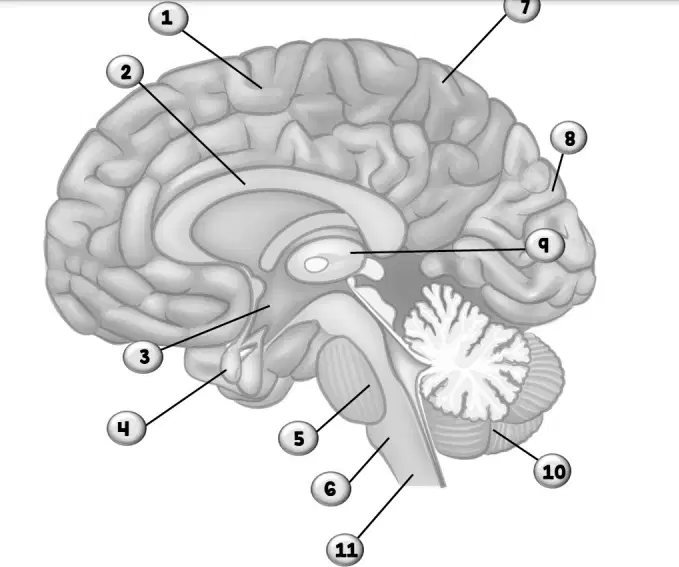
Label 2
a)
Corpus Callosum
b)
Parietal Lobe
c)
Hypothalamus
d)
Pituitary gland
e)
Frontal lobe
52.
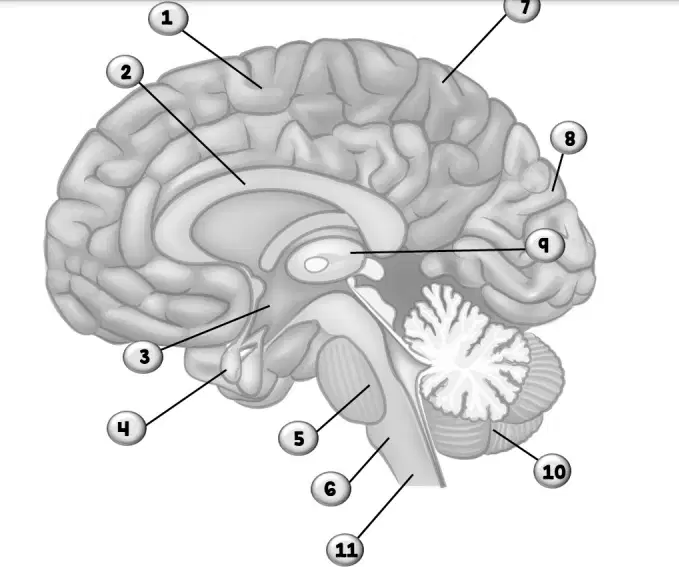
Label 3
a)
Hypothalamus
b)
Parietal Lobe
c)
Pituitary gland
d)
Frontal lobe
e)
Thalamus
53.
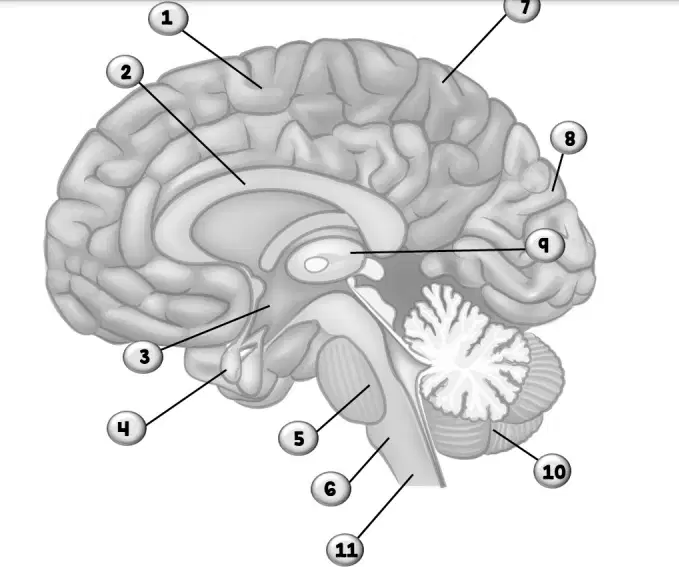
Label 4
a)
Pituitary gland
b)
Parietal Lobe
c)
Hypothalamus
d)
Frontal lobe
e)
Thalamus
54.
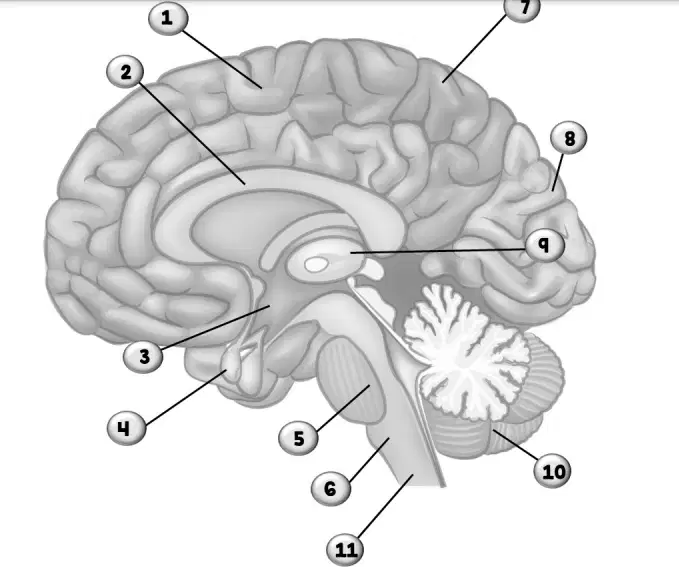
Label 5
a)
Pons
b)
Parietal Lobe
c)
Hypothalamus
d)
Pituitary gland
e)
Frontal lobe
55.
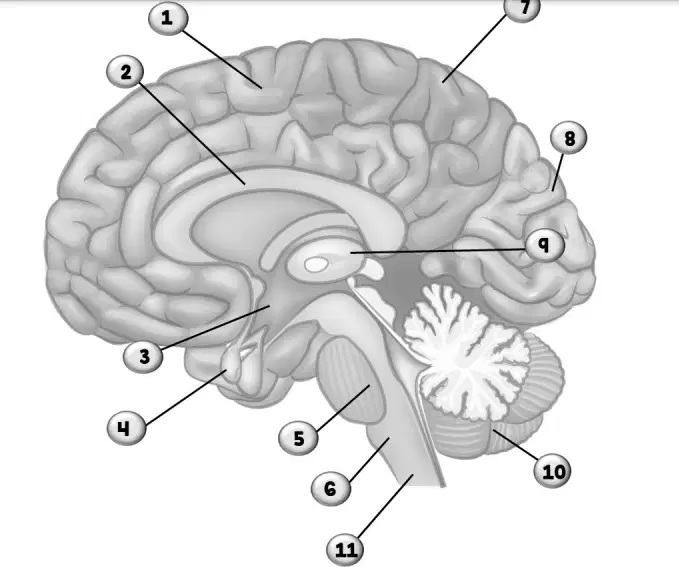
Label 6
a)
Medulla Oblongata
b)
Parietal Lobe
c)
Hypothalamus
d)
Pituitary gland
e)
Frontal lobe
56.
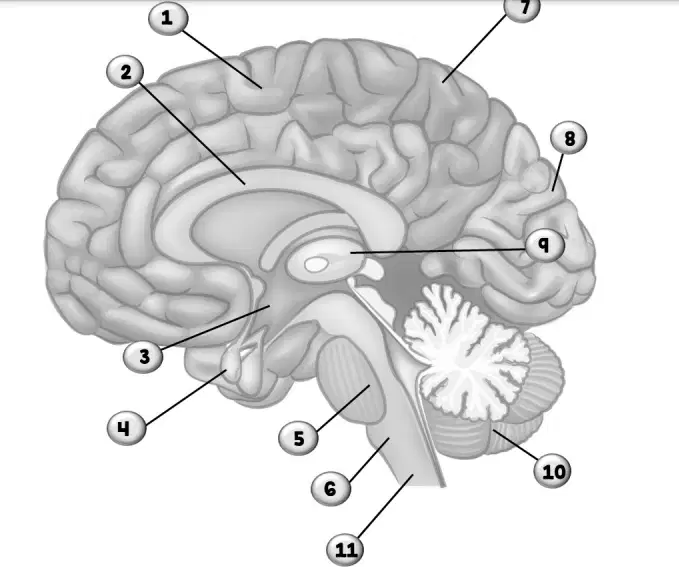
Label 7
a)
Parietal Lobe
b)
Hypothalamus
c)
Pituitary gland
d)
Frontal lobe
e)
Thalamus
57.

Label 8
a)
Occipital Lobe
b)
Parietal Lobe
c)
Hypothalamus
d)
Pituitary gland
e)
Frontal lobe
58.
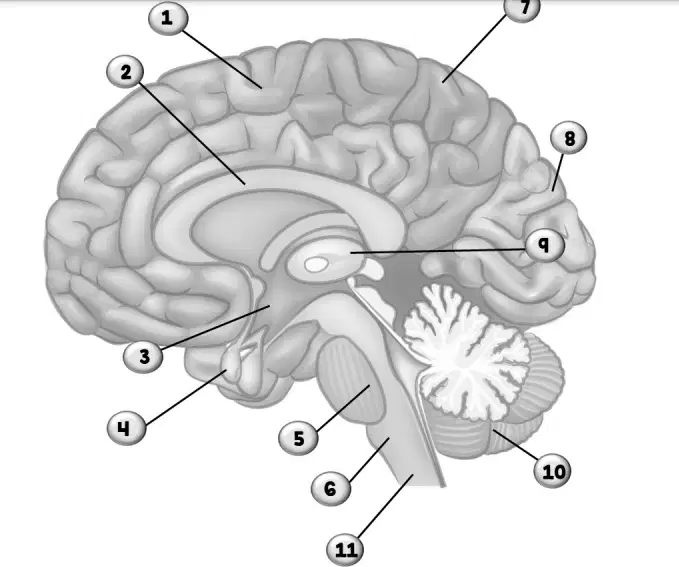
Label 9
a)
Thalamus
b)
Parietal Lobe
c)
Hypothalamus
d)
Pituitary gland
e)
Frontal lobe
59.
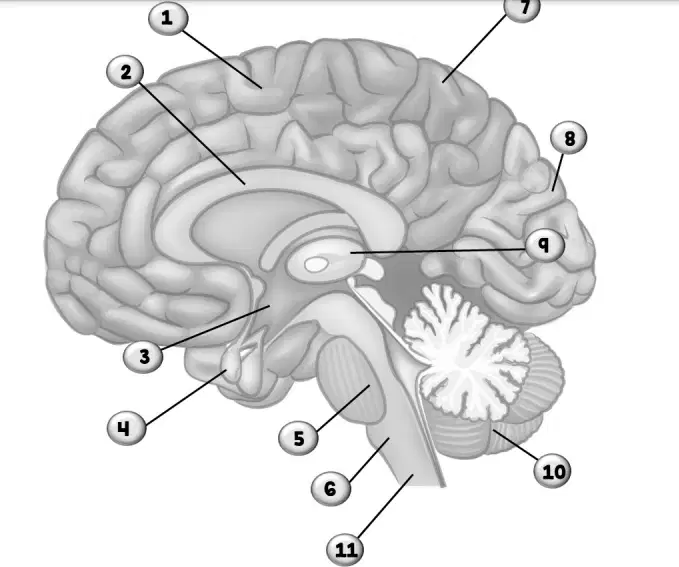
Label 10
a)
Cerebellum
b)
Parietal Lobe
c)
Hypothalamus
d)
Pituitary gland
e)
Frontal lobe
60.
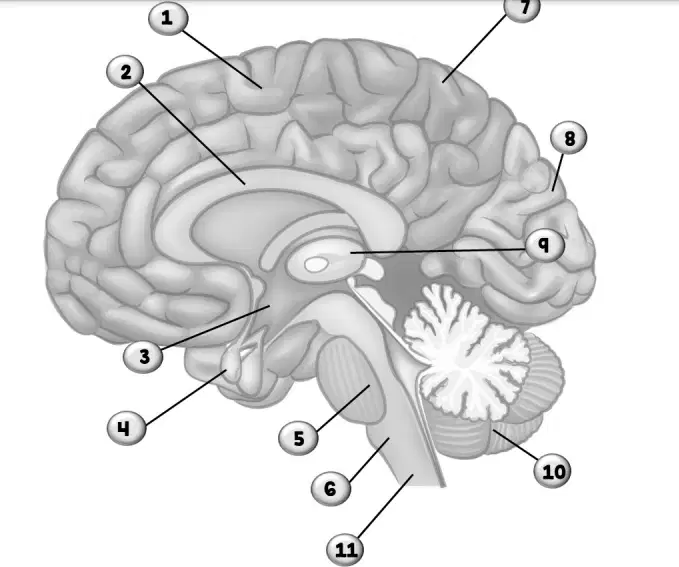
Label 11
a)
Spinal Cord
b)
Parietal Lobe
c)
Hypothalamus
d)
Pituitary gland
e)
Frontal lobe
61.
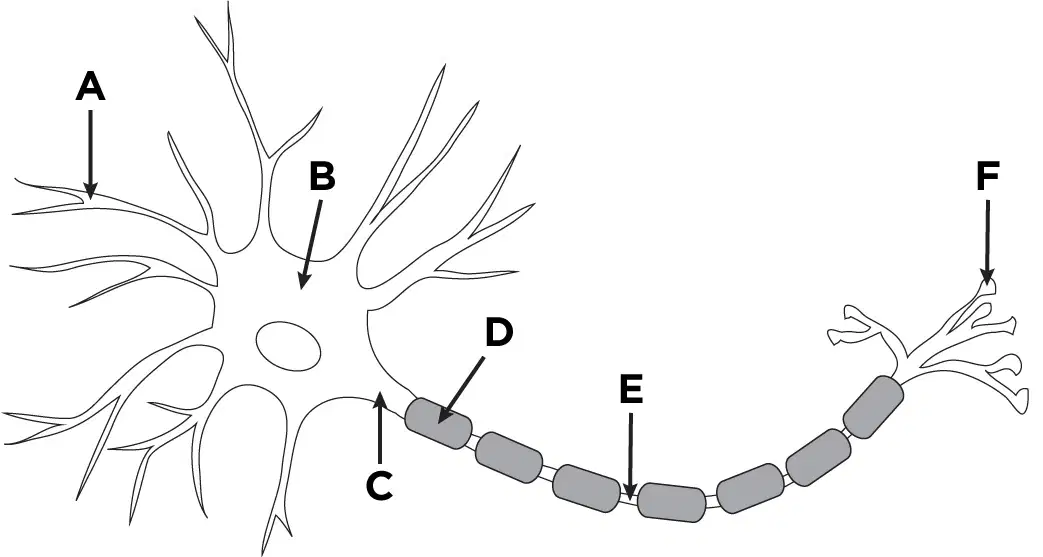
What is A
a)
Dendrites
b)
Axon
c)
Axon terminals
d)
Myelin
e)
Node of Ranvier
62.
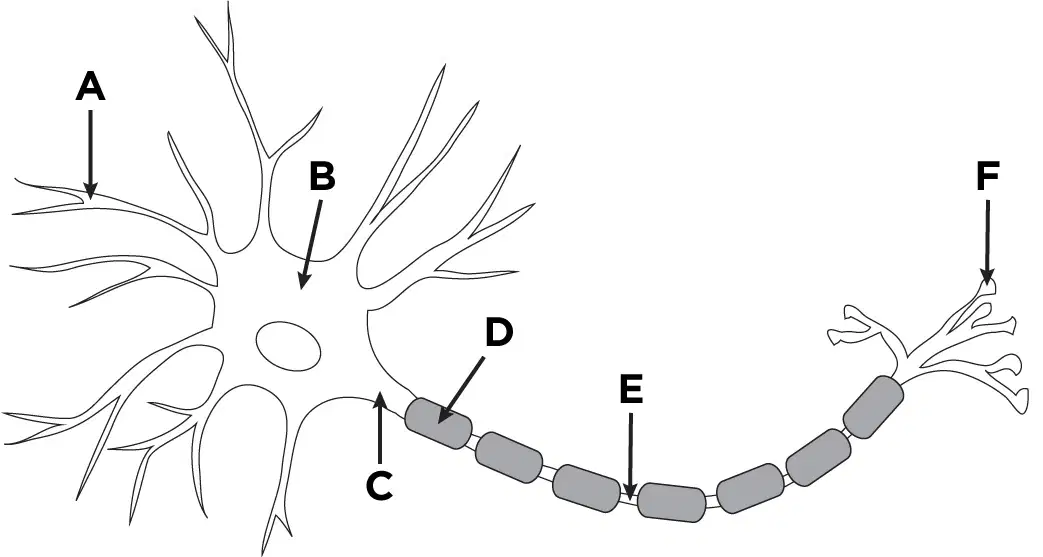
What is B
a)
Cell body
b)
Dendrites
c)
Axon
d)
Axon terminals
e)
Myelin
63.
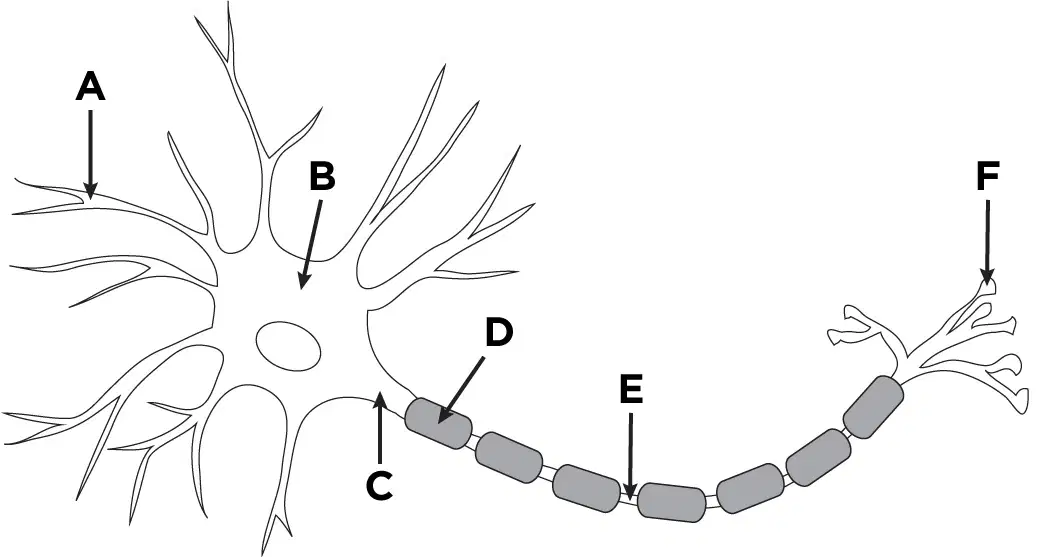
What is C
a)
Axon
b)
Dendrites
c)
Axon terminals
d)
Myelin
e)
Node of Ranvier
64.
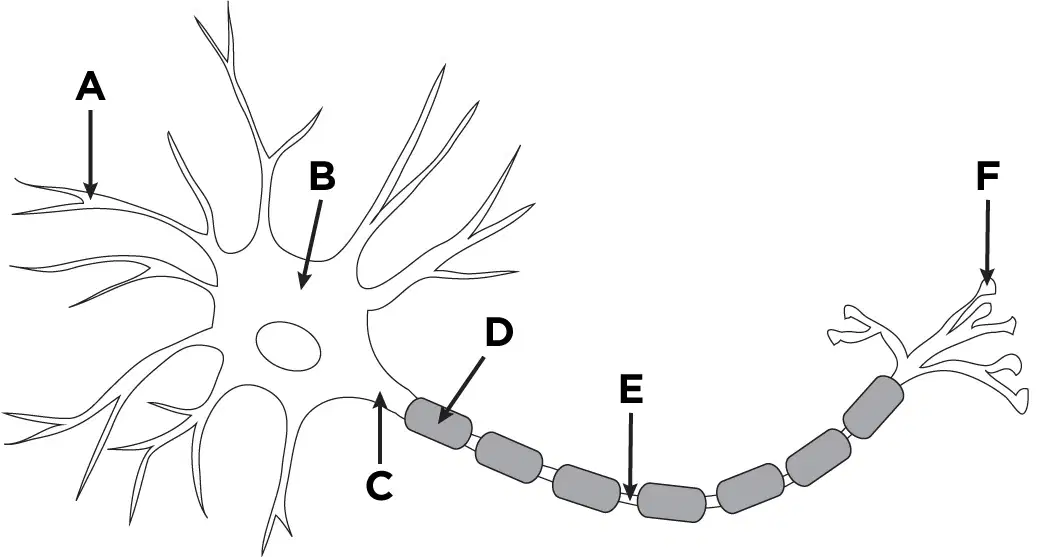
What is D
a)
Myelin
b)
Dendrites
c)
Axon
d)
Axon terminals
e)
Node of Ranvier
65.
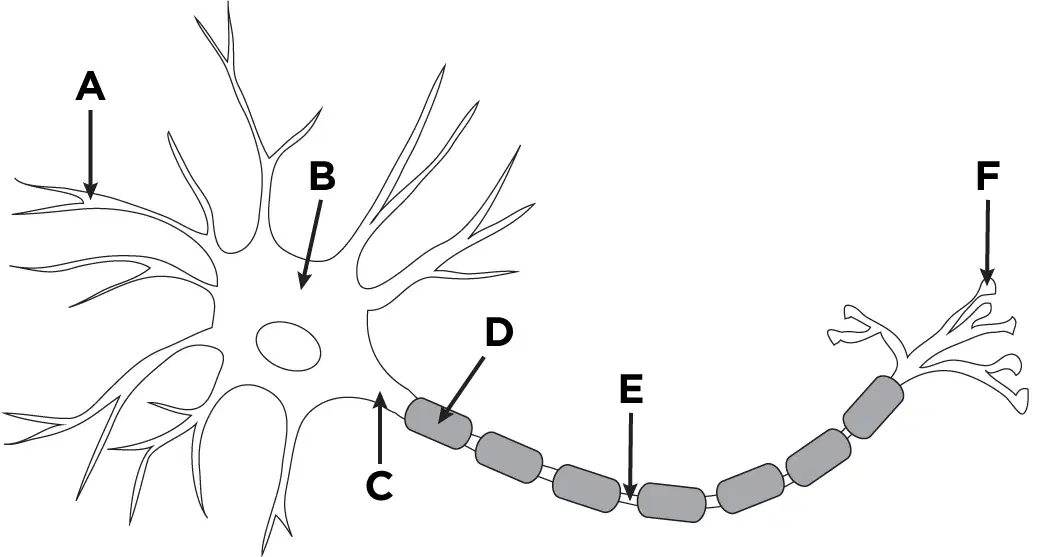
What is E
a)
Node of Ranvier
b)
Dendrites
c)
Axon
d)
Axon terminals
e)
Myelin
66.
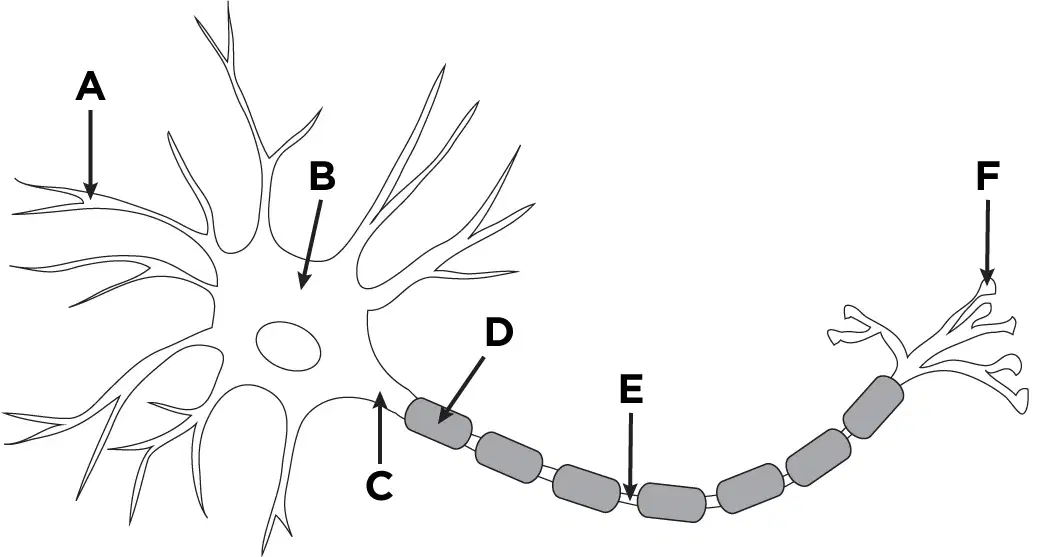
What is F
a)
Axon terminals
b)
Dendrites
c)
Axon
d)
Myelin
e)
Node of Ranvier
67.
What is the primary function of sensory receptors?
a)
To produce hormones
b)
To react to stimuli
c)
To transmit electrical impulses
d)
To provide structural support
68.
Which type of sensory receptor is responsible for detecting temperature variations?
a)
Thermoreceptors
b)
Mechanoreceptors
c)
Chemoreceptors
d)
Photoreceptors
69.
Which structures on the tongue contain taste buds?
a)
Villi
b)
Follicles
c)
Cillia
d)
Papillae
70.
How do taste and smell interact to influence flavor perception?
a)
They operate independently of each other
b)
Taste is solely responsible for flavor
c)
Smell enhances the perception of taste
d)
Taste diminishes the impact of smell
100 %

