
Font size
 Worksheets
Ancient and Classical Greece Review
Total questions: 82
Worksheet time: 41mins
What kind of government did Pericles introduce?
oligarchy
aristocracy
limited democracy
direct democracy
What did Athens use money from the Delian League for?
to build a powerful navy
to conquer other city-states
to expand Mediterranean colonies
to pay military and political leaders
Which art form deals largely with ancient Greek gods and goddesses?
fables
histories
myths
philosophies
What advantage did Sparta have in the Peloponnesian War?
better ships
fewer people to feed
greater land power
more money
How did Sparta respond to Athens’ attack on Syracuse?
destroyed most of the Athenian navy
made peace and joined the attack
surrendered and retreated to Sparta
turned its attention to other city-states
What land did Philip II of Macedonia most want to conquer?
Anatolia
North Africa
Persia
Spain
What leader greatly expanded the Macedonian Empire?
Alexander the Great
Darius I
Pericles
Philip II
What does Hellas mean in Greek?
Macedonia
Greece
Alexander
Philip
Who were Herodotus, Thucydides, and Xenophon?
gods
historians
playwrights
sculptors
Who were Aristotle, Plato, and Socrates?
philosophers
poets
political leaders
warriors
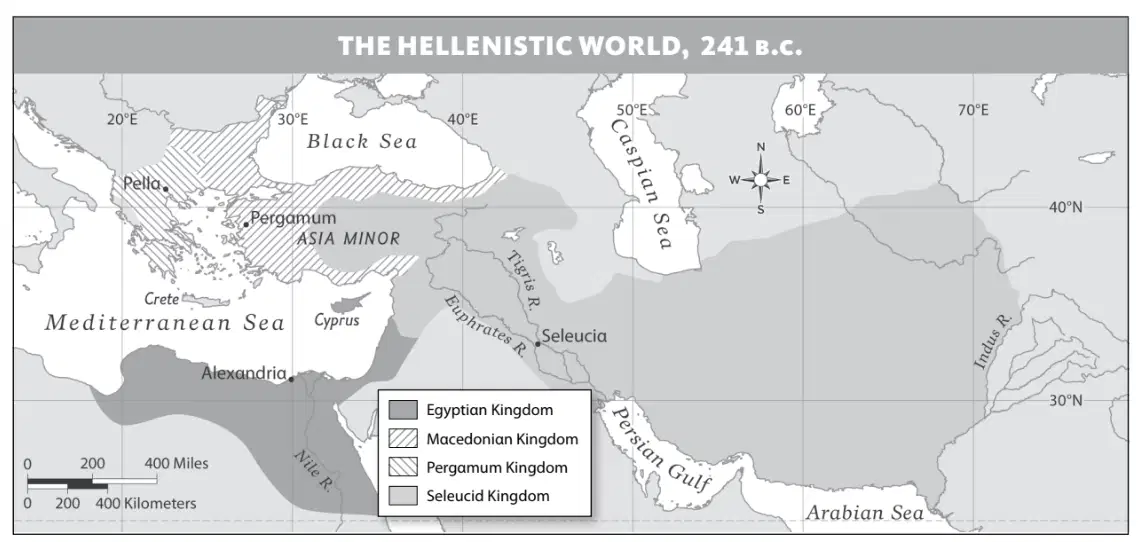
Use the map and your knowledge of classical Greece to answer the question: Which kingdom had the most territory?
Egyptian
Macedonian
Pergamum
Seleucid
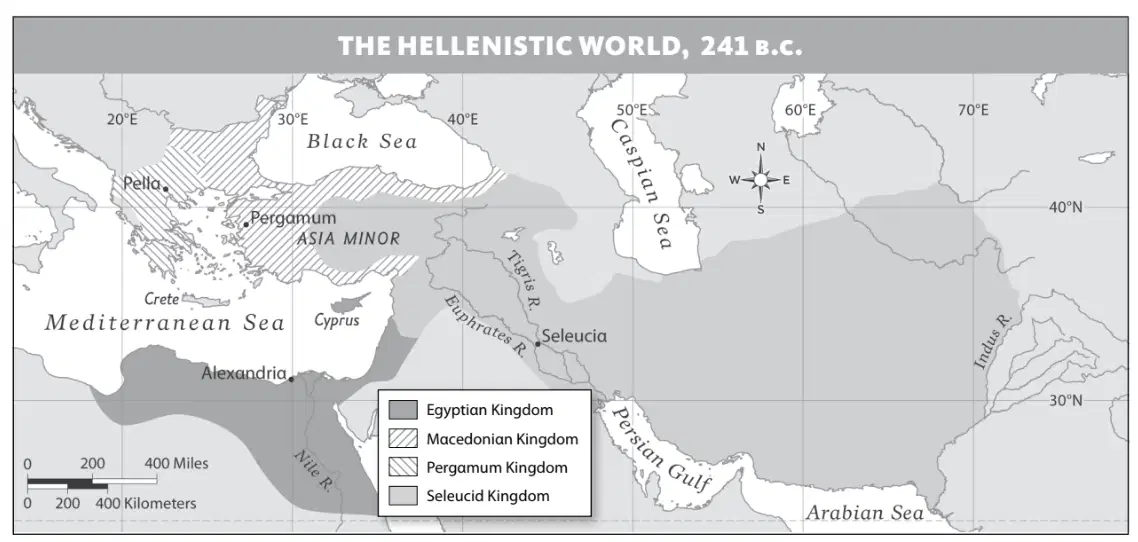
Use the map and your knowledge of classical Greece to answer the question: Which empire controlled all of this territory in 323 B.C.?
Egyptian
Macedonian
Pergamum
Seleucid
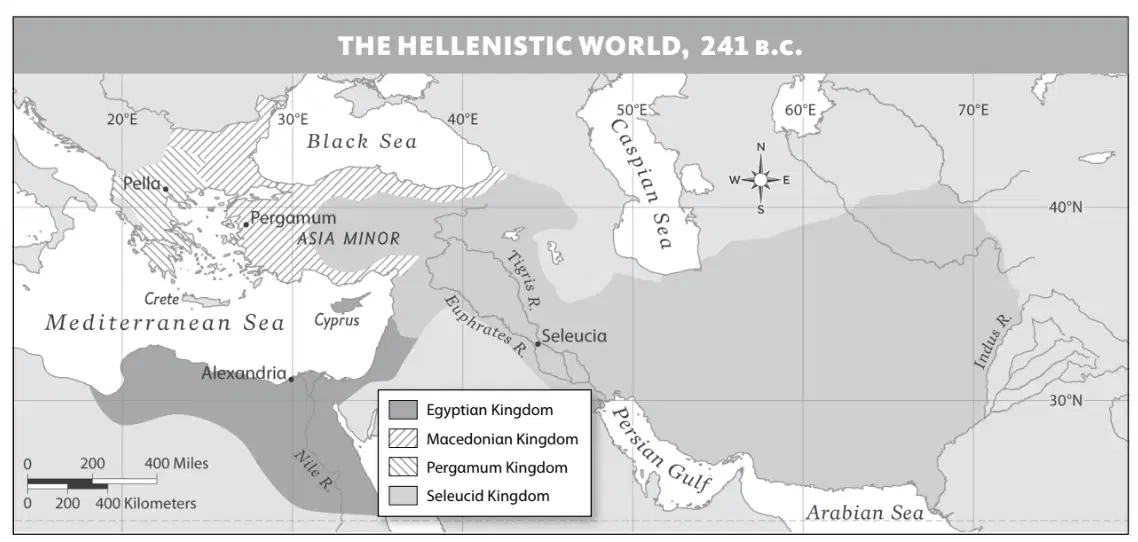
Use the map and your knowledge of classical Greece to answer the question: In which kingdom were the Tigris, Euphrates, and Indus Rivers found?
Egyptian Kingdom
Seleucid Kingdom
Macedonian Kingdom
Pergamum Kingdom
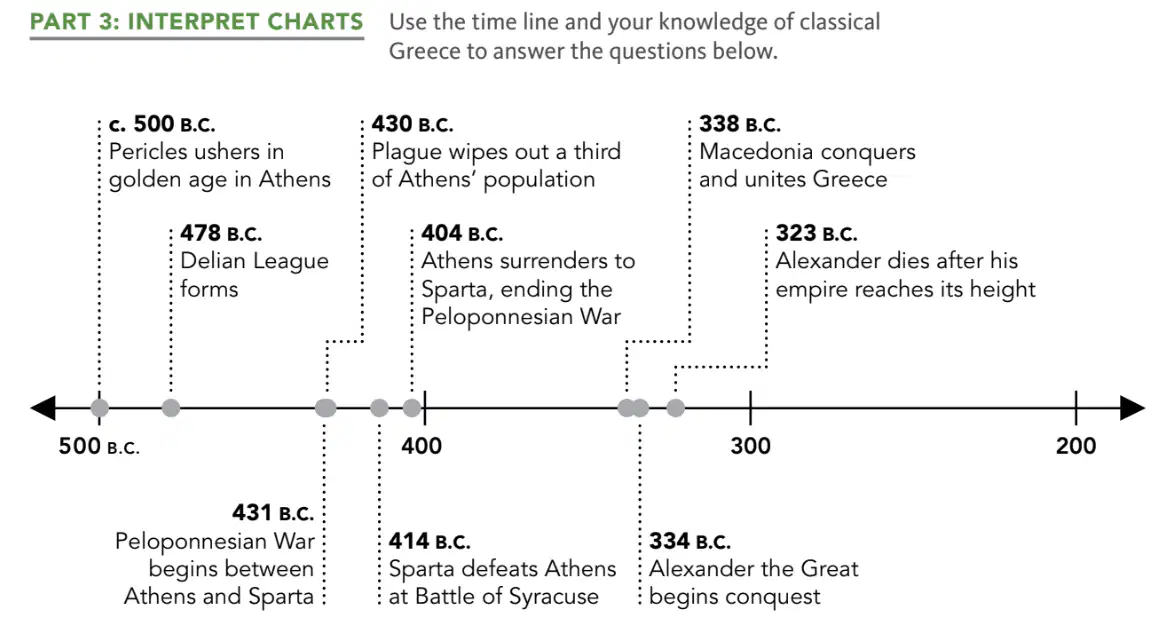
What began around 500 B.C.?
the Peloponnesian War
the Battle of Syracuse
the plague
a golden age in Athens
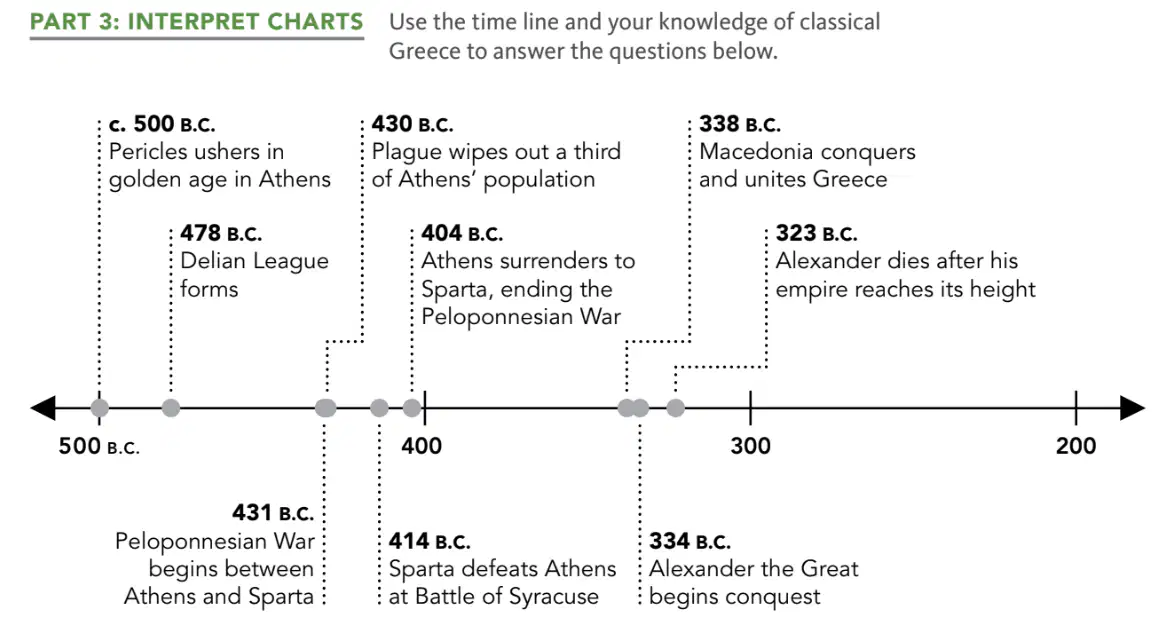
What event happened before the Peloponnesian War?
The Delian League was formed.
Macedonia conquered and united Greece.
Plague wiped out a third of Athens’ population.
Sparta defeated Athens at the Battle of Syracuse.
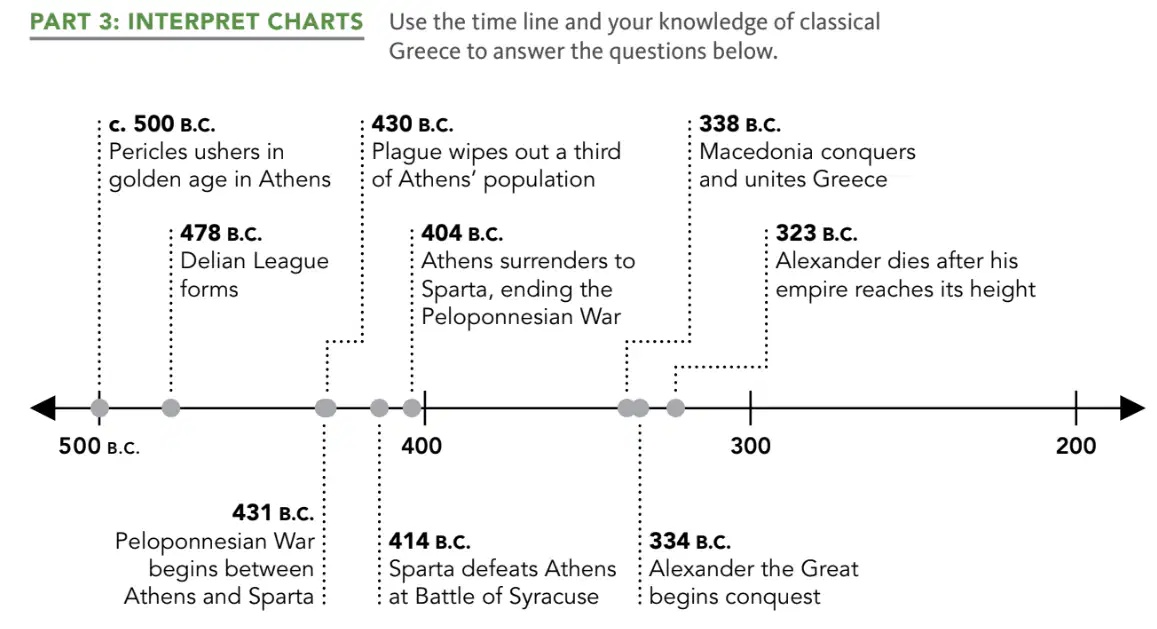
How long did it take Alexander the Great to build his empire?
16 years
15 years
11 years
9 years
Who introduced direct democracy in Athens?
Solon
Cleisthenes
Alexander
Pericles
How did Athens benefit from forming the Delian League?
Athens drew military and political leaders from the league.
Athens paid the league to conquer neighboring city-states.
Athens relied on the league to expand its colonies.
Athens used league money to build a powerful navy.
Who is the ancient Greek king of the gods?
Apollo
Poseidon
Zeus
Hermes
What different plans did Athens and Sparta develop to win the Peloponnesian War?
Athens used more warriors; Sparta used better technology.
Athens had more food; Sparta had more weapons.
Athens relied on siege tactics; Sparta relied on alliances.
Athens used sea power; Sparta used land power.
What happened when Athens attacked Syracuse?
Macedonia conquered all Greek city-states.
Persia intervened to end the war.
Sicily became a Greek colony.
Sparta destroyed the Athenian fleet.
What did Philip II of Macedonia want to do?
ally with Thebes
colonize Egypt
conquer Persia
destroy Sparta
Who accomplished Philip II’s military goal?
Alexander
Aristotle
Pericles
Sophocles
How far did the Macedonian Empire stretch by 323 B.C.?
from Egypt to Spain
from Greece to India
from Italy to Mesopotamia
from Macedonia to Persia
Which Greek historians recorded events in ancient Greece?
Aeschylus, Euripides, and Sophocles
Aristotle, Plato, and Socrates
Herodotus, Thucydides, and Xenophon
Homer, Aesop, and Aristophanes
Who left a lasting legacy in philosophical thinking?
Aeschylus, Euripides, and Sophocles
Aristotle, Plato, and Socrates
Herodotus, Thucydides, and Xenophon
Homer, Aesop, and Aristophanes
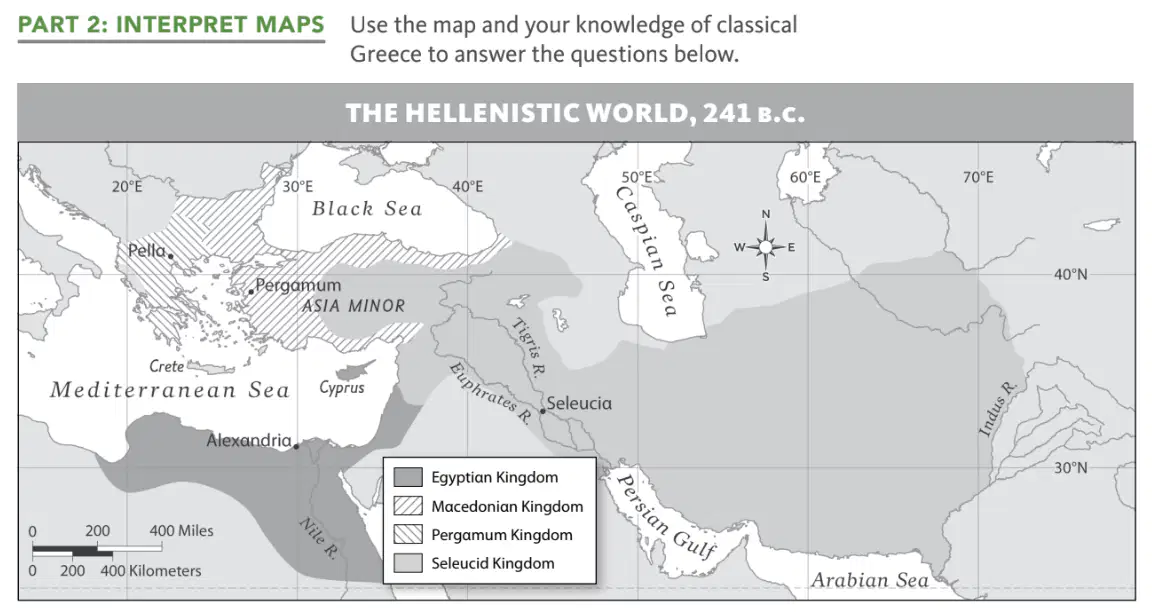
These kingdoms were once part of whose empire?
Alexander the Great
Darius I
Philip II
Pericles
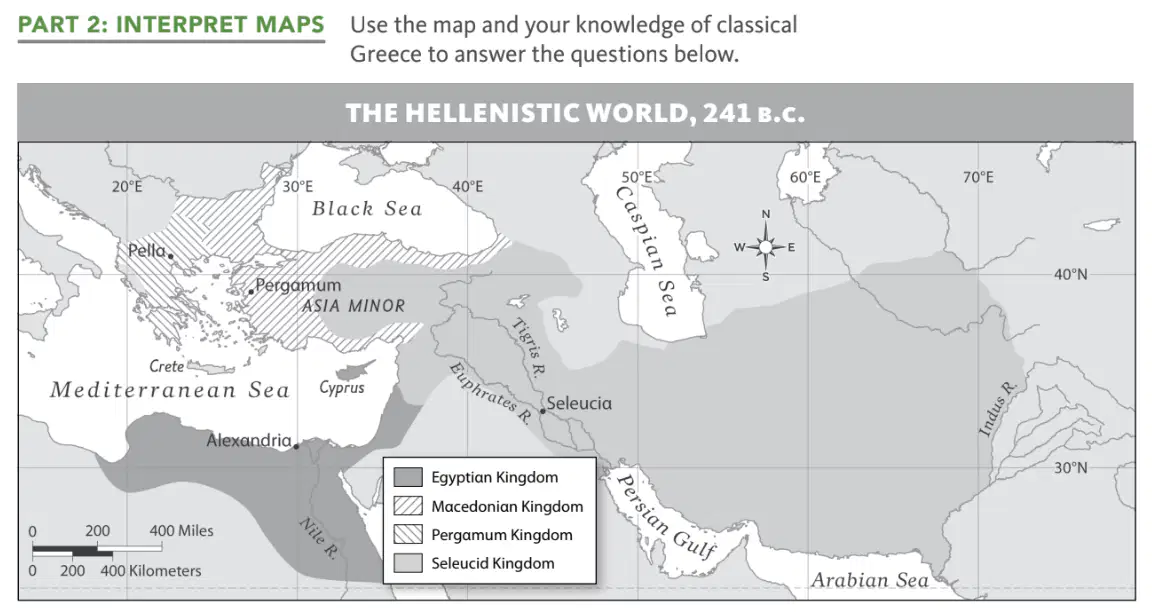
About how far, from west to east, did the Hellenistic World stretch?
about 400 miles
about 1,200 miles
about 2,000 miles
about 2,800 miles
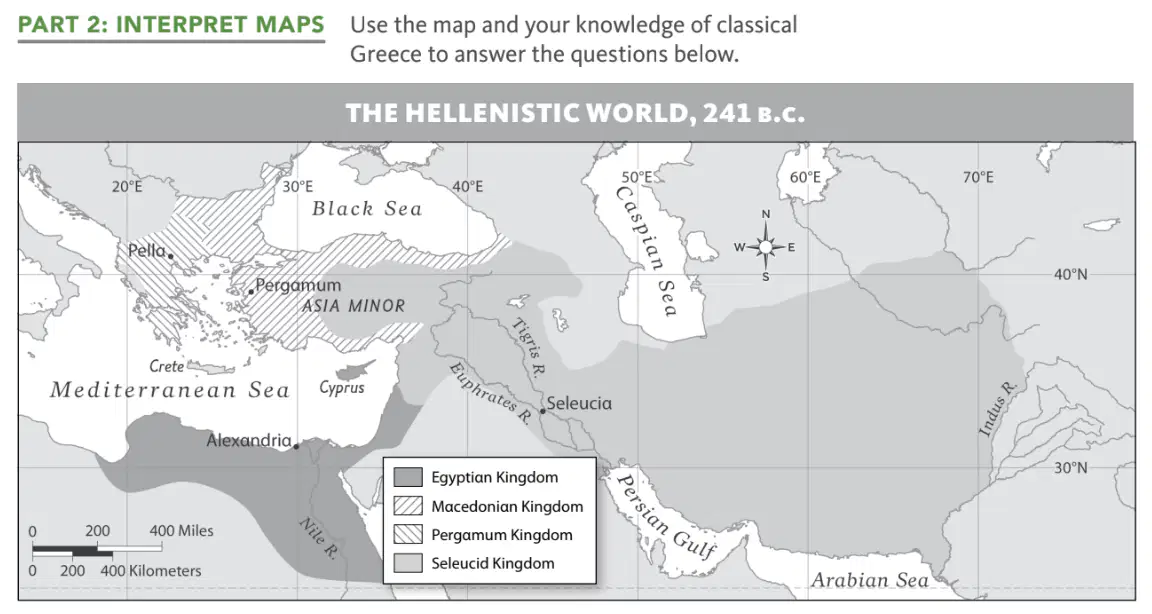
Alexandria, the center of Hellenistic culture, became part of what kingdom?
Egyptian
Macedonian
Pergamum
Seleucid
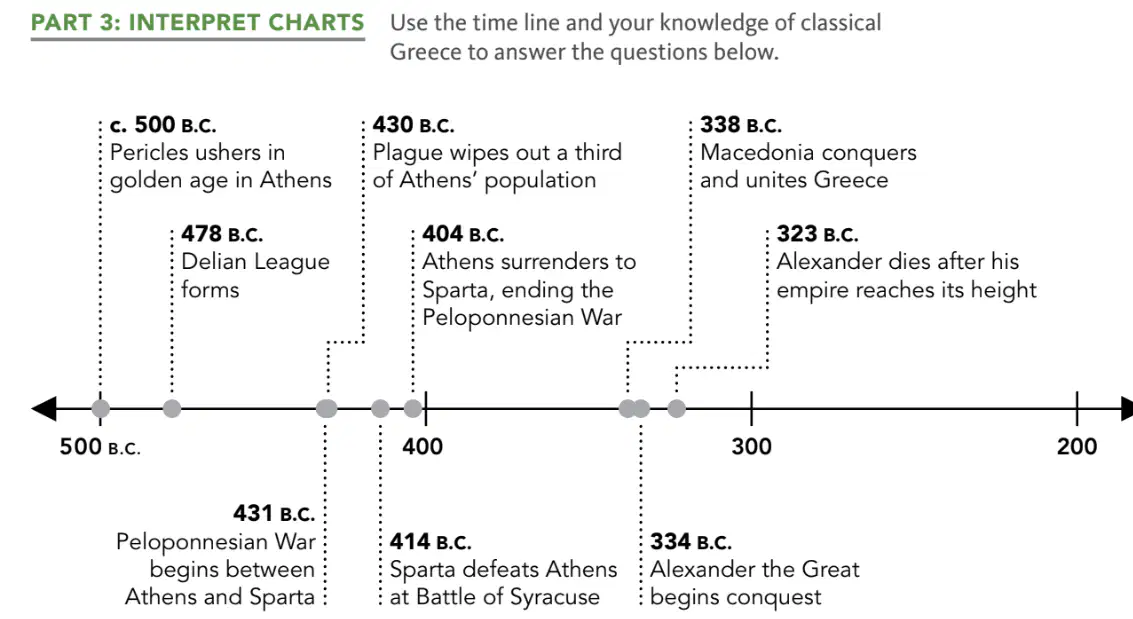
How long did the Peloponnesian War last?
47 years
37 years
27 years
17 years
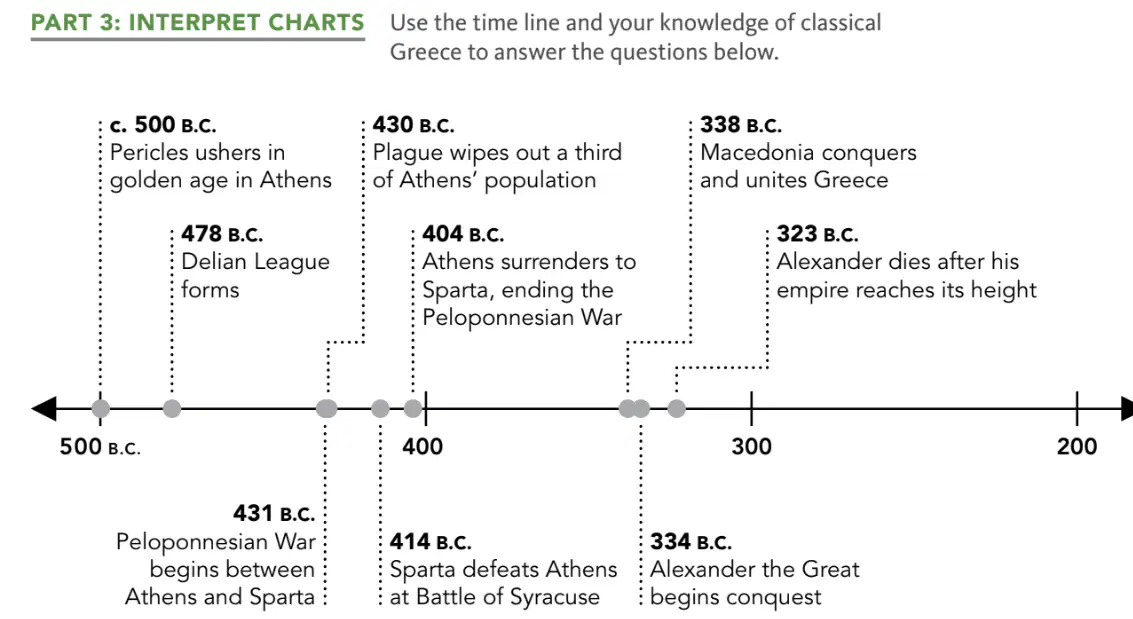
What two city-states were often in conflict?
Macedonia and Alexander
Delian and Pericles
Athens and Sparta
Peloponnesian and Syracuse
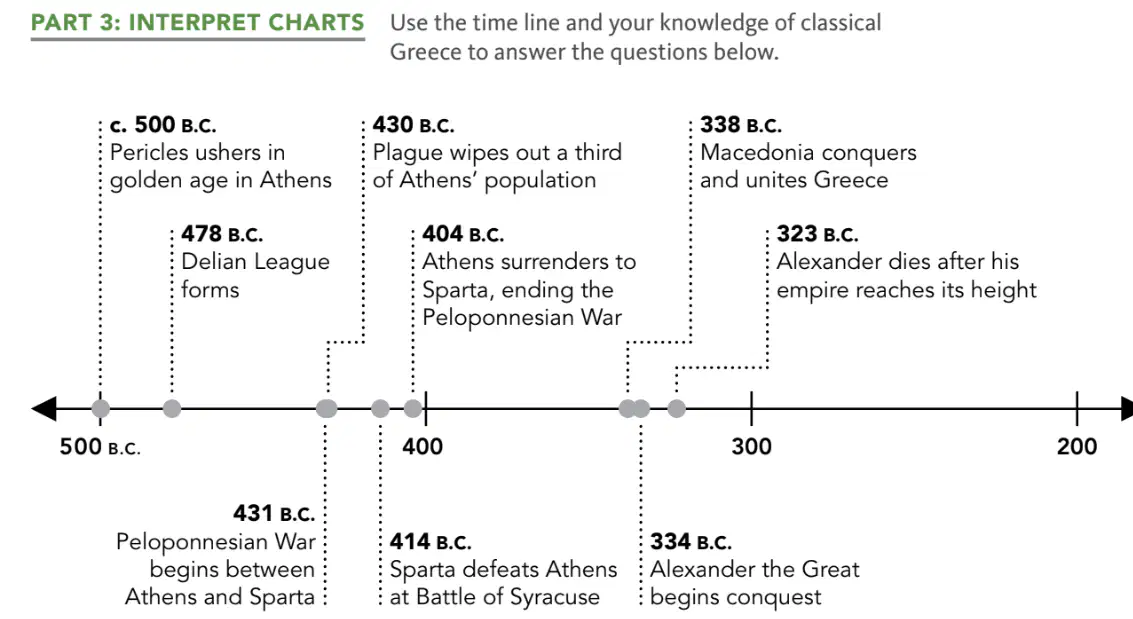
Greece became part of what empire?
Macedonian
Peloponnesian
Delian
Spartan
Which Greek philosopher became known for his question-and-answer teaching style?
Aristotle
Plato
Socrates
Xenophon
What did the Greek author Aesop write?
fables that teach moral lessons
histories of Greek wars
mythologies about Greek deities
treatises on philosophy
What art form, performed in amphitheaters, formed a center of Greek cultural life?
comedic and tragic plays
readings of epic poetry
lessons in rhetoric
public political debates
Ancient Greeks are best known for what type of art?
abstract and geometric mosaics
paintings of mythological beasts and deities
sculptures of the human form
tapestries depicting historic events
What common Greek architectural feature does the Parthenon display?
arches
columns
domes
turrets
How did ancient Greek courts resemble those of the United States?
They included summaries of evidence.
They protected against cruel and unusual punishment.
They provided for a trial by jury.
They secured citizens the right to an attorney.
What ruler united Greece under Macedonian rule?
Achilles
Alexander
Aristotle
Philip II
How did Macedonian forces overwhelm and defeat Greek armies?
by destroying their sea power
by fighting with a phalanx formation
by razing their farms and towns
by starving them through a prolonged siege
What lands did Alexander the Great conquer first?
Egypt
India
Persia
Uzbekistan
Why did Alexander’s empire stop when and where it did?
He could not cross the mountains of Asia.
His forces had run out of food and other supplies.
His soldiers were war-weary and wanted to go home.
What word describes the geographic spread of Hellenistic Greek culture?
decolonization
denunciation
diffusion
dissipation
What city became the center of Hellenistic Greek culture?
Alexandria
Athens
Corinth
Thebes
The Peloponnesian War broke out between which powers?
Athens and Sparta
Athens and the Delian League
Greece and Persia
Greece and Troy
During the Peloponnesian War, what other disaster did Athens face, besides attacks from Sparta?
drought
famine
internal revolt
plague
What event ended the truce between Athens and Sparta?
Athens’ disbanding of the Delian League
Athens’ siege of Syracuse
Sparta’s alliance with Persia
Sparta’s attack on Sicily
What action did Sparta take against a defeated Athens?
burned all of the city’s ships and temples
destroyed the city-state and surrounding lands
enslaved most of the city’s citizens
replaced the city’s democracy with an oligarchy
What Athenian historian recorded the events of the Peloponnesian War?
Herodotus
Homer
Pericles
Thucydides
Why were ostracons made and cast?
to banish citizens thought to be dangerous
to elect citizens as representatives
to select citizens for military service
to vote on laws in the citizens’ assembly
Under Cleisthenes’ reforms, who could participate in Athenian government?
all male and female citizens of Athens
all male citizens born in Athens
only male property owners born in Athens
only wealthy male citizens of Athens
What reform did Pericles make?
cancelled citizens’ debts
freed enslaved farmers
organized citizens into four classes
paid jurors and public officials
Why did Athens and other Greek city-states form the Delian League?
to colonize the Mediterranean
to counter the Peloponnesian League
to defend against the Persian Empire
to share natural resources and trade
What city-state started the Peloponnesian League?
Athens
Delos
Corinth
Sparta
For what god did ancient Greeks build the largest temple in a city-state?
for the king of the gods
for the god or goddess of war
for their favorite Olympian
for their patron god or goddess
Which civilization began in Crete?
Minoan
Mycenaean
Persian
Trojan
Which people took over from the Minoans?
Mycenaeans
Persians
Phoenicians
Trojans
What did the ancient Greeks build at the highest point of their cities?
acropolis
agora
barracks
theaters
What type of government did merchants form in some Greek city-states?
aristocracy
democracy
oligarchy
tyranny
Which of the following was stressed in Spartan society?
education
democracy
arts
military
Who introduced democratic government in Athens?
Homer
Leonidas
Solon
Thucydides
What enemy of Greece did Darius I and Xerxes lead?
Ionia
Persia
Sea Peoples
Troy
What led Athens and Sparta to fight together?
attacks by the Persians
colonization in the Mediterranean
military training schools
trade with the Phoenicians

Around what body of water was most of Greek trade carried out?
The Mediterranean Sea
The Black Sea
The Atlantic Ocean
The Aegean Sea
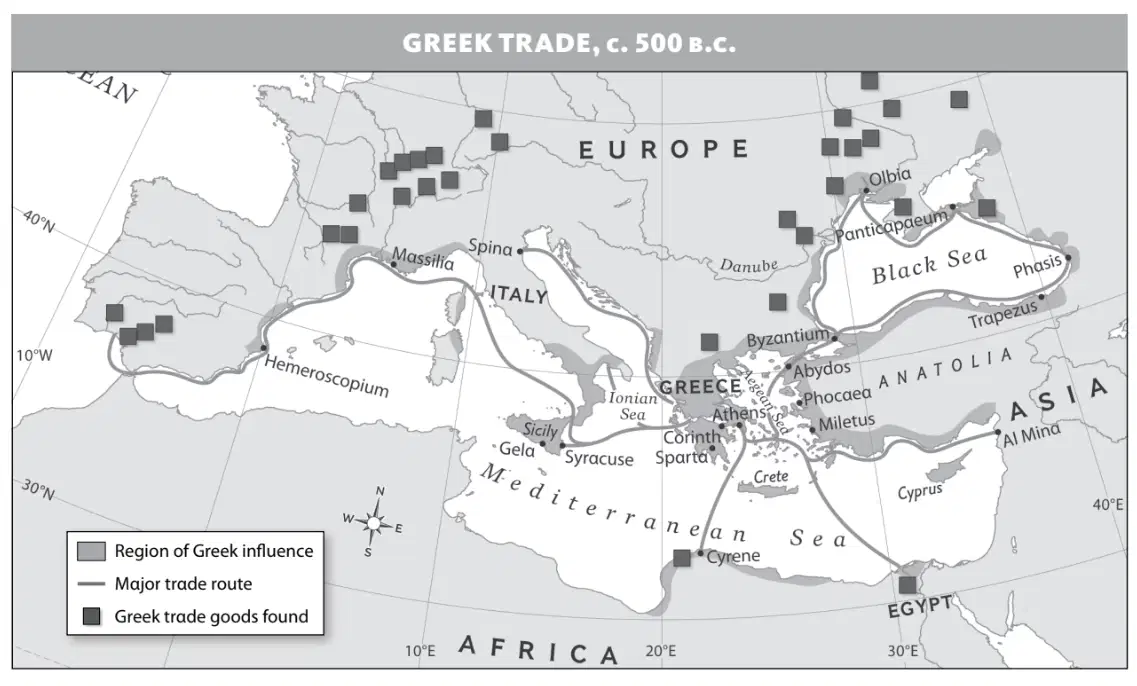
Where did Greek influence mostly spread?
In coastal areas
In inland areas
In central Europe
In northern Africa

What was found along many rivers in Europe?
Greek colonies
Greek outposts
Greek trade goods
Greek triremes
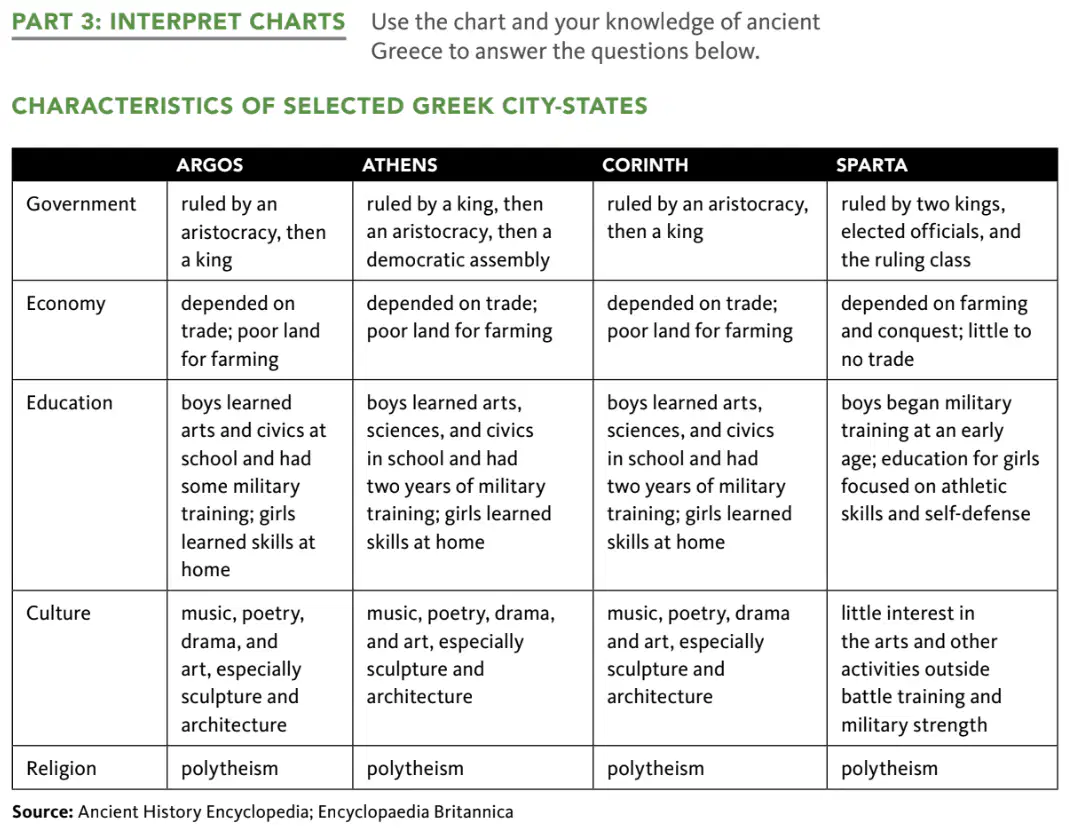
The governments of which two city-states were most alike?
Athens and Sparta
Argos and Athens
Argos and Corinth
Corinth and Sparta
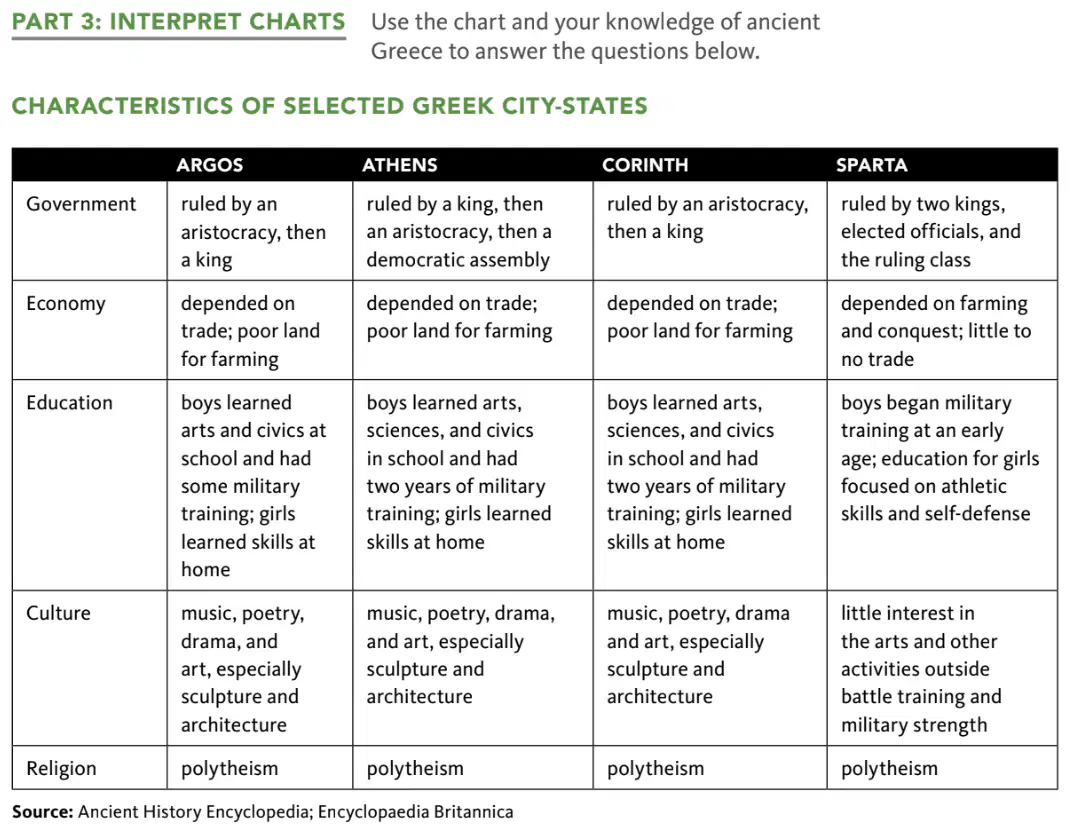
Which city-state obtained what it needed through conquest?
Argos
Athens
Corinth
Sparta

Which city-state developed a democratic form of government?
Argos
Athens
Corinth
Sparta
What did Minoan and Mycenaean civilizations have in common?
They built great city-states based on agriculture.
They colonized much of the Mediterranean coast.
They became part of the foundation of Greek civilization.
They left no evidence of a written language.
Where did Minoan civilization begin?
Crete
Ionia
Mycenae
Troy
Which group conquered the weakened Minoans?
Mycenaeans
Persians
Sea Peoples
Trojans
Where did Greek city-states build their acropolis?
at the highest point of the city
in the center of the city
in the marketplace of the city
where the warriors lived in the city
What group challenged the aristocratic rule of tyrants in some Greek city-states?
farmers
merchants
priests
warriors
What geographic features of Greece encouraged the independence of Greek city-states?
high mountains
arid grasslands
long coastlines
active volcanoes
How did Solon change Athens?
He allowed an assembly of free citizens to pass laws.
He arranged a military alliance with Sparta.
He instituted a system of non-military education.
He led the city-state to victory against the Persians.
Who were Darius I and Xerxes?
Athenian authors
Persian emperors
Spartan kings
Trojan warriors
What is the significance of the Iliad and the Odyssey?
They detail the laws and governing structures of ancient Greek city-states.
They explain the formation of the Minoan and the Mycenaean civilizations.
They provide insight into the mythology and history of ancient Greece.
They record the events of the Trojan and the Persian wars.
Why did Athens and Sparta form an alliance?
to colonize the Mediterranean coast
to exchange needed raw materials
to share military training programs
to resist conquest by the Persians

How did the Greeks probably convey most of their trade goods?
by ship along rivers and lakes
by ship along sea coasts
overland along the coast
overland along existing trade routes

How far south did Greek trade reach?
Egypt
Italy
Anatolia
Sicily
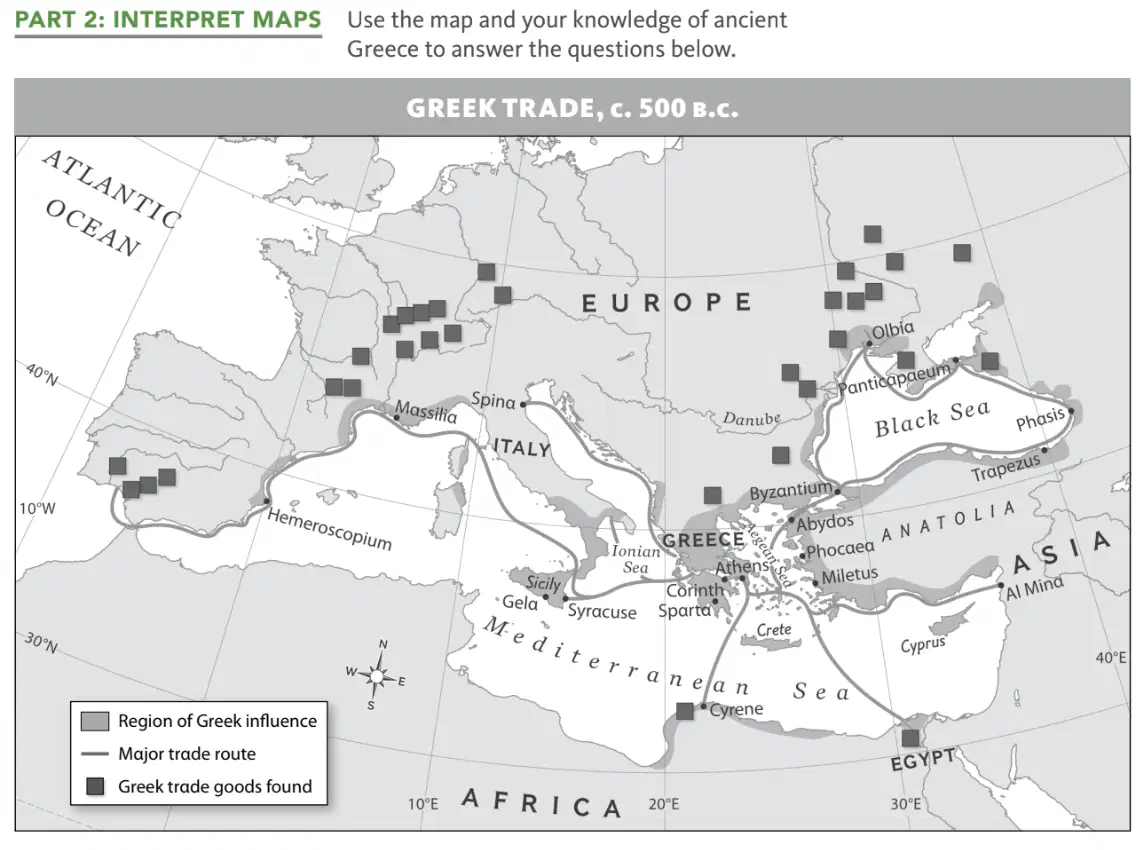
Where were many Greek trade goods found in Europe?
along rivers
in mountainous regions
near the Black Sea
on the Atlantic coast

