
Font size
 Worksheets
European Imperialism in Africa
Total questions: 25
Worksheet time: 25mins
By 1914, how much of Africa did Europeans control?
80%
90%
50%
40%
When a country takes over territory for money and power
Nationalism
Imperialism
The National Anthem
Bullyism
In 1884, 14 nations met at the Congress of Berlin to do what?
Set the rules for colonizing Africa
To discuss new borders with the African Nations
Fight over land
How to bring in clean drinking water
What led to Imperialism in Africa?
Cash Crops
American Independence
Industrial Revolution
The Civil War
The phrase “Scramble for Africa” is most associated with:
World War II
Industry
European Imperialism
Religious rights
About how much of Africa was controlled by European nations?
60%
70%
80%
90%
What was the name of the meeting of European countries where they decided on how to divide up Africa?
Conference of Paris
Treaty of Versailles
Berlin Conference

Identify one of the political motives behind European imperialism in Africa. (Two Choices)
The spread of industrial technology
The competition for power and prestige among European nations
The promotion of global peace
The desire for raw goods.
At what conference did the Europeans divide up Africa for their colonization?
Egypt Conference
London Conference
Belgium Conference
Berlin Conference

How many European Countries were involved in the colonization of Africa?
5
7
3
10
Which of these best describes the Scramble for Africa?
Imperialist powers sliced Africa amongst themselves by drawing borders on a map
Diplomats worked with tribal leaders to determine how to colonize countries in Africa
European countries worked to finance capital expansion in African nations through loans.
The United States used the Roosevelt Corollary to prevent nations from colonizing Africa.
Who was the general in the DRC for King Leopold II?
Bismarck
Kurtz
Stanley
Hanks
The 3 M's of Imperialism in Africa are...
M & M's
Money, Machines, Muscle
Money, Power, Machines
Money, Manipulation, Moron
How many African Nations were invited to the Congress of Berlin?
10
15
30
0
Horrible ______________ were committed to the African people for their resources.
Atrocities
Laws
Languages
Acts of Kindness
During the Age of Exploration, Europe explored the
Interior of Africa
North America Only
The African Coast
Southern Africa
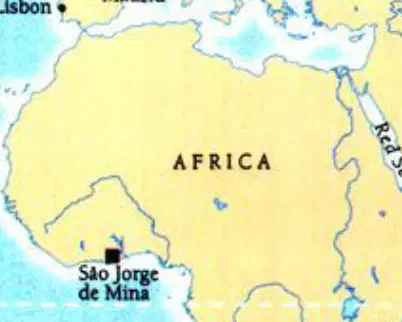
What was a limitation for European countries in expanding further inland from their trading posts in Africa, India, and Southeast Asia?
Hostile local populations
Lack of interest in inland territories
Lack of technology
Unfavorable climate conditions
What natural resources were primarily responsible for attracting European powers to Africa by the late 1800s?
Oil and gas
Uranium and copper
Gold and diamonds
Manganese and iron ore
According to Cecil Rhodes, why did the British feel the need to expand?
Because they needed more land for agriculture
Because they were looking for new markets
Because they believed they were superior and therefore had to expand
Because they wanted to explore new territories
What was one of the causes of New Imperialism according to the learning material?
Europeans needed to find new places for vacation.
Europeans wanted to spread their ideas and culture to non-Europeans.
Europeans were looking for new sports to play.
Europeans wanted to learn from the cultures in Africa.
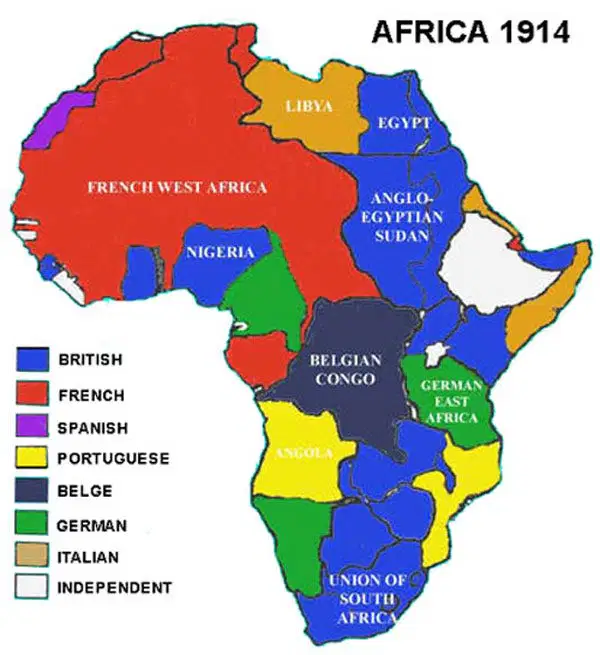
Which European country controlled the largest area in Africa after the scramble in 1914?
British
French
German
Portuguese
What is one positive effect of European influence in Africa according to the image?
Europeans introduced modern transportation and communications.
Europeans led to the erosion of traditional values.
African people were treated as inferior to Europeans.
Europeans introduced a new language.
What continent did Europeans conquer almost entirely?
Asia
South America
Africa
Australia
What was the primary motivation for European countries to engage in the Scramble for Africa during the late 19th century?
A) To spread Christianity
B) To acquire new territories for settlement
C) To exploit natural resources and establish trade routes
D) To escape political conflicts in Europe
Which European country controlled the largest portion of Africa during the height of imperialism?
A) France
B) Germany
C) Belgium
D) United Kingdom

