
NEW
Font size
 Worksheets
AP Microeconomics Review Exam
Total questions: 15
Worksheet time: 15mins
What is the term for the principle that suppliers will normally offer more for sale at higher prices and less at lower prices?
law of supply
supply schedule
law of demand
market demand
____ is the struggle between buyers and sellers to get the best products at the lowest prices.
Competition
Productivity
Free enterprise
Economic freedom

The graph below is an example of a
Demand Schedule
Demand Curve
Supply Schedule
Supply Curve

The table below is an example of a
Supply Schedule
Supply Curve
Demand Curve
Demand Schedule
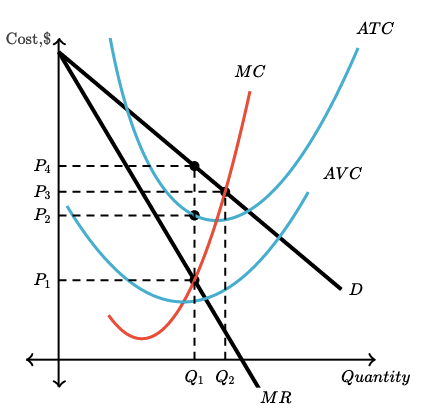
For the graph shown here, if the firm were regulated to the socially optimal / allocatively efficiency output and price the firm would produce at ___ and charge ___
Q2 ; P2
Q2 ; P3
Q1 ; P1
Q1 ; P2
Q1 ; P4
If this single price monopolist could now perfectly price discriminate it would produce at ___ and charge ___
Q2 ; P2
Q2 ; P3
Q1 ; P1
Q1 ; P2
Q1 ; P4
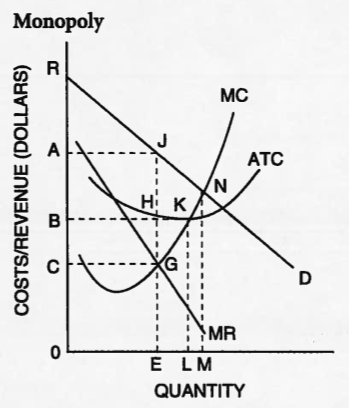
If this monopolist is given a per unit subsidy, what would happen to amount of consumer surplus?
increase due to MC shifting right and price falling
decrease due to MC shifting right and price rising
increase due to ATC shifting right and price falling
decrease due to ATC shifting right and price rising
not change
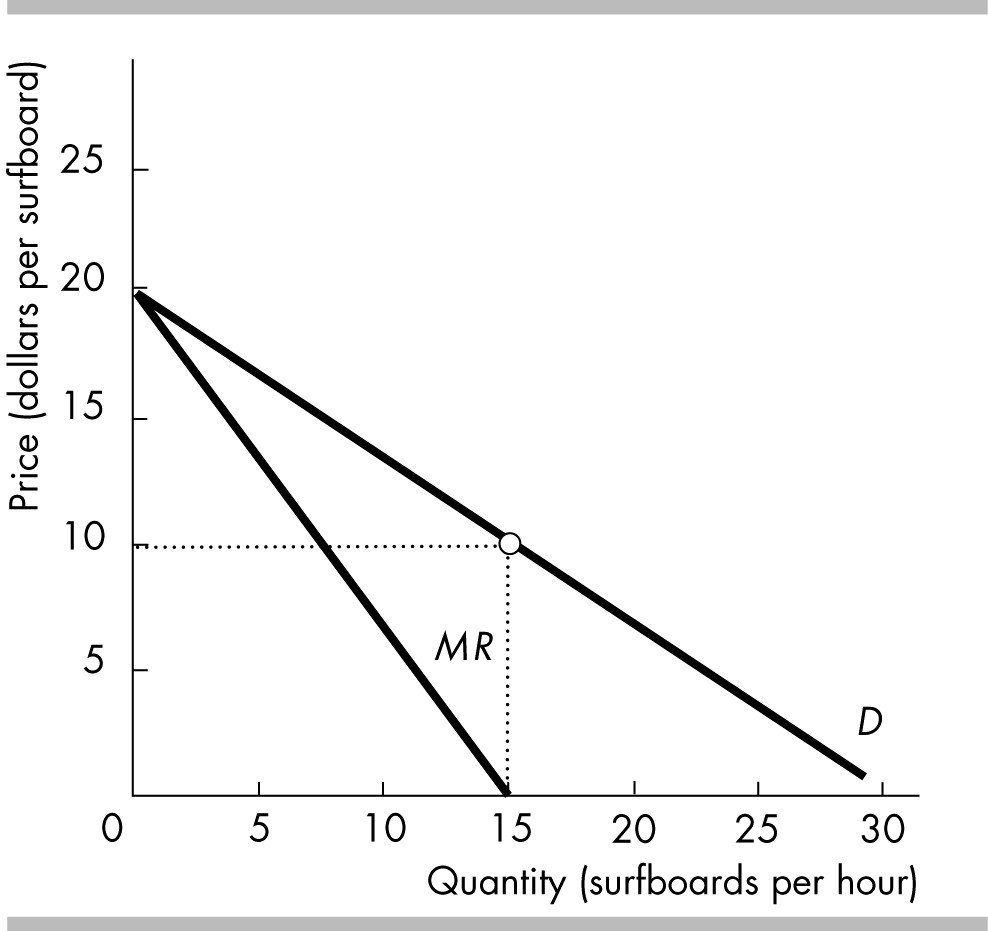
Sue's Surfboards is the sole renter of surfboards on Big Wave Island. Sues demand and marginal revenue curves are illustrated in the figure above. Sue's Surfboards currently rents 15 surfboards an hour. Sue's total revenue from the 15 surfboards is
$300
$220
$150
$100
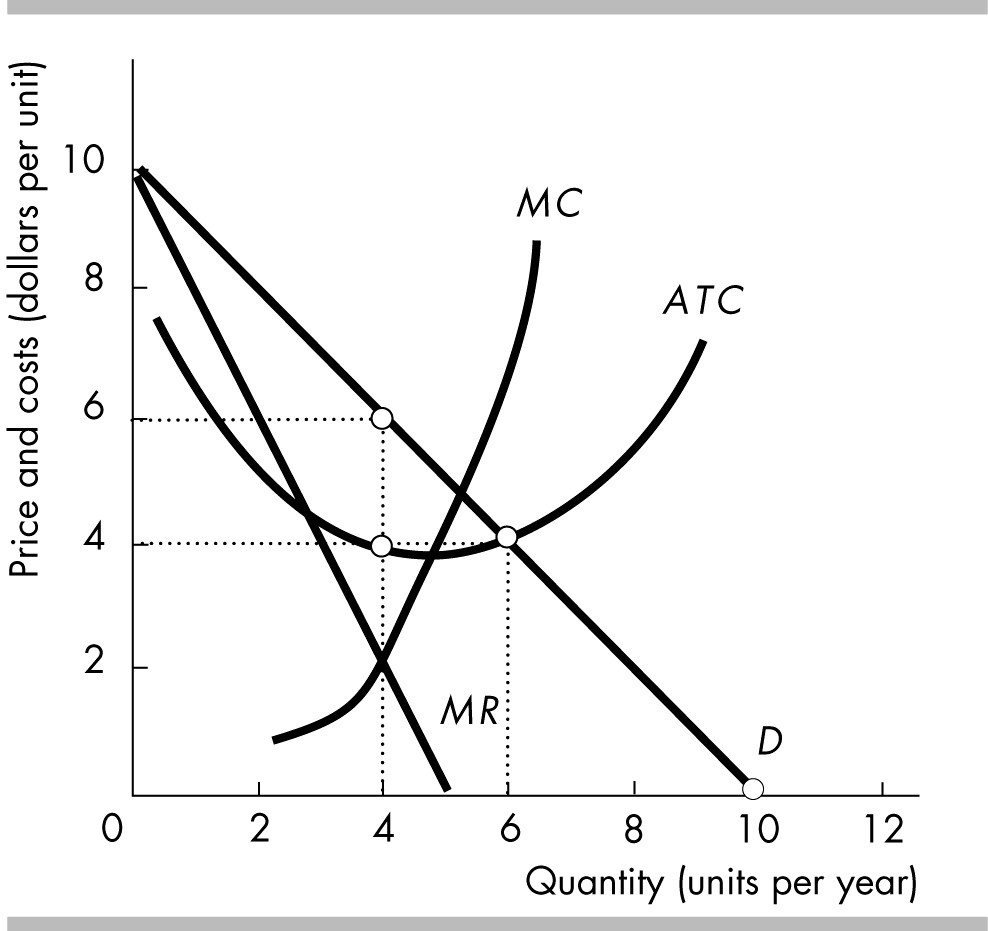
For the unregulated, single-price monopoly shown in the figure above, when its profit is maximized, output will be
4 units per year and the price will be $6.
4 units per year and the price will be $4.
6 units per year and the price will be $4.
5 units and $5
10 units and $0
For this monopolist, what is the area of consumer surplus?
ABHJ
AJGC
ARJ
ARJE
Total revenue for this monopoly is represented by area:
0CGE
0AJE
AJHB
BAJH
If this monopolist is given a lump-sum subsidy its output would
increase to M. A lump-sum subsidy shifts the firm's MC curve to the right.
increase to L. A lump-sum subsidy shifts the firm's MC curve to the left.
decrease by the amount of the subsidy.
remain at E. A lump-sum subsidy does not shift the firm's MC curve.
Shift the MR curve to the right
What is the term for the additional satisfaction or utility that a consumer receives from consuming one more unit of a good or service?
A) Marginal utility
B) Total utility
C) Opportunity cost
D) Consumer surplus
In a perfectly competitive market, what happens to the price of a good when there is an increase in supply, assuming demand remains constant?
A) The price increases
B) The price decreases
C) The price remains the same
D) The price becomes unpredictable
Which of the following best describes a situation where a firm can produce at a lower average cost due to an increase in the scale of production?
A) Diseconomies of scale
B) Economies of scale
C) Constant returns to scale
D) Diminishing returns

