
 Worksheets
The Renaissance Unit Test
Total questions: 25
Worksheet time: 13mins
Imagine you are living in Florence during the 14th century, witnessing a remarkable transformation in art, culture, and science. This period is known as the Renaissance, which literally means a(n) -
“rebirth” of classical knowledge
The “uncovering” of truth
The “discovery” of life
The “rebirth” of life
Imagine you are a merchant in the 14th century, seeking to explore the birthplace of the Renaissance to trade in art and culture. In which modern-day country would your journey begin?
France
Spain
Italy
Greece
Which one of the lasting effects from the Crusades influenced the start of the Renaissance?
Religious divisions
Lasting trade links
Consolidated power in Europe
Christian dominance
In the vibrant world of the Renaissance, who were the influential figures known as “patrons”?
Wealthy Renaissance priests
European teachers
Mathematical scholars
Wealthy people who sponsored artists
During the Renaissance, which family was considered the most influential and powerful in shaping the cultural and political landscape of Europe?
The Accoltis
The Albizzi family
The Medici
The Albergo family
During the Renaissance, people began to explore new ideas and ways of thinking. One of these was secularism. In this context, what does secularism mean?
Loyalty to the state rather than the individual family
The state of running a tax-free civilization
The focus on worldly themes instead of religious
An emphasis on democracy over autocracy
During the Renaissance, which of the following areas did NOT see significant cultural advancement?
Agricultural technology
Arts
Philosophy
Literature
During the Renaissance, a renowned artist was commissioned to create a portrait that would become one of the most famous paintings in history. Who was this master painter?
Michelangelo
Leonardo da Vinci
Botticelli
Borromini
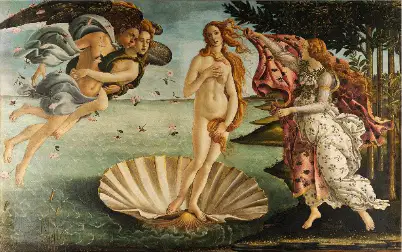
Imagine you are walking through a grand Renaissance art gallery. You come across a painting that captures the essence of beauty emerging from the sea. Which famous Renaissance painting are you admiring?
The Death of Sabine
The Venus of Urbino
The Birth of Venus
The Pieta
In a grand Renaissance festival, which writer is celebrated for his vivid and imaginative depictions of the afterlife?
Raphael
Dante
Petrarch
Erasmus
During the Renaissance, which humanist scholar was known for his extensive travels purely for the joy of exploration, earning him the title of “the first tourist”?
Raphael
Petrarch
Leonardo da Vinci
Botticelli
What was one of the major impacts of the Renaissance?
The first ever discovery of mathematics.
The creation of spice trade routes.
Marked the birth of the “modern world”.
Reunited Christianity with Islam.
Imagine you are an art historian exploring the Renaissance period. Who would you identify as the Trinity of Great Masters from this era?
Da Vinci, Raphael, and Michelangelo
Raphael, Botticelli, and Borromini
Botticelli, Petrarch, and Erasmus
Erasmus, Medici, and Dante

Imagine you are living in the Renaissance era, surrounded by art, science, and innovation. You come across a quote that inspires you to explore both the arts and sciences to develop a complete mind. Which Renaissance figure, often described as the perfect “Renaissance Man,” is known for such a philosophy?
Raphael
Michelangelo
Leonardo da Vinci
Dante
Imagine you are a scholar in the vibrant city of Florence during the Renaissance, a time of great intellectual awakening. You are tasked with studying one of the pioneering works of political philosophy that has just been published. Which of the following works would you choose?
Machiavelli’s The Prince
Dante’s The State of Man
Angomorro’s Democracy and Freedom
Erasmus’ Liberalism and Religion
Imagine you are living in the Northern Renaissance period in England. Which writer would you most likely hear about as the most prominent figure of this era?
Jane Eyre
William Shakespeare
Jane Austen
Charles Dickens
During the Renaissance, scholars and artists began to explore new ideas and perspectives. What was the definition of the “humanism” concept during this period?
The idea that humans are more important than religion
An intellectual movement that focused on human potential and achievements
An education concept that put children’s learning at the forefront
The concept of separation between church and state
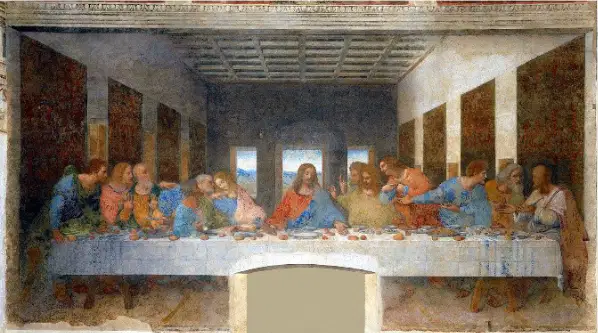
Painted in a church during the Renaissance, a gathering of individuals is captured in this famous artwork. What is the name of this Masterpiece?
The Last Supper
The Pieta
The Wedding at Cana
Transfiguration
During the Renaissance, a period of great cultural and intellectual growth, which invention played a crucial role in disseminating new ideas and knowledge across Europe?
The compass
The steam engine
The printing press
The telescope
Imagine you are an artist in the Renaissance period. Which of the following techniques would you most likely use to bring depth and realism to your paintings?
Abstract forms
Minimalist design
Use of perspective
Monochrome colors
Which Renaissance artist is known for the sculpture of David?
Leonardo da Vinci
Michelangelo
Raphael
Donatello
During the Renaissance, which city was known as the cradle of the Renaissance due to its cultural and artistic influence?
Milan
Venice
Florence
Rome
How did the artistic innovations of the Renaissance reflect the broader societal changes of the time?
They focused exclusively on religious themes, reinforcing the power of the church.
They mirrored the rigid structures of medieval art, showing little change in style or technique.
They embraced realism and individual expression, symbolizing a shift towards humanism and secularism.
They were primarily concerned with abstract concepts, ignoring the human experience.
Considering Machiavelli's perspective in "The Prince," how might his ideas challenge the ethical frameworks of modern political leaders?
They emphasize the importance of public opinion over strategic decision-making.
They suggest that leaders should avoid making difficult decisions to maintain public favor.
They advocate for the use of manipulation and deceit as valid tools for political success.
They encourage leaders to prioritize ethical considerations above all else.
In what way did the cultural exchange facilitated by trade routes during the Renaissance impact European society?
It enriched European culture by introducing new ideas, art forms, and philosophies.
It led to the isolation of European nations from global influences.
It had little to no impact on society.
It primarily benefited the wealthy elite, leaving common people unaffected.

