
NEW
Font size
 Worksheets
Studies Weekly: The Renaissance
Total questions: 68
Worksheet time: 34mins
What does the word Renaissance mean?
Resurrection
Rebirth
Rejuvenation
Reformation
In what country did the Renaissance start?
Italy
Greece
France
Germany
Which was NOT a characteristic of Renaissance art?
More secular subjects than before
More focus on perspective than before
More realistic human figures than before
More religious subjects than before
Which do you think is the best example of a "Renaissance Man"?
Joe paints portraits, loves calculus, writes articles on anatomy, and is an expert gardener.
John is an expert in computer science and can program any type of computer.
Jeb is great at almost every sport--basketball, football, soccer, and tennis.
Jethro is a fantastic writer and writes not only poetry but also essays and novels.
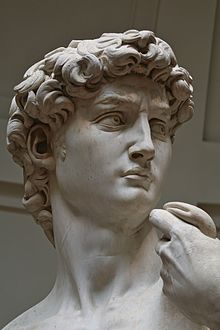
This work by Michelangelo is called what?
Michael
Noah
David
Vitruvius
Which of these was the PRIMARY intellectual movement of the Renaissance?
Secularism
Humanism
McCarthyism
Classicism
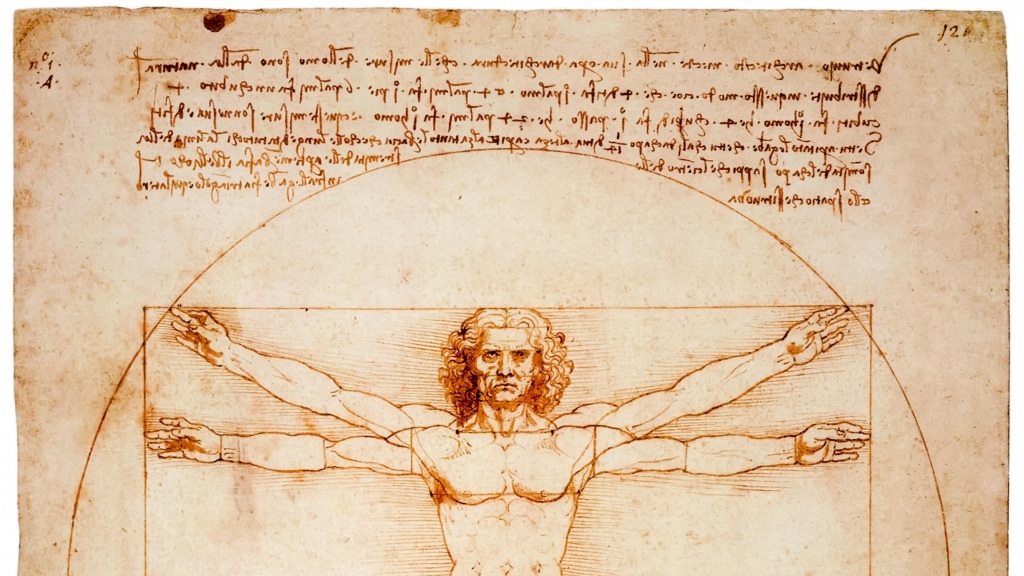
Leonardo da Vinci called this famous drawing
Vitruvian Man
Architectural Man
Renaissance Man
Vienna Man
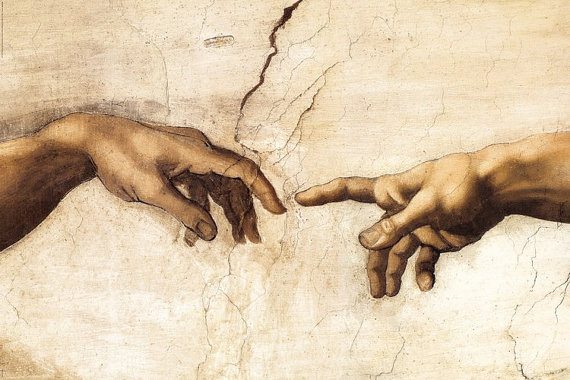
You would find this painting by Michelangelo on the ceiling of what building?
The Metropolitan Museum of Art
The Louvre
The US Capitol
Sistine Chapel
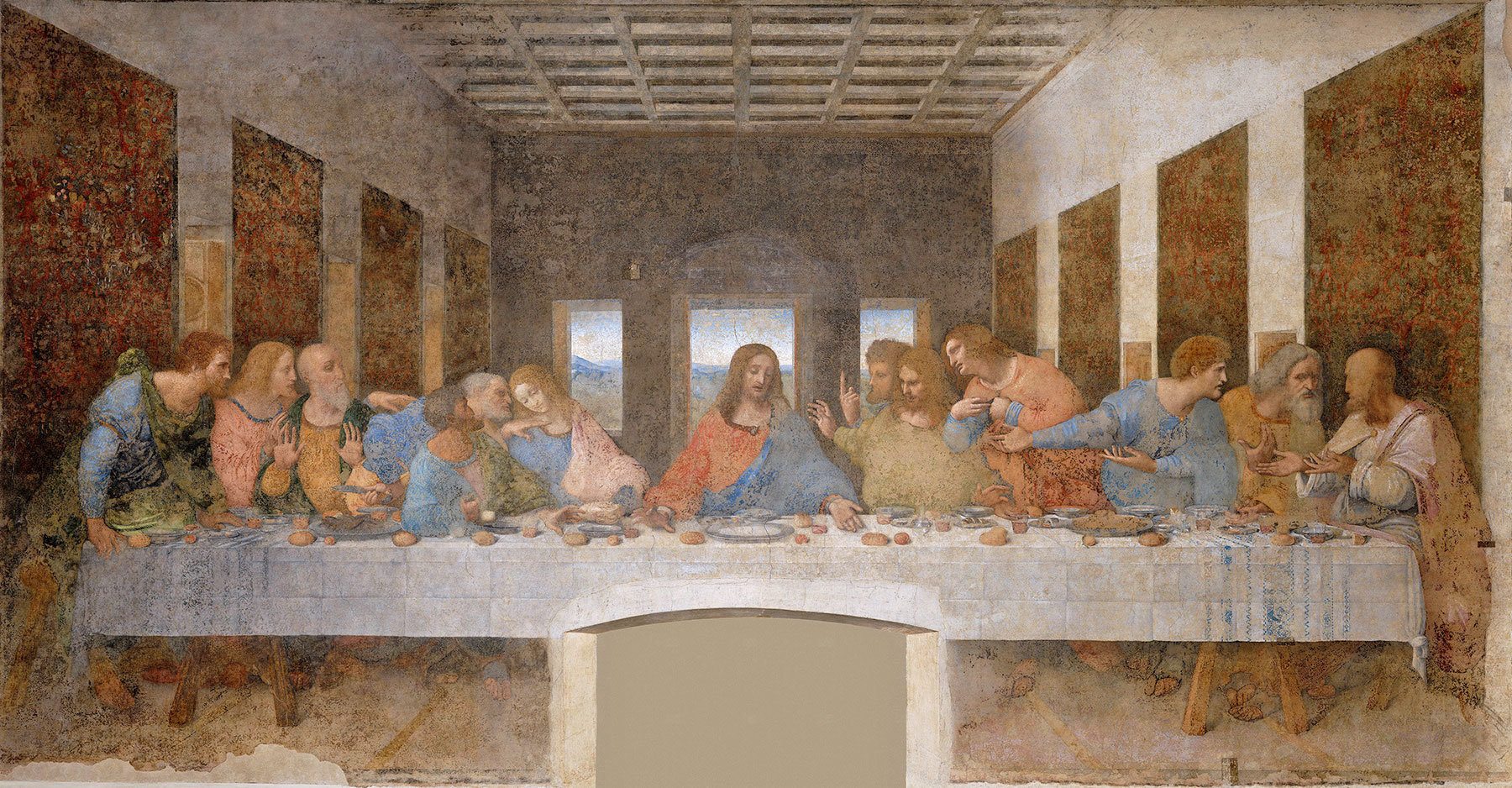
In this painting, the large area in the foreground (front) shrinks down to the smaller area in the back, giving it dimension. This is an example of....
Secularism
Perspective
Water color techniques
Pointilism
Which of the following statements describes the type of government which existed in Florence during the Renaissance?
It was a small Italian town ruled by the king of Italy in Rome.
It was completely under the control of the Catholic Church.
It was a city-state ruled by the wealthy Medici family.
It was the capital of Italy and had a large bureaucracy.
In which city-state did the Italian Renaissance begin?
Venice
Rome
Naples
Florence
Milan was famous for what type of craft?
Textiles
Metalwork
Banking
Ceramics
Which statement BEST describes a city-state?
An independent region ruled by a powerful city
A powerful city that is part of a larger country
A powerful city that is part of a larger state
All of the above

Who was the founder of a powerful banking family
Niccolo Machiavelli
Lorenzo di Medici
Galileo
Queen Elizabeth
One of the most famous writers of all time (“Romeo & Juliet”)
Kayne West
William Shakespeare
Michelangelo
Which culture(s) influenced the Renaissance?
Ancient Greek and Roman Culture
Judaism
Early Chinese Civilization
Which event caused Greek scholars to move to Italy, which, in turn, helped start the Renaissance?
The Battle of Tours
The Battle of Hastings
The Barbarian invasions
The fall of Constantinople
Which statement BEST explains the economic and political factors that contributed to the rise of Florence as one of the prominent European cities from the 14th to 16th centuries?
Florence became Italy's capital in 1865.
Galileo, Da Vinci, and Michelangelo all lived in Florence.
Florence was a center of trade with stable leadership under the Medici family
The city lies in a basin between hills with ample water sources and a Mediterranean climate.
Historians believe that Florence, Italy, was the birth-place of the Renaissance because Florence
was home to many people from China and Japan.
remained loyal to the Pope during the Reformation.
avoided being affected by the plagues that struck Europe.
was a wealthy center of trade in the late Medieval period.
The rise of Florence as one of the leading cities in Europe from the 1400s to the 1800s can be attributed to its
economic growth and political stability.
position as the center of the Catholic Church.
policies of military conquest of surrounding areas.
exploration to the New World and establishment of colonies.
During the Renaissance, cities like Florence, Genoa, and Venice were important MOSTLY because they were
places where artists thrived.
centers of trade and commerce.
home to the best universities in Europe.
under direct control of the King of Italy.
Which ruling family had the greatest impact on the Renaissance culture in Florence, Italy?
Alberti
Ferdinand
Medici
Pazzi
How did the monasteries of western Europe help preserve the knowledge of the Greeks and Romans and early Christians?
They hand copied written documents for their libraries.
They provided food for those in need in their communities.
They adopted and spread the culture of the Greeks and Romans.
They restored the ancient structures built by the Greeks and Romans.
Which of these had the GREATEST influence on the formation of the first universities in Western Europe?
the Protestant Reformation
the printing press of Johannes Gutenberg
the monasteries spread throughout Western Europe
the knowledge gained after the Crusades came to an end

The cathedral of Notre Dame, built from 1220 to 1402 CE in Paris, France, is in which style of architecture?
Baroque
Byzantine
Gothic
Romanesque
Medieval learning, managed by the Catholic Church, focused less on new scientific discovery and more on
emotional artistic forms.
mastering existing knowledge.
reading the Bible in the vernacular.
investigating mathematics for agriculture.

Which is the BEST description of how medieval monks contributed to Western culture and civilization?
They organized and led bands of "Crusaders" who defended Europe from Muslim attackers.
Much of their artwork served as the inspiration for the "Renaissance" that developed in Italy.
They helped preserve the learning, writing, and culture of the early Greeks, Romans, and Christians.
They re-wrote the Bible and changed many of its original stories and messages so that European peasants could understand them.

Which culture produced art such as the painting pictured here?
Ancient Roman
Classical Greek
Classical Indian
European Renaissance

Which Renaissance artist is responsible for this painting?
Raphael
da Vinci
Botticelli
Michelangelo
Which person is CORRECTLY paired with his work during the Renaissance?
Shakespeare- Utopia
Michelangelo- Mona Lisa
da Vinci- The Last Supper
Sir Thomas More- Julius Caesar
The Northern Renaissance is MOST associated with
musical composition.
literature.
philosophy.
sculpting.
Unlike painters in the medieval period, who used a fixed, two-dimensional style of painting, Renaissance painters
steered away from depictions of the natural world.
focused on producing paintings for the Catholic Church.
arranged subjects according to their symbolic importance.
included perspective, light, and shadow in their paintings.

Michelangelo was famous as Renaissance sculpture, painter, architect, poet, and engineer. His most famous architectural achievement included what is still one of the most famous domed structures in the world. What is this famous structure called?
The Grand Mosque in Mecca
The Temple Mount in Jerusalem
Saint Peter's Basilica in Rome
The U.S. Capitol in Washington D.C.
In contrast to their status during the Medieval period, painting and sculpting during the Renaissance were viewed as
decorative crafts.
religious tributes.
scientific experiments.
intellectual achievements.

Which Renaissance artist is responsible for this sculpture?
Raphael
da Vinci
Botticelli
Michelangelo
Unlike painting from the medieval period, Renaissance artists
worked exclusively with granite.
focused primarily on religious topics.
refused to accept payments from wealthy political or religious patrons.
used light, shadow, and perspective to carefully recreate the human form.

Which Renaissance artist is responsible for this painting?
Raphael
da Vinci
Botticelli
Michelangelo

Pietro Perugino's painting is considered an ideal example of Renaissance art because of its use of
color.
perspective.
natural elements.
religious symbolism.

This painting of St. Peter's Basilica in Vatican City represents a prime example of
Islamic art.
French impressionism.
Byzantine architecture.
Renaissance architecture.
Why is Leonardo da Vinci known as a “Renaissance Man?”
This is the name that has been widely used for Leonardo’s self-portrait.
Leonardo was born near the town of Vinci in the Italian province of Renaissance.
Leonardo’s many interests perfectly symbolize the revival in learning associated with the Renaissance.
Leonardo lived from 1452 to 1519 meaning that chronologically he lived in the middle of the Renaissance period.
While patrons of the arts during the Northern Renaissance often commissioned works such as tapestries and illuminated manuscripts, patrons of the arts during the Italian Renaissance opted for
prose and poetry.
music and theater.
portraits and drawings.
paintings and sculptures.
Which of these would MOST likely have been a topic of artists of the Italian Renaissance?
human beauty
Royal leadership
the crucifixion of Jesus
the evil nature of people
One of the Leonardo’s most famous works is titled “The Last Supper.” This painting depicts the last meal of which famous religious figure?
Buddha
Jesus
Mohammad
Moses

Which well-known Renaissance artist created this painting?
Michelangelo
Leonardo da Vinci
Botticelli
Shakespeare
Shakespeare is considered by many to be the greatest writer of the English language. He is also one of the most influential.... why is this?
Through his works, he is credited with introducing nearly 3,000 words to the English language.
He was credited with the writing of nearly 1,000 plays
He was credited with starting a new language
He was credited with allowing women the right to perform in plays

The painting seen here is the -
Madonna
Mona Lisa
Margaret
da Vinci

Artist who painted the ceiling of the Sistine Chapel in Rome
Michelangelo
Leonardo Da Vinci
Perspective
Patron

