Worksheets
Unit 7 and 8 Review
Total questions: 27
Worksheet time: 20mins
If 2 organisms share a feature at the embryonic (developmental) stage, what does that mean?
They share a common ancesor
There will be no relationship at all
They share a parent
They must always be the same species
Structures with the same bone structure but have different functions; suggests that organisms share a common ancestry

When examining DNA sequence of organisms, the number of differences in the DNA sequence is DIRECTLY related. According to the DNA sequences, who is most related to the fish?
Human
Rabbit
Frog
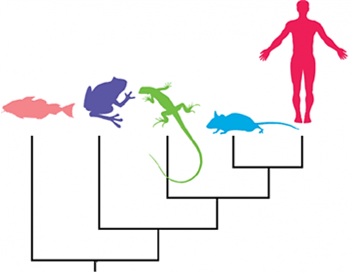
What is the human most closely related to?
Fish
mouse
Salamander
Human
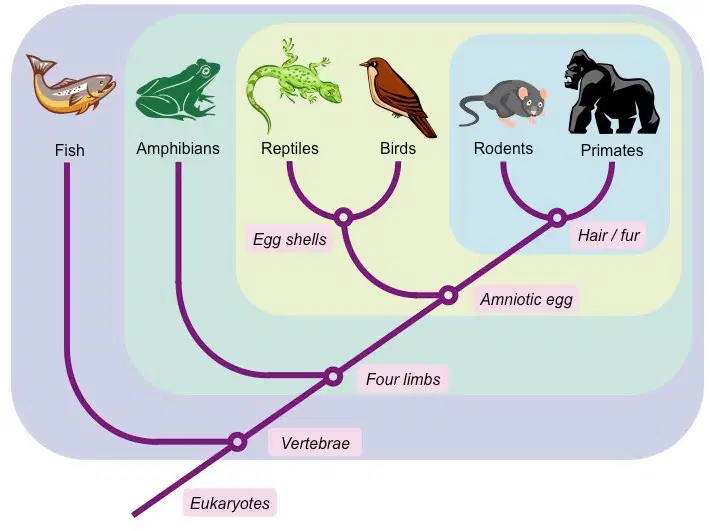
Which of the following organisms have eggs with shells?
Rodents and Primates
Reptiles and Birds
Birds and Rodents
Reptiles and Rodents
A fossil record that shows _______ change would support Darwin's theory of evolution?
gradual
zero
aprupt
dramatic

Whales have pelvic bones that were once useful in previous ancestors, but no longer serve a purpse. What type of structure does this best represent?
Homologous structure
Analogous structure
Vestigial structure
None of the above
Which of the following can show common ancestry?
Similar size
Similar color fur
Sharing a function, like flying
Similar amino acid sequence
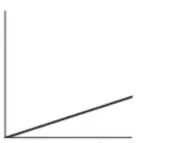
This graph would represent evolution because it shows
gradual change over time
rapid increases
rapid decreases
no change

Which of these provides the BEST evidence that the environment of Earth has changed over millions of years?
finding leaf fossils in a forest
marine (water) fossils found in the middle of a desert
polished appearance of rock surfaces
none of the above
Where the better adapted organisms with desirable traits survive to pass traits along to offspring, allowing those offspring then to reproduce and pass down desirable traits.
An accepted principle on natural or physical phenomenon works or happens and is supported by data is called a -
theory
law
fact
experiment

Darwin studied the relationship between beak structure and food in several species of finches in the Galapagos Islands.
Which factor most directly influenced the evolution of the diverse types of beaks of these finches?
During a freeze, most strawberry plants die. Why would some strawberry plants survive?
The color of the strawberry helps maintain it's temperature.
Some have larger leaves that protect the fruit.
Some have genetic variations that cause them to be resistant to the cold.
Some are able to reproduce more quickly than others.
If a certain trait in a population is NOT desirable, you will most likely see __________ in the frequency of that trait over time.
an increase
a decrease
no change
When populations become reproductively isolated, this can lead to
speciation
bottleneck effect
gene flow
growth
When two or more populations no longer successfully reproduce it is called...
species
order
speciation
a shame
What is genetic drift?
A) A predictable change in allele frequency due to natural selection
B) A random change in allele frequency
C) The transfer of alleles from one population to another
D) A change in allele frequency due to mutation
What is gene flow?
The addition of alleles in a population due to individuals entering an established population
A change in allele frequencies when a new population arises from only a few individuals
A reduction in population caused by natural disasters, disease, hunting, etc.
A change in the gene pool due to chance
Mutations can benefit organisms because they can:
Cause illness
Make an organism more suited to live in its environment and allow the species to evolve
Make organisms live shorter lives
Cause organisms to grow extra limbs.
When the population significantly decreases due to a natural disaster (meteor, hurricane, etc), this type of Genetic Drift is considered the
Bottleneck effect
Gene Flow
Founder effect
Allele frequency
Evolved from different ancestors, but due to living in similar environments have a similar function.
Homologous structures
Analogous structures
Vestigial structures
All of the above