
Font size
 Worksheets
Unit 7 Plate Tectonics Review
Total questions: 46
Worksheet time: 39mins
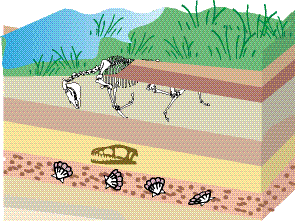
What evidence do fossil records provide for the movement of continents?
Fossils of the same species are found on different continents that are now separated by oceans.
Fossils of different species are found on the same continent at different time periods.
Fossils are only found in coastal regions of continents.
Fossils of the same species are found only on one continent.
While on a school trip, students Ethan and Scarlett discovered some of the same types of rock containing the same types of fossil species in Africa and Antarctica. Which explanation does this information support?
Both continents gradually increased in size over time.
Both continents were attached by glacial ice millions of years ago.
Both continents were attached but drifted away from each other over time.
Both continents were underwater millions of years ago.
Eighth graders have been studying about the theory of plate tectonics. Of the following statements, which ones would be the BEST conclusion to the lesson?
There are small amounts of movement at the plates' edges.
There is no geologic activity located at the plates' edges.
Geologic activity causes stress to build and storage of energy at the edges.
Geologic stress and stored energy is released as earthquakes at the edges.
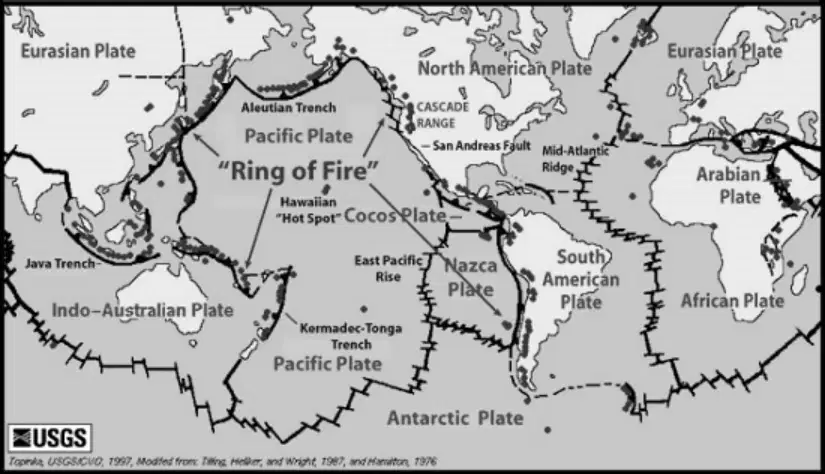
Abigail and David are working on a school project about Earth's geology. They need to identify which combination of the following theories was most directly responsible for the development of the Theory of Plate Tectonics. Can you help them?
A) Continental Drift and Seafloor Spreading
B) Pangaea and Special Relativity
C) Heliocentric Solar System and Continental Drift
D) Darwin’s Theory of Natural Selection and Germ Theory
Which Scientific Theory is supported by the following observations? - Similar rock formations are found on different continents - Evidence of ancient climates in regions where they do not exist today - The coastlines of continents appear to align with each other
Seafloor Spreading as proposed by Harry Hess
Continental Drift as proposed by Alfred Wegener
Plate Tectonics as proposed by John Nash
Quantum Mechanics as proposed by Max Planck
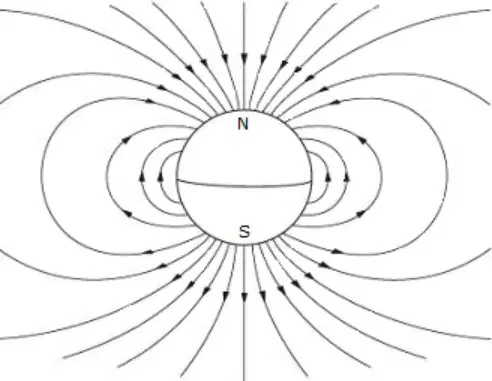
Maya and her friends are studying Earth’s magnetic field and learn that it has North and South poles that have reversed themselves many times in the past. They discover that these reversals are recorded in rocks forming along mid-ocean ridges. These facts most closely correlate to which of the following Scientific Theories?
Continental Drift as proposed by Alfred Wegener
Seafloor Spreading as proposed by Harry Hess
Geologists found that rock samples from the Appalachian Mountains in North America and the Scottish Highlands in Europe were identical in age and composition. This finding supports the theory of —
volcanic activity
plate tectonics
tidal forces
climate change
During a school science project, Avery and Aria were tasked with proving that the plates containing continents and ocean floor are always moving. What documented proof did they find?
Most scientists did not believe Wegner because he was a meteorologist and could not prove how the continents moved. But, Hess and Dietz were geologists so the public and the scientific community gave them support in their conclusions.
The bathymetric dating and mapping of the ocean floor found younger rock near mid-ocean ridges and the ocean crustal material near continents contained older rock.
The discovery of similar fossils on different continents.
The observation of similar mountain ranges on different continents.
What insights can scientists gain about Earth's future by examining the movement of tectonic plates?
They can determine the exact number of species that will exist in the future.
They can predict the future positions of continents and oceans if current plate movements persist.
They can identify the only time period when continents moved and similar fossils were found.
They can understand the development of human theories on continental drift and plate tectonics.
What type of geological feature is typically formed at a divergent plate boundary?
Trench
Mid-ocean ridge
Volcanic arc
Plateau
Identify the tectonic process that leads to the creation of ocean basins. When _______ happens, an oceanic plate collides with a continental plate, causing the denser plate to be pushed beneath the lighter one. This tectonic process can result in _______, and ocean trenches are typically formed.
subduction, volcanic eruptions and mountain building
convection, mountain formation
divergence, earthquakes
convergence, landslides
What type of landform is typically created by the collision of two continental plates?
Trench
Mid-ocean ridge
Volcanic arc
Mountain range
What geological process is primarily responsible for the formation of volcanic arcs in the Pacific Ocean's Ring of Fire?
Convergent plate boundary
Divergent plate boundary
Transform plate boundary
Mantle hot spot
Elijah and Abigail are studying the Earth's crust. They want to find the most recently formed crust. Where should they look?
where plates moving sideways passed each other
where one plate is going under another plate
where two plates are pushing directly toward each other
where two plates are moving away from each other in opposite directions
What geological feature is likely to form at a convergent plate boundary?
Volcanic arc
Mid-ocean ridge
Transform fault
Rift valley
During a field trip to a tectonic boundary, Scarlett and Avery observed a geological feature formed by the collision of two plates. Which of the following features did they most likely see?
Trench
Mid-ocean ridge
Fault line
Rift valley
The theory of plate tectonics is a result of —(not continental drift) remember there is a difference.
similar fossils being found on all continents
knowing that Pangea was a super-continent
why the oceans and continents have always been in the same locations
finding older rocks near continents and younger rocks near the center of oceans
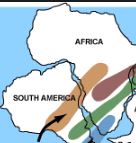
What do these color strips show between South America and Africa with the Theory of Plate Tectonics?
Similar cultures
Similar fossils
Similar languages
Similar weather

This picture is an example of which type of evidence?
matching fossil
matching land formation
climate change
memorial movement

Which of these is a key piece of evidence of continental drift?
Continent shapes
Paleomagnetism
Which of the following is NOT evidence supporting the theory of continental drift?
The fit of the continents
Similar rock formations on different continents
The presence of oceanic ridges
Fossil evidence across continents
Which is an example of a transform boundary:
The Himalayas
The Andes
Iceland
The Caribbean
San Andreas
Which is an example of a hotspot:
The Himalayas
The Andes
Iceland
Yellowstone
San Andreas

Which island is the oldest?
A
B
C
D
E
Where would you expect the next island in this chain to form?
to the left of A
between D and E
to the right of E
between A and B
Hotspots are volcanoes that form...
at convergent plate boundaries.
at divergent plate boundaries.
at transform plate boundaries.
in the middle of a tectonic plate.

This image shows the hawaiian island change. Hawaii is currently the tallest island and is still an active volcano. Based on the map chose the answer that best explains the age of the islands.
The further the islands are from Hawaii the younger the island is.
Hawaii is the youngest island because it is currently on top of the hotspot.
Hawaii is the oldest island because it is closest to the hotspot.
Ohau is younger than the big island because it is further from the hot spot.


Volcanoes usually form near
What is the force inside the mantle that causes the Earth's Plates to move ?
subduction
radiation
conduction
convection
What geologic feature will occur at a hot spot ?
volcano
folded mountain
deep sea trench
crevasse
What are the two main sources of volcanoes?
Tectonic plates and mantle plumes
Ocean currents and atmospheric pressure
Volcanic gases and seismic activity
Earth's core and asthenosphere
These types of volcanoes often produce the most violent and strongest volcanic eruptions on Earth.
Shield volcanoes
Cinder cones
Supervolcanoes
Subglacial volcanoes

Why does hot mantle rise (go/move up)?
hot = less dense
hot = no change
hot = more dense
True or False:
Hotspots move in the mantle
True
False

The process that makes new ocean floor
SONAR
converging boundaries
Sea floor Spreading
earthquakes

What type of plate boundary is shown in the diagram?
Convergent oceanic-oceanic plate boundary; volcano
Convergent continental-continental plate boundary; mountain building
Convergent oceanic-continental plate boundary; earthquake
Divergent oceanic-oceanic plate boundary; sea floor spreading

How did the Appalachian Mountains form?
Folded mountains occur when two plates of the Earth's crust
separate.
Folded mountains are the result of many volcanoes erupting all
at the same time.
Folded mountains form over millions of years as sediments are
deposited and build up.
Folded mountains occur when two plates of the Earth's crust
push against each other.

What type of plate boundary is pictured above?
Transform
Convergent
Divergent

What type of plate boundary is pictured above?
Convergent
Transform
Divergent

What type of plate boundary is pictured above?
Convergent
Transform
Divergent

When 2 plates move together.
diverging
transform
converging
sea floor spreading

What type of boundary is this?
Convergent
Divergent
Transform

What type of boundary is this?
Convergent
Divergent
Transform

