
 Worksheets
Development Key Terms Revision
Total questions: 82
Worksheet time: 46mins
Define social development
Improvements in peoples welfare to meet the needs of a population
Improvements socially, economically and environmentally to meet the needs of the current population without compromising the ability of future generations to meet their needs
Increase in total goods and services a country produces.
Improvements in environmental quality
Which of these countries are BRIC's?
Canada
India
Russia
Brazil
GNI is........
Gross national income - the total imports of a country.
Gross national income - the total exports of a country.
Gross national income - the total wealth of a country.
Gross national income - The sum of all the money earned in a country.
Colonialism effects development because (a)
Land-locked means....
Geographically surrounded by land with no coastline.
Having little coastline.
A country will lack development.
A country will be advanced.
Rostow's model of development showed....
How a country develops its economy.
5 stages of economic development for a country (based on the USA.)
How a developing country changes over time.
The 3 stages of economic development for a country (based on the UK.)
Define the Millennium development goals
Targets for improving development in Asia and South America.
Targets for improving development in Africa.
8 global goals to improve development and halve world poverty by 2015.
8 national goals to improve development and reduce national poverty.
Bottom up development can be described as.......
Developing a country by building basic infrastructure like roads, railways and housing.
Building a country from the ground up.
Development schemes that are large scale, nationally managed, high value and work with governments and TNC's.
Development schemes that are small scale, locally managed, lower cost and work with NGO's.
Top down development schemes aim to..............
Improve a country's development by building infrastructure such as roads, dams and railways.
Improve a country's development by creating more jobs.
Improve a country's development by working with TNC's.
Improve a country's development by investing large sums of money.
What is the development gap?
The difference in health and wealth between countries
The difference in air quality between countries
The difference in types of transport between different countries
A physical distance between countries
Which of the following is a PHYSICAL cause of uneven development?
debt
war
landlocked
corrupt government
Which of the following is an ECONOMIC cause of uneven development?
debt
war
landlocked
climate
Which of the following is a HISTORICAL cause of uneven development?
debt
Colonialism
landlocked
climate
Tropical disease is an example of a ....... cause of the development gap
Physical
Economic
Historical
Political
Poor governance is an example of a ....... cause of the development gap
Physical
Economic
Historical
Political
Investment is an example of a ....... cause of the development gap
Physical
Economic
Historical
Political
Distribution means---
providing aid to another country
giving something to another country
How something is spread out over the world/ area
International Aid is.....
Money or services provided by a HIC to either NEE or LIC
Charity which gives money foreign countries
Money given to countries to increase their economy
Service or advice given to any country in need of support
What do they use to measure HDI?
Average salary and reading ages
Life expectancy and reading ages
Life expectancy, National income, education
What does HDI stand for?
Human Development Industries
Human Development Index
Health Development Industries
Health Development Index
What does GDP stand for?
Great Domestic Product
Gross Domestics Produce
Gross Domestic Pricing
Gross Domestic Product
What does Import mean?
Bring in goods and services brought in to a country to be sold
Goods and services sent out of the country to be sold
industries which make products using foreign raw materials
industries which make products using raw materials
What is life expectancy?
How long your are expected to live
How long men live in that country
How long women live in that country
The average age people live to in that country
What term describes the numbers of deaths per 1000 of the population per year?
(a)
1. Which of the following countries is more economically developed?
Yemen
Norway
Ethiopia
Afghanistan

Countries with high levels of literacy and higher education are in which level of economic development?
More Developed
Newly Industrialized
Less Developed
What disease spreads from poor sanitation?
cholera
malaria
asthma
yellow fever
Providing a service (e.g. nurse or shopkeeper) is which type of job?
Primary job
Tertiary job
Secondary job
Quaternary job


Countries with strong infrastructure [transportation/ communication/ healthcare/ education systems] would be which level of economic development?
More Developed
Newly Industrialized
Less Developed
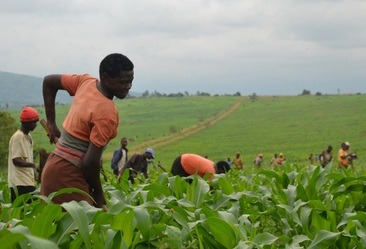
Which level of development is a country where most people work at the subsistence level?
More Developed
Newly Industrialized
Less Developed
Which countries are more developed?
Nepal, Nigeria, Chad
India, Nigeria Brazil
Brazil, China, USA
UK, Japan, Germany
Which of the following countries is less economically developed?
Australia
Canada
Denmark
Syria
A job that provides raw materials (like a farmer) is which style of job?
Primary job
Tertiary job
Secondary job
Quaternary job

Three indicators of development of a country
GDP per capita, literacy rate and life expectancy.
Richness, industrial production and business
Multinationals and industry
Technology, trade and research
Development is the process of change which affect's people's standard of living and (a)
Which indicators would you want to use when looking to measure the standard of healthcare received in a country?
Number of people per doctor
% of qualified doctors
Current health Expenditure
GDP Per Capita
Which of these statements is the most accurate definition for people who are economically active?
People employed between the ages of 16-65.
People employed between the ages of 25-45.
People unemployed between the ages of 16-25.
People over 65 receiving a pension.

Which cause of uneven development does this picture represent?
International Aid
Corrupt Government
Colonialism
Geographical Disadvantage
Which of the following are consequences of civil war and terrorism?
Infrastructure destroyed
Business activities disrupted and TNC's less inclined to open offices in affected area's.
Innocent people are killed
Increased spending on weapons
Which particular infection passed on by insects is thought to be a major cause of uneven development in Africa?
(a)
Why do landlocked countries in Africa have a geographical disadvantage?
Because they will have less efficient global transport connections.
Because they will be surrounded by unstable economies.
Because there are more civil wars
Because they are still not independent countries

Which strategy to reduce the development gap is shown in the picture?
(a)
Grameen Bank offering out small loans to locals for starting businesses is also referred to as (a) finance loans.
birth rate definition
how many people are born
number of births per million of population per year
the number of live births per thousand of population per year.
X+C=X
Standard of living is about wealth and material _________
Health
Goods
Education
Quality of life includes standard of health, comfort and...?
Wealth
Housing
Happiness
Which of the following TWO are physical causes of the development gap?
Debt
Lack of natural resources
War
Climate hazards
World trade
The slave trade is linked to which cause of the development gap?
Natural resources
World trade
Colonialism
War
Which indicators would you want to use when looking to measure the standard of healthcare received in a country?
Number of people per doctor
% of qualified doctors
GDP Per Capita
What do development indicators tell you?
How long they are expected to live until
What level of education a population has
What level of income a population has
What the health of a population is like
Which of the following is a factory worker?
Primary Industry
Secondary Industry
Tertiary Industry
None of the above
What is outsourcing?
When a company distributes its ketchup!
When a company uses a different company to produce a section/stage of its product/service.
When a company uses the government to run a section of its business.
Despite India Industrialising rapidly, the largest contribution to its GDP is.........
services
agriculture
industry
Which of these is not a way that the Indian government has helped India to develop?
Allowing rapid urbanisation and development of slums.
Investment into education
Pro FDI policy (open economy)
Investment into technology and infrastructure.
The top 5 investors of FDI in India are.......
•France
•Germany
•USA
•UAE
•Cyprus
•Mauritius
•Singapore
•Japan
•Netherlands
•UK
India's economy is predicted to.........
Become the second largest in the world by 2050.
Become the 10th largest by 2050.
Shrink by 2050.
India's GDP growth rate is......
The same as the UKs
Much higher than the UKs
lower than the UKs
Which of these is an important social context factor influencing India's place in the world?
The world's second largest population.
The world's largest democracy.
The birth place of 4 of the world's religions.
Some of the world's richest biodiversity.
Which of these is an important political context factor influencing India's place in the world?
The world's second largest population.
The world's largest democracy.
The birth place of 4 of the world's religions.
Some of the world's richest biodiversity.
Which of these is an important environmental context factor influencing India's place in the world?
The world's second largest population.
The world's largest democracy.
The birth place of 4 of the world's religions.
Some of the world's richest biodiversity.
Which of these is an important cultural context factor influencing India's place in the world?
The world's second largest population.
The world's largest democracy.
The birth place of 4 of the world's religions.
Some of the world's richest biodiversity.
Which of these is site location factor?
It has a large and growing population.
2 long coastlines east and west for easy trade.
In the Middle of trade routes through Asia.
South of the Himalayas.
Which of these is a situation location factor for India?
South of the Himalayas.
Located in between large and growing economies of China and Saudi Arabia.
on the Tropic of Cancer.
In the North Indian ocean.
India is located..........
in south east Asia.
in south Asia
in north Asia
in west Asia

The point the cartoonist is making is (chose the best answer)
Poor nations feed the rich by producing cheap goods
Poor nations get poorer because rich nations don’t share their profits
Poor nations supply cheap raw materials allowing rich nations to become wealthy
There is an imbalance in the way food is distributed
Underdevelopment can best be described as.....
Lacking development because of colonisation
Being poor with widespread starvation
Being under resourced as a result of poor economic factors
Not having enough money and technology to use resources properly
TNC's can choose to change the factory they use whenever they like. What is this called?
Being choosy
Globalisation
Outsourcing
Footloose
Which areas of an emerging country benefits the most from TNC's?
Urban
Rural
Mountains
Rivers
Which area of India has suffered from rural to urban migration?
(a)
What do governments in emerging countries do to attract TNCs?
Put on a big party
Reduce company taxes
Invest in biogas boilers
Redevelop landfill sites
What percentage of a UK call centres workers wage is payed to people in India?
20%
40%
60%
80%
Which one of these is NOT a reason why India is a good place for a British companies call centre?
It is close to the UK
It can employ university graduates who speak english
Wages are lower
The time difference means they can work inconvenient hours
What is FDI?
Money from foreign countries or TNC's which is invested in an emerging country
A measure of how developed a country is using 5 criteria
A world bank that lend money to developing countries
Which is your case study country for an emerging nation
USA
Malawi
UK
India

Which continent has the highest development?
Asia
South America
Europe
Africa
Which of the following is a teacher?
Primary Industry
Secondary Industry
Tertiary Industry
None of the above

