
 Worksheets
Physics Quarter 3
Total questions: 104
Worksheet time: 2hrs 49mins
a form of energy due to electric charges
(a)
(a) is an intrinsic property of electrons and protons, which are found in atoms
SI unit for electric charge
(a)
Charge of a proton
(a)
Charge of an electron
(a)
What are the three methods of charging?
In this process, two different insulating materials, which are initially neutral, are rubbed together
(a)
In this process, a charged object is placed in contact with the object to be charged
(a)
A (a) builds up static electricity by transferring charge from a moving belt to a metal dome. When you touch the dome, the charge spreads across your body, including your hair. Since each hair strand gets the same charge, they repel each other and spread apart, making your hair stand up. This happens because like charges repel, following electrostatic principles.
In this process, a charged object is close enough to but does not touch a grounded object
(a)
What causes lightning to occur during a storm?
The ground builds up a strong negative charge, attracting positive charges from the clouds.
The storm clouds gain a strong negative charge at the bottom, inducing a positive charge on the ground.
The positive charge in the clouds repels negative charges on the ground, causing a discharge.
The wind carries charged particles, directly creating a lightning strike.
How does a lightning rod protect buildings during a storm?
It repels lightning away from the building.
It absorbs the lightning and stores the charge.
It provides a safe path for the electric charge to flow into the ground.
It prevents the clouds from building up charge.
According to the (a) , like charges repel, and unlike charges attract:
The magnitude of the electric force between two stationary point charges is directly proportional to the product of the charges and inversely proportional to the square of the distance between them
(a)
The magnitude of the electric force can be determined by means of (a)
charged objects that are very small in comparison to the distance between the
(a)
The net electric force on a point charge is equal to the vector sum of the individual electric forces acting on it
(a)
An invisible form of energy that surrounds an electric charge
(a)
It enables an electric charge to exert force on another charge.
(a)
Formula for Electric Field
(a)
Small positive charge used to determine the electric field of another charge
(a)
Formula for Electric Field
(a)
measure of the electric field passing through a given surface
(a)
Technically, it is the product of the electric field perpendicular to a surface and the area of the surface:
(a)
Formula for electric flux
(a)
3 Conditions for the Special Equation of Electric Flux
The electric flux through a closed surface is equal to the enclosed charge divided by the permittivity of free space
(a)
Formula for electric flux
Q/ε0
ε0/Q
value of permittivity of free space or vacuum
(a)
formula for permittivity of free space or vacuum
1/(4πk)
1/(2πk)
1/(4π)
1/(2π)
Measure of a material’s ability to store an electric field
(a)
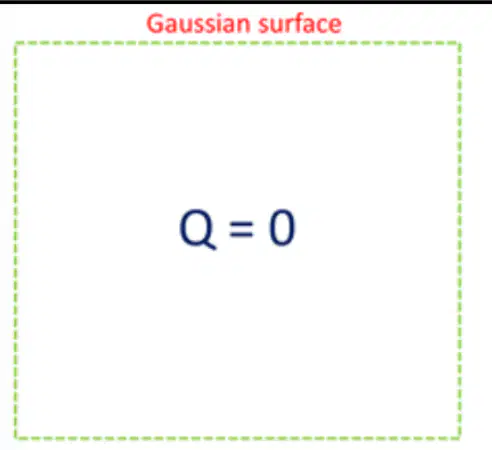
value of electric flux
Q/ε0
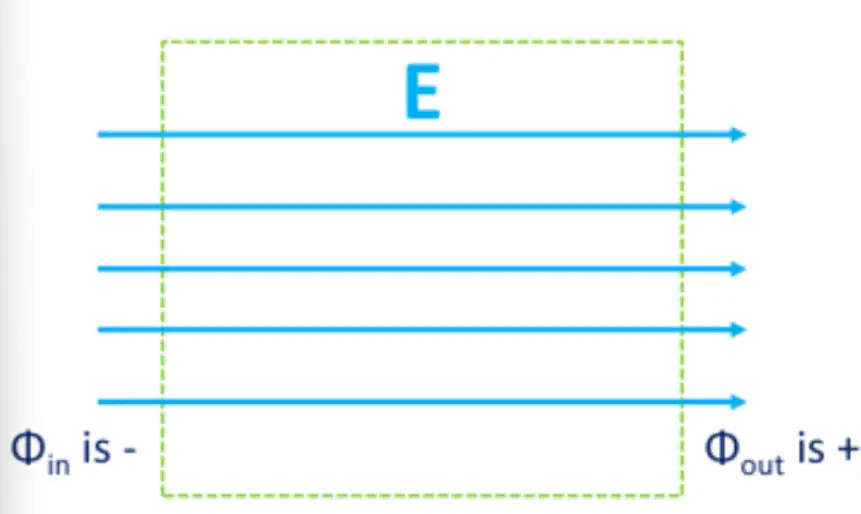
value of electric flux
Q/ε0
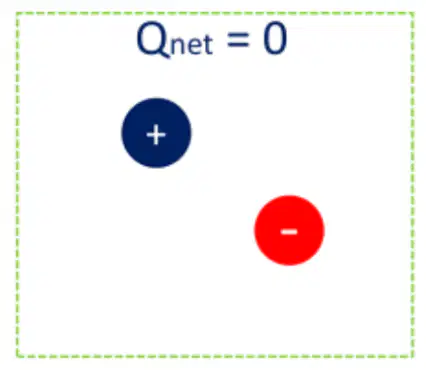
value of electric flux
Q/ε0
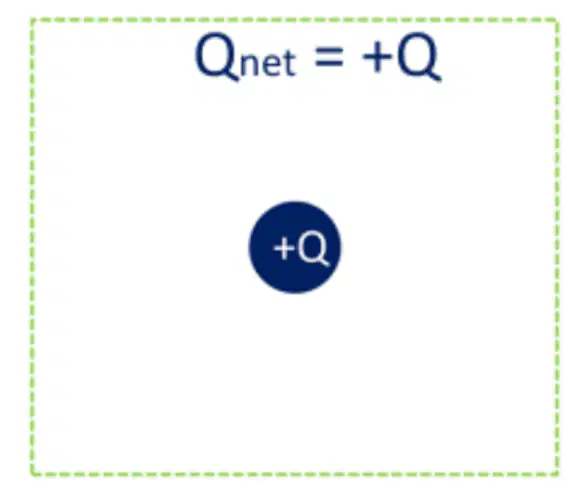
value of electric flux
Q/ε0
an imaginary closed surface can be of any shape, but the most useful GSs are those that mimic the shape of the given charge distribution
(a)
Electric Potential formula
(a)
At a distance r from a point charge Q, the electric potential is:
(formula)
(a)
Electric Potential SI Unit
(a)
a surface on which the electric potential is the same everywhere
(a)
Which statement correctly describes the relationship between the electric field and equipotential surfaces?
The electric field is always parallel to equipotential surfaces.
The electric field is perpendicular to equipotential surfaces and points in the direction of increasing potential.
The electric field is perpendicular to equipotential surfaces and points in the direction of decreasing potential.
The electric field has no specific relationship with equipotential surfaces.
The quantitative relation between the electric field and the equipotential surfaces is given by:
E = ΔV/Δd
E = Δd/ΔV
Which among the following choices is true
No work is required to move a test charge on an equipotential surface.
Work is required to move a test charge on an equipotential surface.
In contrast, work must be done to move a test charge between equipotential surfaces:
W = qΔV
W = qΔd
W = ΔV/Δd
Motion of electric charges
(a)
Factors necessary for current to exist
(a)
a material that allows current to pass through
(a)
Types of electric current
(a)
Motion of negative charges from lower to higher potential, opposite to the direction of the electric field
(a)
Motion of positive charges from higher to lower potential, in the direction of the electric field
(a)
A difference in potential measured between the terminals of the source:
(a)
A quantity that measures how strongly a given material resists the flow of current
(a)
Substances with low resistivities allow current to flow and are classified as (a) (plural)
Substances with high resistivities do not allow current to flow and are classified as (a) . (plural)
(a) have resistivities between conductors and insulators and may or may not allow the flow current. (plural)
Potential difference relates to current, and both relate to a quantity called (a)
states that the voltage across a conductor is directly proportional to the current flowing through it, provided all physical conditions and temperatures remain constant.
(a)
Materials that obey Ohm’s Law (p)
(a)
Materials that do not obey Ohm’s Law (p)
(a)
A pathway for current, consisting of interconnected electrical components
(a)
4 Basic Components of an Electric Circuit
provides the potential difference
(a)
provides the potential difference
(a)
converts the energy of electric current into useful form of energy
(a)
controls the current
(a)
connect the other components of the circuit (p)
(a)
a simplified representation of an electrical circuit
(a)
current moves in one direction in the circuit
(a)
current changes direction in the circuit
(a)
dry cell and battery are examples of what?
(a)
4 Circuit Conditions
Current flows in the circuit due to continuity in the conducting path
(a)
No current flows in the circuit due to a gap in the conducting path
(a)
Large current flows in the circuit that exceeds its current capacity
(a)
Usually occurs when there are too many loads connected in parallel
(a)
it may also occur with a single load, whose current requirement exceeds the current capacity of the connecting wires.
(a)
Large current flows in the circuit that bypasses the load
(a)
Large current is due to the presence of a low resistance path in the circuit
(a)
series-connected devices, like a fuse or circuit breaker, that stop the flow of current in the circuit when there is an overload or short circuit (p)
(a)
Two examples of circuit protectors
(a)
4 Types of Circuit Connection
A circuit connection that has only one path for current
(a)
A circuit where as the no. of loads increases, the amount of current in the circuit decreases due to increasing resistance
(a)
A circuit where if one of the loads is removed or is not working, the other loads will not work
(a)
A circuit connection that has more than one path for current
(a)
A circuit where as the no. of loads increases, the amount of current in the circuit increases due to decreasing resistance
(a)
A circuit where if one of the loads is removed or is not working, the other loads may still work
(a)
A circuit connection that is a combination of series and parallel connection
(a)
A circuit connection that is neither series nor parallel
(a)
Process to determine the current, voltage, resistance, power and energy in circuit components
(a)
Devices that can be used to determine the current, voltage, resistance, power and energy in circuit components
(a)
The sum of the currents approaching any junction must be equal to the sum of the currents leaving that junction
(a)
The sum of the voltages around any loop is equal to zero
(a)
connection point between two or more conductors
(a)
any closed conducting path within the circuit consisting of conductors, resistances, and voltage sources
(a)
Phenomenon associated with magnets, resulting in attractive and repulsive forces
(a)
Any object that has a magnetic field
(a)
four kinds of magnet
Any object that has a magnetic field
(a)
Why does the north pole of a compass needle point toward the Earth's geographic North Pole?
The Earth's geographic North Pole is a strong positive charge that attracts the compass needle.
The Earth acts as a magnet, with its magnetic south pole located near the geographic North Pole, attracting the north pole of the compass needle.
The compass needle aligns with the Earth's rotation, pointing toward the North Pole.
The north pole of a compass needle is repelled by the Earth's magnetic field, forcing it to point north.
An invisible form of energy that causes a magnet to exert force on another magnet
(a)
Magnetic field causes a magnet to exert a force (called the (a) ) on moving charges.
Lorentz force when θ = 90⁰
F = lqlvB.
F = 0
F=IqIvBsinθ
Lorentz force when θ = 0⁰ or 180⁰
F = lqlvB.
F = 0
F=IqIvBsinθ

