
 Worksheets
Properties of fluids
Total questions: 25
Worksheet time: 18mins
Specific volume is reciprocal of :
mass density
mass
volume
area
…………. Is NOT a property of fluid.
Mass density
Area
Specific volume
Specific weight
Which of the following is dimensionless ?
specific weight
specific volume
specific speed
specific gravity
Specific gravity is defined as the ratio of the density of fluid and density of water at which temperature (in °c)?
0
100
4
It is not dependent on temperature
The specific gravity of water at standard atmospheric conditions is :
greater than 1
less than 0
1
0
The weight density of a fluid to the weight density of a standard fluid is called :
mass density
specific weight
specific gravity
specific volume
Fluid is a substance which offers no resistance to change of
Pressure
Flow
Shape
Volume
Shear stress for a fluid at rest is ……….. .
negative
unpredictable
positive
zero
Fluids consist of
solids and liquids
gases
gases and liquids
gases and solids
Which of the following is false?
fluids take the shape of their container
fluids have the ability to flow
a fluids molecules are farther apart than a solids
fluids are always less dense than solids
The measure of the force of gravity pulling on an object is called
mass
weight
buoyancy
pressure
Pressure applied to a fluid is transmitted throughout the fluid is the basis for which of the following principles:
Pascal's Principle
Bernoulli's Principle
the Quantum Entanglement Principle
Archimedes' Principle
"The resistance of a fluid to flowing" is MOST likely the definition for which of the following terms:
Pressure
Density
Buoyancy
Viscosity
What happens to the pressure of a fluid as its depth increases?
A) Pressure decreases
B) Pressure remains constant
C) Pressure increases
D) Pressure fluctuates
It is the pressure above absolute zero pressure (absolute vacuum),
Absolute Pressure
Atmospheric Pressure
Vacuum Pressure
Gage Pressure
It is the pressure at any one point on the Earth's surface.
Absolute Pressure
Atmospheric Pressure
Vacuum Pressure
Gage Pressure
It is the pressure below the atmospheric pressure.
Absolute Pressure
Atmospheric Pressure
Vacuum Pressure
Gage Pressure
It is the pressure above or below the atmospheric and can be measured by pressure gauges or manometers.
Absolute Pressure
Atmospheric Pressure
Vacuum Pressure
Gage Pressure
This is the simplest form of manometer. It is a tube tapped into a wall of a container or conduit for the purpose of measuring pressure.
Piezometer
Open Manometer
Differential Manometer
U-tube Manometer
Density of water is
1000 kg/m3
100 g/m3
13600 kg/m3
None of the above
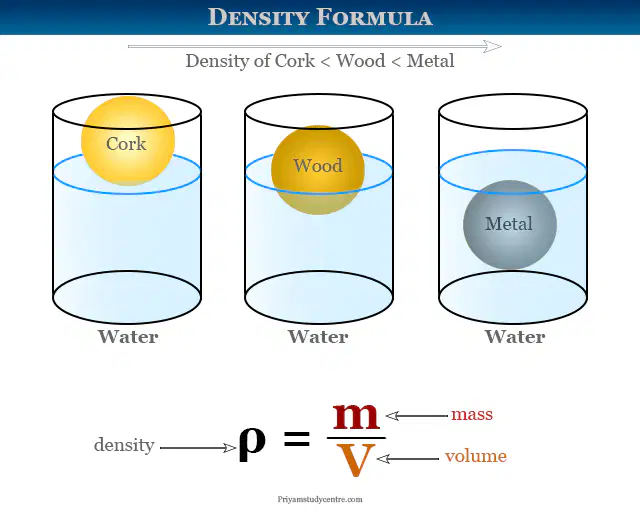
Density of mercury is
1300 kg/m3
1000 kg/m3
13600 kg/m3
none of the above

