
 Worksheets
Chapter 14 Test
Total questions: 23
Worksheet time: 12mins
Name
Class
Date
1.
Matter that has a definite volume and a definite shape is a .
a)
a. solid
b)
b. liquid
c)
c. gas
d)
d. plasma
2.
Matter in which particles are arranged in repeating geometric patterns is a .
a)
a. solid
b)
b. liquid
c)
c. gas
d)
d. plasma
3.
A gaslike mixture with no definite volume or shape that is made up of positively and negatively charged particles is a .
a)
a. solid
b)
b. liquid
c)
c. gas
d)
d. plasma
4.
Matter with no definite volume and no definite shape is a .
a)
a. solid
b)
b. liquid
c)
c. gas
d)
d. plasma
5.
Matter that has a definite volume but no definite shape is a .
a)
a. solid
b)
b. liquid
c)
c. gas
d)
d. plasma
6.
Matter in which the particles are free to move in all directions until they have spread evenly throughout their container is a
a)
a. solid
b)
b. liquid
c)
c. gas
d)
d. plasma
7.
Most matter ________ when heated.
a)
a. expands
b)
b. contracts
c)
c. solidifies
d)
d. condenses
8.
What change of state is changing from a liquid to a gas
a)
Evaporation
b)
Freezing
c)
Melting
d)
Condensation
e)
Sublimation
9.
The most common state of matter in the universe is .
a)
a. solid
b)
b. liquid
c)
c. gas
d)
d. plasma
10.
Which of the following is not a property of liquids?
a)
A They have a definite shape.
b)
B They have a definite volume.
c)
C They take the shape of their container.
d)
D They have the ability to flow.
11.
Which of the following best examples the particle spacing of a liquid?
a)
the particles are packed tightly together
b)
the particles have small gaps between them
c)
the particles have large gaps
d)
the particles are broken down into smaller pieces
12.
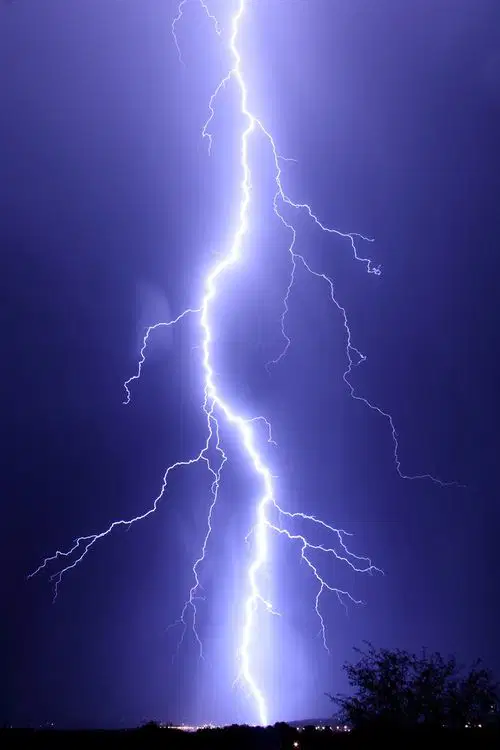
Which state of matter is shown below?
a)
Solid
b)
Liquid
c)
Gas
d)
Plasma
13.
Which of the following best examples the particle spacing of a gas?
a)
the particles are packed tightly together
b)
the particles have small gaps between them
c)
the particles have large gaps
d)
the particles are broken down into smaller pieces
14.
As temperature rises energy __1__ and the space between particles __2__.
a)
1- increases, 2-increases
b)
1- decreases, 2-increases
c)
1- decreases, 2- decreases
d)
1- decreases, 1-increases
15.
In a solid the attraction of particles is...
a)
high
b)
low
c)
in the middle
16.
What change of state is changing from a liquid to a solid.
a)
Freezing
b)
Melting
c)
Evaporation
d)
Condensation
e)
Sublimation
17.
Earth is the only planet where we have found _____ in all states of matter
a)
oxygen
b)
heat
c)
water
d)
plasma
18.
One property that all particles of matter have in common is they
a)
Never move in solids
b)
Only move in gases
c)
Move constantly
19.

Which state of matter is shown below?
a)
Solid
b)
Liquid
c)
Gas
d)
Plasma
20.
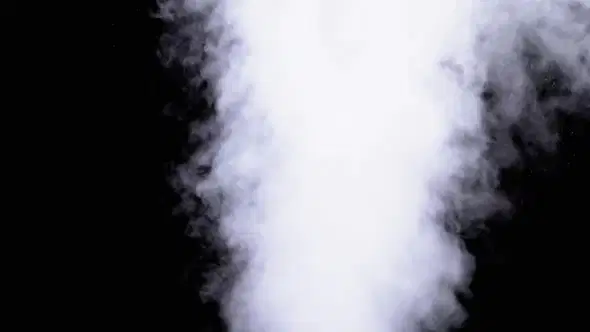
Which state of matter is shown below?
a)
Solid
b)
Liquid
c)
Gas
d)
Plasma
21.
68.0g of mercury occupies a volume of 5.00 cm3. Calculate the density of mercury in g/cm3.
(a)
22.
A piece of wood with a mass of 30 grams has a volume of 25 cm3. Calculate its density.
(a)
23.

Which state of matter has particles arranged like this?
a)
solid
b)
liquid
c)
gas
100 %

