
 Worksheets
310 Micro-Combined Heat and Power Systems Quiz
Total questions: 30
Worksheet time: 15mins
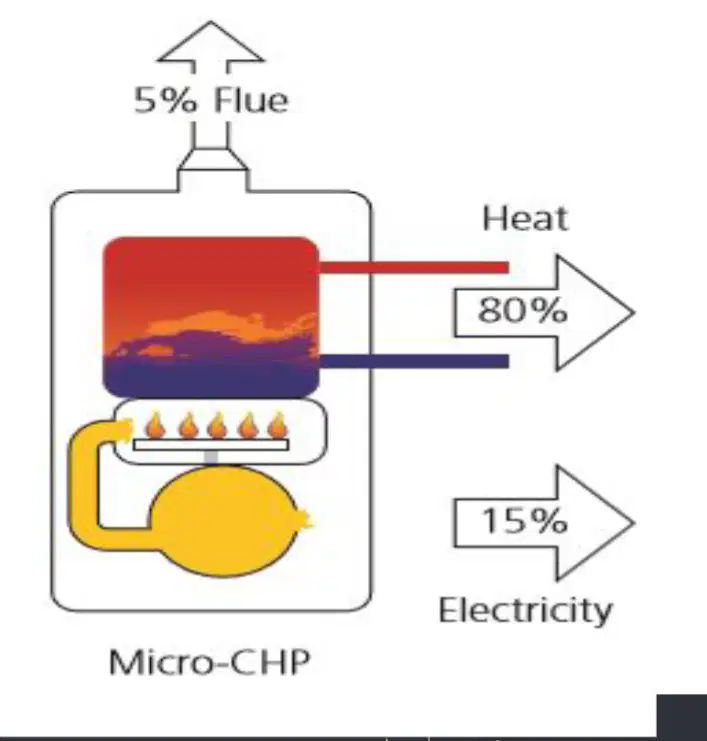
What is the primary function of micro-combined heat and power (mCHP) systems?
To supply heating and hot water while also generating electricity
To only generate electricity
To only supply heating and hot water
To store energy for later use
What percentage of heat is typically used to provide heating in a micro-CHP system?
80%
15%
5%
50%
What is the term used to describe a system where the primary focus is on providing heat?
Heat-led system
Electricity-led system
Power-led system
Energy-led system

Which of the following is a component part of a micro-combined heat and power (mCHP) system?
The engine burner
The cooling fan
The water pump
The solar panel
What is the role of the Stirling engine in a micro-combined heat and power (mCHP) system?
To generate electricity
To cool the system
To store energy
To provide lighting
Which component in a micro-combined heat and power (mCHP) system is responsible for exchanging heat?
The heat exchanger
The cooling fan
The water pump
The solar panel
What percentage of the full heat output does the engine produce in a micro-combined heat and power (mCHP) system?
10%
25%
50%
75%
What happens if there is more demand for heat in a micro-combined heat and power (mCHP) system?
The system shuts down
The supplementary burner ignites
The engine produces more power
The heat exchanger stops working
How does the Stirling engine operate the piston in a micro-combined heat and power (mCHP) system?
Through explosive combustion
By using the expansion and contraction of internal gases
By releasing gases outside the engine
By using external combustion
What is a key requirement for a building to be suitable for a micro-combined heat and power (mCHP) system?
The building should have a high demand for heating.
The building should have low carbon emissions.
The building should be small in size.
The building should have poor insulation.
Why is a building with good and effective insulation not normally suitable for a mCHP system?
It is likely to have a high demand for heating.
It is unlikely to have a high demand for heating.
It increases carbon emissions.
It requires more energy to heat.
Which Building Regulation is concerned with fire safety?
Regulation A
Regulation B
Regulation E
Regulation J
Which Building Regulation focuses on water efficiency?
Regulation G
Regulation L
Regulation P
Regulation E
What is the focus of Building Regulation J?
Sanitation and hot water safety
Heat producing appliances
Conservation of fuel and power
Electrical safety
Which Building Regulation is related to the installation of supply and control wiring?
Regulation A
Regulation B
Regulation P
Regulation L
When is planning permission not normally required for installing an mCHP in a domestic property?
When the work is external
When the work is internal
When the property is listed
When the property is in a conservation area
If the installation requires an external flue, what should be done?
Ignore the local authority
Assume no permission is needed
Check the criteria with the local authority
Proceed without checking
What should be done if the property is a listed building?
No need to check with local authority
Check with the local authority for both internal and external work
Only check for external work
Only check for internal work
What do the Gas Safety (Installation and Use) Regulations require?
Installation of electrical systems
Installation of water fittings
Installation of the gas supply by a qualified engineer
Installation of heating systems
What is the main concern of the Water Supply (Water Fittings) Regulations?
Contamination of gas supply
Contamination of potable water
Maintenance of electrical systems
Installation of heating systems
What does BS7671 cover?
Installation of gas supply
Installation of water fittings
Installation and maintenance of electrical connections
Installation of heating systems
What is G83 related to in the context of regulations?
A type of energy source
A set of requirements for connecting generation
A financial scheme for energy projects
A safety protocol for construction
What is the purpose of the Microgeneration Certificate Scheme?
To provide financial incentives
To certify large-scale power plants
To refer to when energy is generated
To regulate fossil fuel usage
What is one benefit of mCHP regarding electricity production?
It depends on the direction of the property.
It is not dependent on the direction of the property.
It requires specific weather conditions.
It only works during the day.
What does the mCHP system generate while producing heat?
Water
Gas
Electricity
Steam
What financial incentive is available for mCHP systems?
Tax rebate
Feed-in tariff
Discounted installation
Free maintenance
How does mCHP compare to centrally generated electricity in terms of carbon savings?
It saves more carbon.
It saves less carbon.
It has no impact on carbon savings.
It increases carbon emissions.
What environmental benefit does mCHP provide to a property?
Increases energy consumption
Reduces the property’s carbon footprint
Increases the property’s carbon footprint
Has no effect on the carbon footprint
Which of the following is a limitation of mCHP?
Low installation cost
Suitable for all properties
High initial installation cost
Unlimited capacity for electrical generation
What is a limitation of mCHP regarding electrical generation?
Unlimited capacity
Limited capacity
Excessive capacity
No capacity

