
 Worksheets
Crustaceans
Total questions: 16
Worksheet time: 8mins
Name
Class
Date
1.
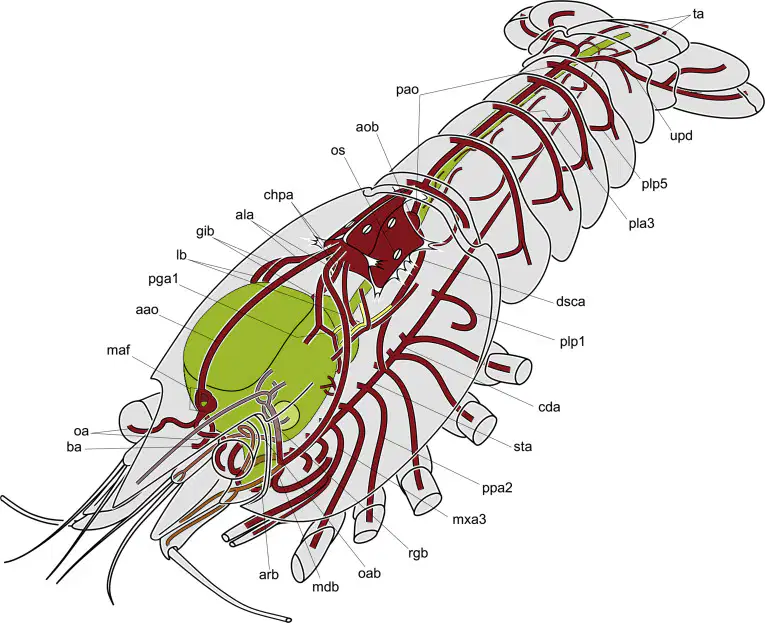
What type of circulatory system do crustaceans have?
a)
Open
b)
Closed
c)
None
2.

Lobsters often have two different size claws to:
a)
Eat, breathe
b)
Pinch, crush
c)
Sense, move
d)
Crush, breathe
3.
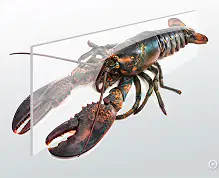
What type of symmetry do crustaceans have?
a)
Bilateral
b)
Radial
c)
None
4.

All crustaceans:
a)
have stinging tentacles
b)
are soft-bodied
c)
have jointed appendages
d)
are bioluminescent
5.
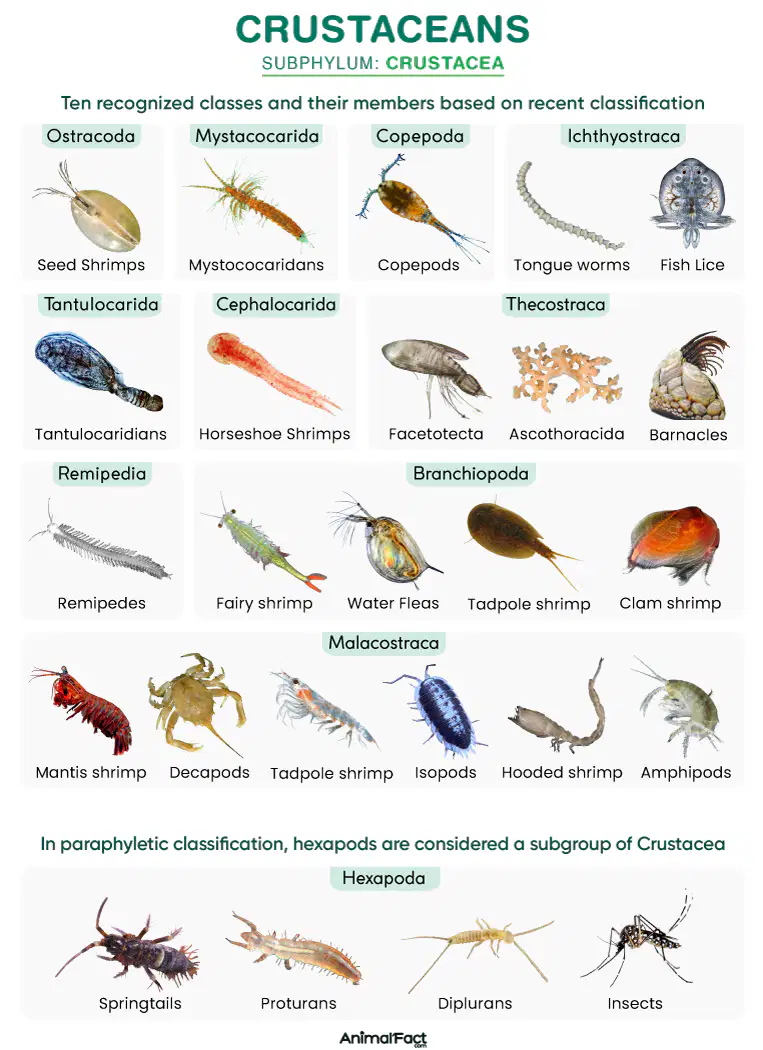
All crustaceans:
a)
Have an exoskeleton
b)
Have 10 appendages
c)
Reproduce internally
d)
Have an internal skeleton
6.

Why are barnacles considered crustaceans? (Two answers!!)
a)
Live in an exoskeleton
b)
Attach itself to substrates
c)
Have jointed appendages
d)
Filter feed
7.

What phylum do crustaceans belong to?
a)
Animalia
b)
Echinodermata
c)
Arthropoda
d)
Cnidarian
8.
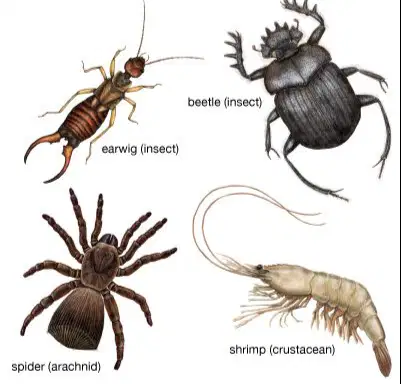
The arthropod exoskeleton is made of
a)
chitin
b)
melanin
c)
resin
d)
carbohydrates
9.

Why do arthropods have to shed their exoskeletons?
a)
it wears out
b)
they don't shed
c)
it limits the size they can grow
d)
to go from water to land environments
10.
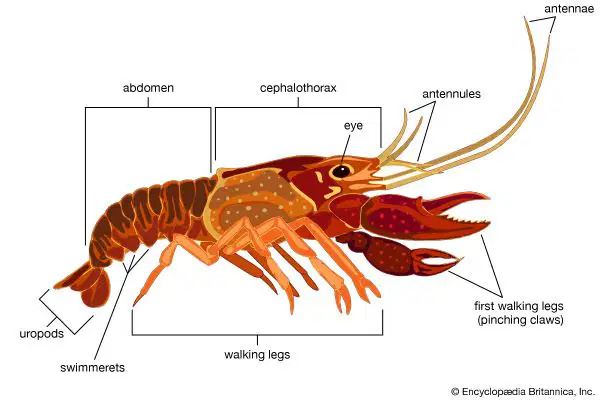
How many pair of antennae do crustaceans have>
a)
4
b)
2
c)
1
d)
3
11.

The structures labeled E are the
a)
swimmerets
b)
walking legs
c)
maxillae
d)
uropods
12.
The structure labeled C is the
a)
antennae
b)
carapace
c)
abdomen
d)
uropods
13.
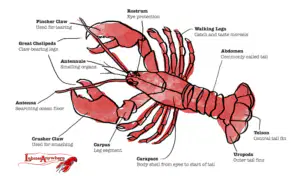
What are the body regions of a crustacean called?
a)
Head, Thorax, Abdomen
b)
Head, Cephalothorax, Abdomen
c)
Head, Body, Stomach
14.

What is molting?
a)
The process in which arthropods reproduce
b)
The process in which arthropods shed their outer covering and grow a larger one.
c)
The process in which larval forms develop into adult forms
d)
The process in which arthropods breathe
15.
The removing and replacing of old exoskeleton is called
a)
metamorphosis
b)
replacement
c)
molting
d)
exoing
16.
Crustaceans, like crayfish, are all vertebrates.
a)
True
b)
False
100 %

