
 Worksheets
IG1.6温习
Total questions: 54
Worksheet time: 39mins
Subatomic particles with a negative charge
Electrons
Neutrons
Protons
Quarks

Which part of the diagram represents the proton?
a
b
c
d


What are the subatomic particles?
Protons, Electrons, Neutrons
Molecules, and atoms
Electrons, Protons, Nucleus
Nucleus, and Electrons
What is this subatomic particle that has no charge?
Electron
Neutron
Proton
Megatron
What is the small, DENSE REGION consisting of protons and neutrons at the CENTER of an atom?
Molecules
Nucleus
Subatomic particle
Atoms
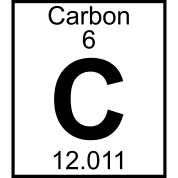

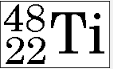

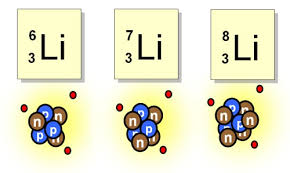

What is the mass number of the element shown?
15
7
8
0
Who created the periodic table?
John Dalton
Marie Curie
Dmitri Mendeleev
The periodic table is arranged in order of...
increasing atomic number
increasing atomic mass
decreasing atomic mass
decreasing atomic number
Groups on the periodic table are arranged...
vertically
horizontally
diagonally
Periods on the periodic table are arranged...
vertically
horizontally
diagonally

Evaporation is the change of state of a
Gas to solid
Liquid to Gas
Solid to liquid
Liquid to Solid

What is the state change that occurs, when ice turns into a liquid?
Boiling
Condensation
Melting
evaporation

Condensation is when
Liquid turns to a solid
Gas turns to liquid
Solid turns to liquid
Liquid turns to a gas

Evaporation occurs when (a) energy from the sun warms the ocean
Solid particles are
Far apart
Close, but able to move
Closest together
Fast moving

This image is an example of what particle
Solid
Liquid
Gas
What particles move the fastest?
Solid
Liquid
Gas
What is the name of the change when a liquid becomes a solid?
Precipitation
Freezing
boiling
evaporation
Why do solids have a fixed shaped?
The particles vibrate
The particles are fixed in place
The particles are closely packed together
The particles are free moving
A compound consists of two or more ____________.
Molecules
Atoms
Elements
Pieces of matter

