
 Worksheets
CHAPTER 8 HEART STRUCTURE, ECG, CARDIAC CYCLE REVISION SB025
Total questions: 35
Worksheet time: 45mins
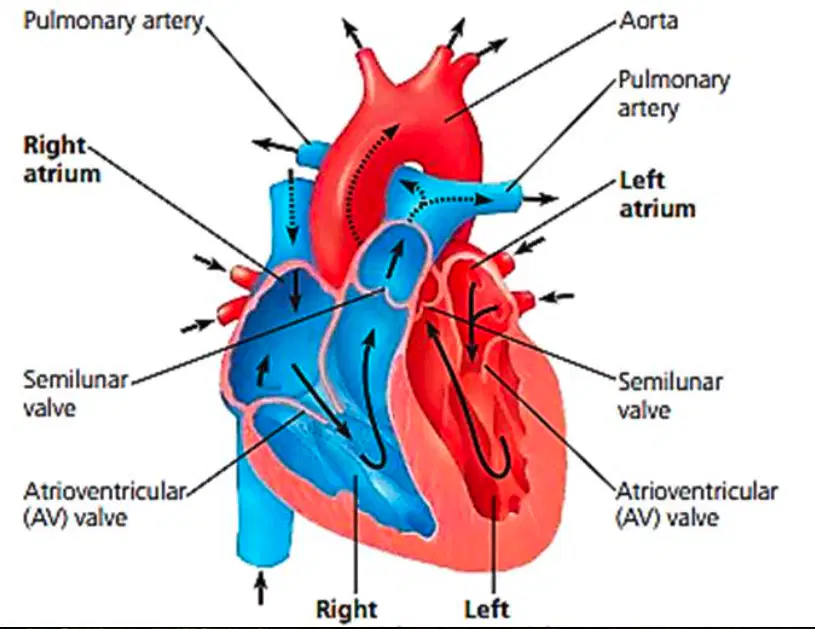
Which chamber of the heart has the thickest wall?
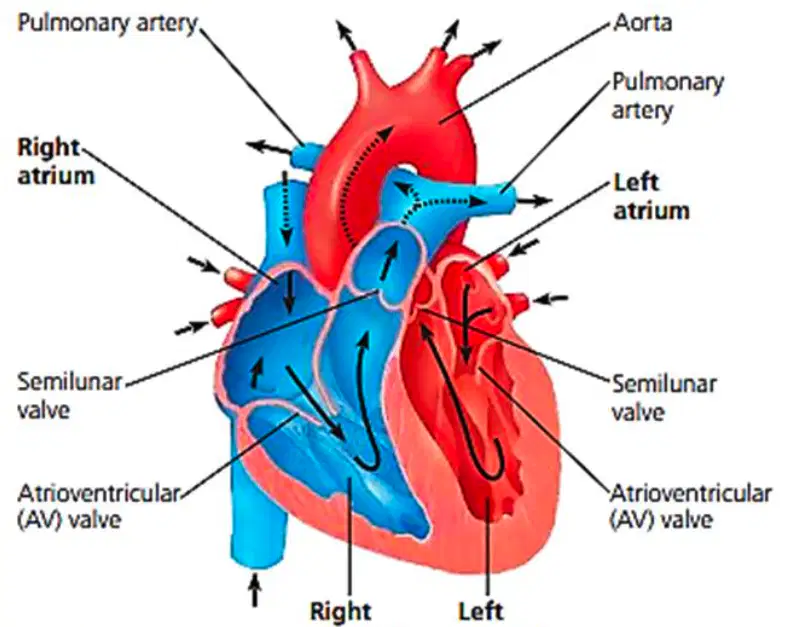
Which valve prevents the backflow of blood from the left ventricle to the left atrium?
Tricuspid valve
Pulmonary valve
Aortic valve
Bicuspid (mitral) valve
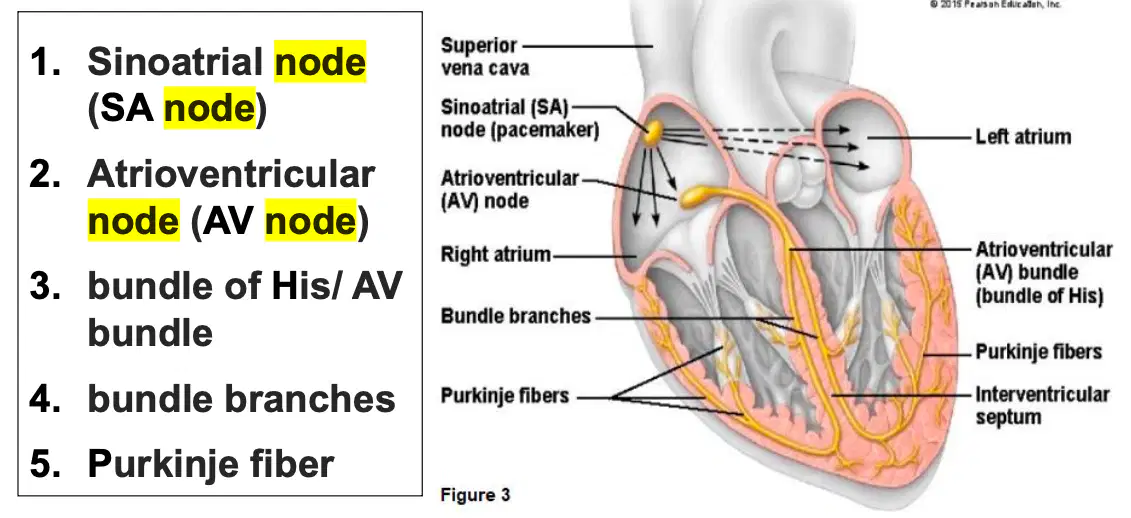
What is the function of the sinoatrial (SA) node in the heart?
To pump oxygenated blood to the lungs
To act as the heart’s pacemaker, generating electrical impulses
To prevent blood backflow into the ventricles
To pump deoxygenated blood to the left atrium
What is the function of the sinoatrial (SA) node in the heart?
To pump oxygenated blood to the lungs
To act as the heart’s pacemaker, generating electrical impulses
To prevent blood backflow into the ventricles
To pump deoxygenated blood to the left atrium
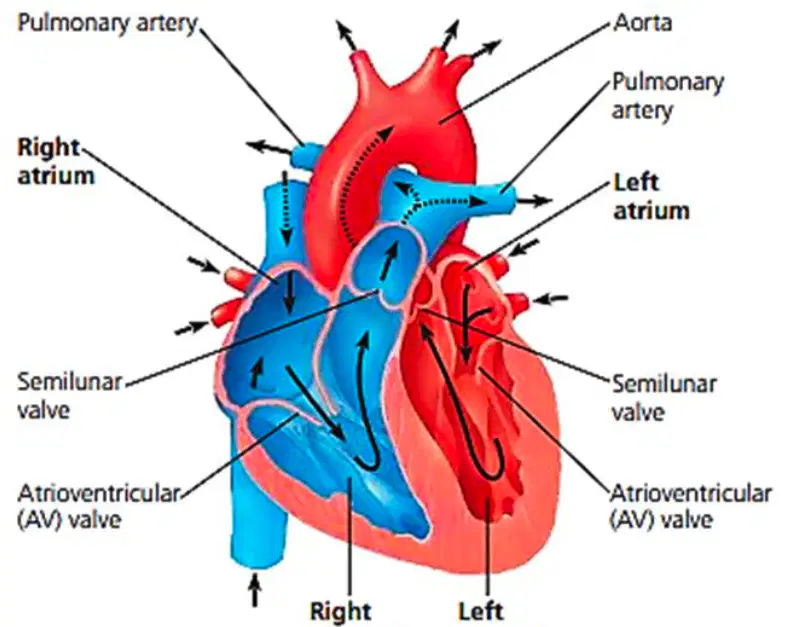
Which vessel carries oxygenated blood from the lungs to the heart?
Aorta
Pulmonary vein
Pulmonary artery
Vena cava
Which statement about the regulation of heart rate is correct?
An increase in blood pH will cause the heart rate to increase
The cardioacceleratory center in the medulla oblongata reduces heart rate
The vagus nerve releases acetylcholine to decrease heart rate
The sympathetic nervous system decreases the heart rate
The right atrium receives (a) blood from the body via the vena cava.
The (a) valve prevents backflow of blood from the right ventricle to the right atrium.
Match the following
Pumps oxygenated blood to the whole body
Left ventricles
Prevents backflow of blood into the atria
AV Valves
Carries oxygenated blood from lungs to heart
Pulmonary veins
Delivers deoxygenated blood to the lungs
Pulmonary arteries
Largest artery in the body
Aorta
Describe the sequence of the cardiac cycle, including the changes in pressure and valve movements.
Atrial Systole (0.1 sec): (a) contract, increasing atrial pressure, pushing blood into (b) . AV valves are open, and semilunar valves remain closed.
• Ventricular Systole (0.3 sec): Ventricles (c) , increasing ventricular pressure, closing (d) valves (“lub” sound) and opening semilunar valves. Blood is pumped into the pulmonary artery and aorta.
• Atrial and Ventricular Diastole (0.4 sec): Both atria and ventricles (e) , allowing blood to fill the atria from the veins. Semilunar valves close (“dup” sound) to prevent backflow.
Identify the major chambers of the heart and blood vessels
What is the function of the sinoatrial (SA) node in the heart?
To pump oxygenated blood to the lungs
To act as the heart’s pacemaker, generating electrical impulses
To prevent blood backflow into the ventricles
To pump deoxygenated blood to the left atrium


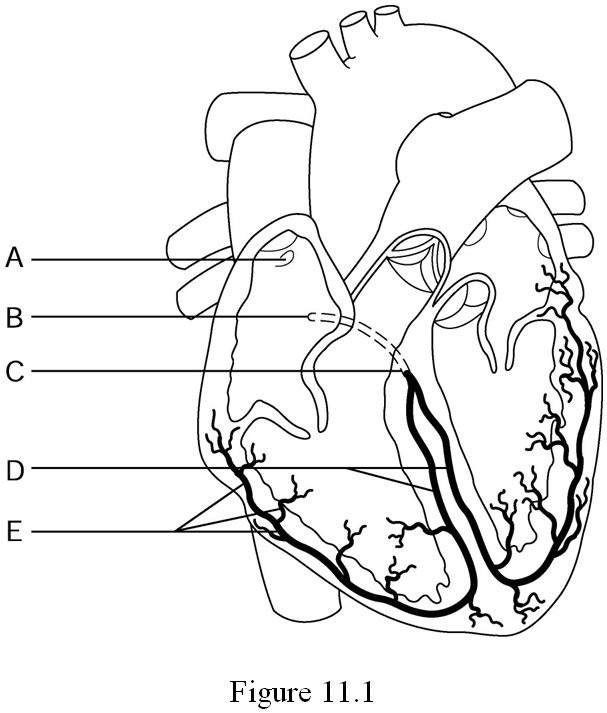
Which label is representing the Bundle of His?
A
C
D
E
Identify the major chambers of the heart and blood vessels
Explain why the left ventricle has a thicker muscular wall compared to the right ventricle.
The left ventricle has to pump (a) blood to the (b) body through the systemic circulation, which requires a stronger (c) . In contrast, the right ventricle only pumps blood to the nearby (d) , which requires less force.
Match the following
Pumps oxygenated blood to the whole body
Left ventricles
Prevents backflow of blood into the atria
AV Valves
Carries oxygenated blood from lungs to heart
Pulmonary veins
Delivers deoxygenated blood to the lungs
Pulmonary arteries
Largest artery in the body
Aorta
Which chamber is the strongest?
The Vena Cava delivers blood to the heart into the.....
left atrium
right atrium
left ventricle
right ventricle

#1 is pointing to the:
SA node
AV node
AV bundle
Purkinje fibers

#2 is pointing to the:
SA node
AV node
AV bundle branches
Purkinje fibers

#3 is pointing to the:
AV node
Bundle of His
Bundle branches
Purkinje fibers

What is happening during the P wave?
Atrial repolarization (atrial diastole)
Atrial depolarization (atrial systole)
Ventricular repolarization (ventricular diastole)
Ventricular depolarization (ventricular systole)
What is happening during the QRS complex?
Atrial repolarization (atrial diastole)
Atrial depolarization (atrial systole)
Ventricular repolarization (ventricular diastole)
Ventricular depolarization (ventricular systole)
What is happening during the T wave?
Semilunar valves close
Atria are in systole
Ventricles are in diastole
Ventricles are in systole
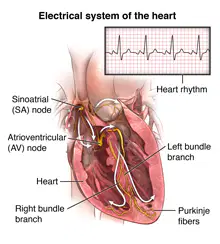
What is another name for the "pacemaker" of the heart?
SA node
AV node
AV bundle
Purkinje fibers

Why is the left ventricular wall so much thicker than the right ventricular wall?
Blood from the right side is being pushed so much farther
Blood from the left side is not being pushed as far
It's not, it's the same thickness
Blood from the left side is being pushed so much farther

Electrolysis
Electromagnet
Electrocardiogram
What is the function of valves present in the veins?
Ensure blood flow back to the heart
Prevent blood clotting
Ensure blood flow in one direction
What is the primary role of the right atrium in the heart?
To pump oxygenated blood to the body
To receive deoxygenated blood from the body
To pump deoxygenated blood to the lungs
To receive oxygenated blood from the lungs


What is the name of valve A?
Tricuspid
Bicuspid
Aortic Semilunar
Pulmonary Semilunar
Label the Valves

