NEW
Font size
 Worksheets
Unit 1 Exam: Ecology
Total questions: 30
Worksheet time: 20mins
Which are the following is not abiotic factors?
Nutrient Enrichment
Hunting deer in a forest
Temperature changes across a weekend
Water Currents
The number of pythons found throughout Everglades National Park has increased in recent years. These huge snakes are not native to Florida and are believed to have been released into the wild by pet owners. Wildlife biologists have initiated attempts to capture and remove these pythons. Which statement best explains the biologists’ reason for removing these pythons from the Everglades?
The pythons could upset the territorial boundaries of native organisms.
The pythons could adapt to overcome diseases common to native snakes.
The pythons could prey on native organisms and cause native populations to decline.
The pythons could begin to interbreed with native snakes and produce a more successful species.

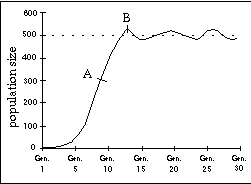
Which of the following statements account for the change in population seen between years 7 and 8?
The birth rate of the pigeons increased.
The emigration rate of the pigeons decreased.
The death rate of the pigeons exceeded the birth rate.
The neighborhood reached its carrying capacity for the pigeon population
Ecologists study different levels of organization within the biosphere. Identify which level corresponds to a group of individuals that belong to the same species and live in the same area.
A: Community
B. Biome
C. Ecosystem
D. Population

Invasive species can crowd out native species.
TRUE
FALSE
True or False: Climate on Earth never changes
True
False
Which of the following is contributing to an INCREASE in carbon dioxide in the atmosphere?
deforestation
photosynthesis
oceans
all of the above
the loss of animal species
A lion that eats a zebra that eats grass is a
primary consumer
secondary consumer
tertiary consumer
quaternary consumer

90% of the energy that gets lost as you move up a food pyramid or chain gets lost as
pollution to the environment
heat to the environment
energy for decomposers
gets recycled

Where does the energy start in this food chain?
Hawk
Snake
Sun
Fungi

When organisms die, what process returns their carbon back into the atmosphere?
Respiration
Decomposition
Combustion
Erosion
What is true about the pyramid of numbers?
A. There are more producers than first-level consumers
B. First-level consumers make up the greatest number of individuals
C. There are more third-level consumers than second-level consumers
D. There are more second-level consumers than first-level consumers
A series of progressive changes in the composition of an ecological community over time
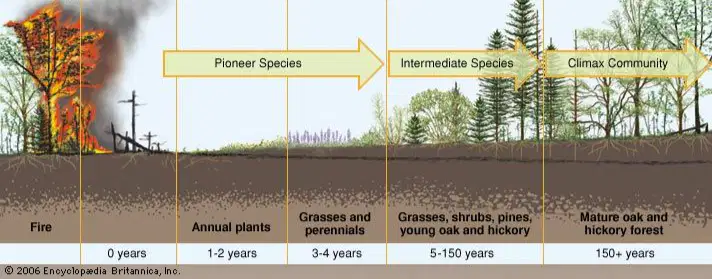
What type of ecological succession is this?
Primary
Secondary

Which of the following describes a population?
the wild dogs and cats that live in the city
four different species of fish living in a pond
a group of Canadian Geese living in a pond in Ijams
roses and sun flowers in a garden

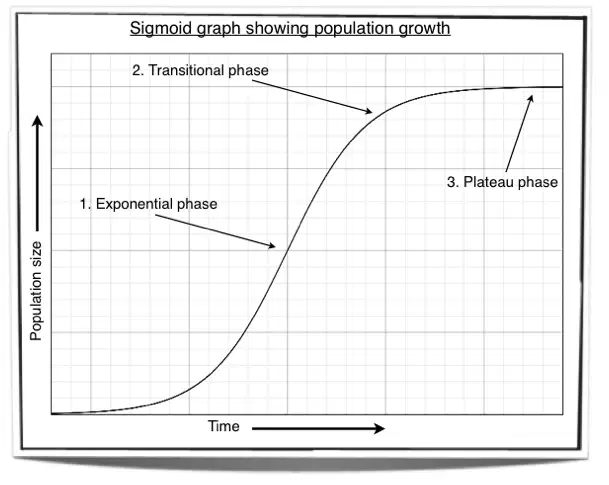
Which type of population growth is shown in this graph?
Exponential growth
Logistic growth
Logarithmic growth
Linear Growth
This level of ecological organization includes BOTH abiotic and biotic factors such as animals and water.
Population
Community
Organism
Ecosystem

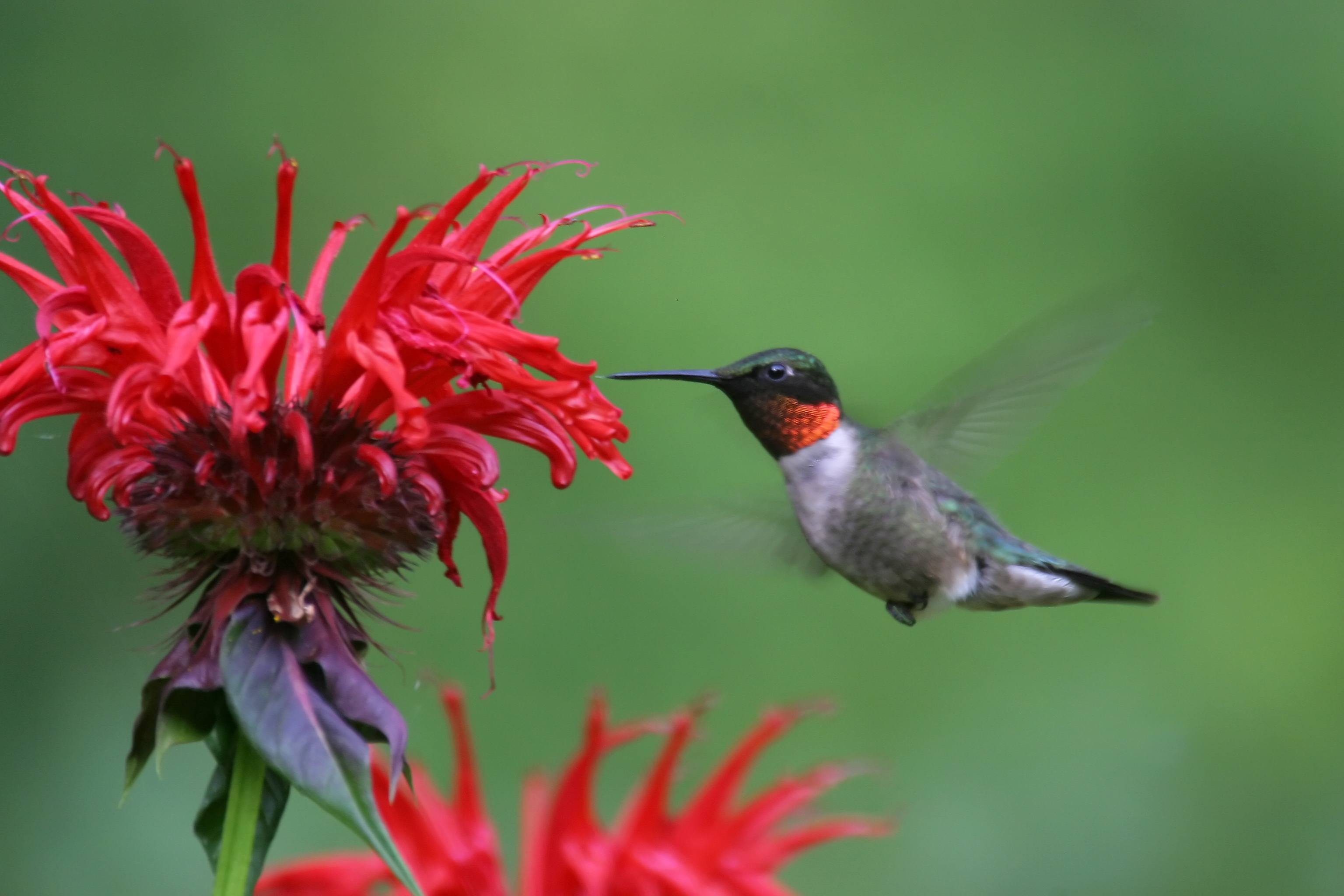

Aphids are tiny insects that live on and eat the leaves of plants, removing vital nutrients from the plants.
Predation
Parasitism
Commensalism
Mutualism
What is an invasive species?
An organism that is new to an environment that has positive effects on the environment.
An organism that is native to an environment that has negative effects on the environment.
An organism that is new to an environment that has negative effects on the environment.
An organism that is native to an environment that has positive effects on the environment.

Click on the map to help answer this question: What can we predict about the population of Feral Swine for the year 2016?
There will be less feral swine in 2016 than there were in 1982.
There will be more feral swine in 2016 than there were in 2010
There were fewer feral swine in 2004 than 1982.
There will be no change in feral swine population.