
 Worksheets
Shape of molecule and IMF PROJECT
Total questions: 15
Worksheet time: 8mins
Identifying compounds that do not follow the octet rule!
PCl5
XeO2F2
CCl2H2
BrF5
If the atomic number for N = 5 and H = 1, determine the type of orbital in NH3!
s-s overlap
s-p overlap
p-p overlap
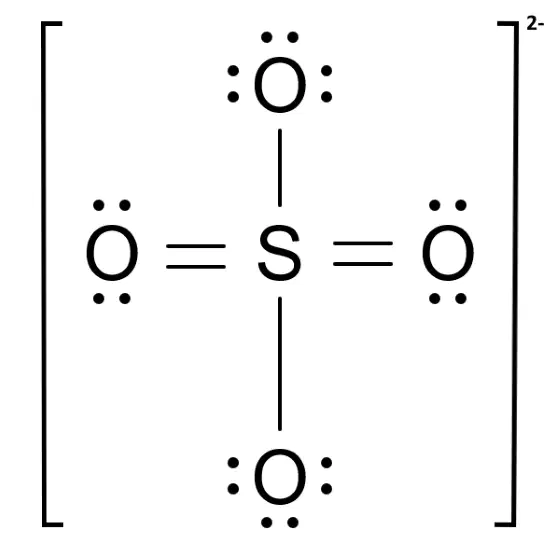
Determine sigma bond and pi bind for molecule SO42-!
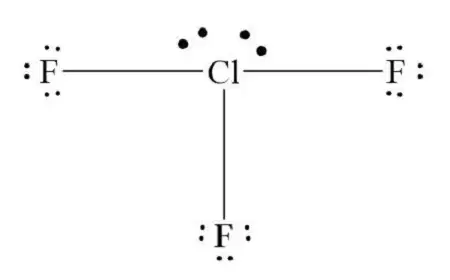
Determine BED, NBED and AX notation for molecule ClF3!
BED: 3, NBED:2, AX3E2
BED: 1, NBED: 4, AX1E4
BED: 4, NBED:1,AX4E1
BED: 2, NBED: 3, AX2E3
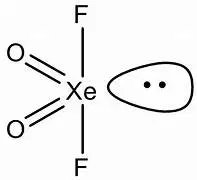
Determine shape of molecule and AX notation for XeO2F2!
Seesaw, AX4E
Determine bond angle for molecule CBr2F2 and SCN-1
Determine the molecular shape and bond angle of CH2O!
Trigonal planar with a bond angle of 120 degrees.
Which of the following is a nonpolar molecule?
SCN-1
PO33-
BrO2-
NH4+
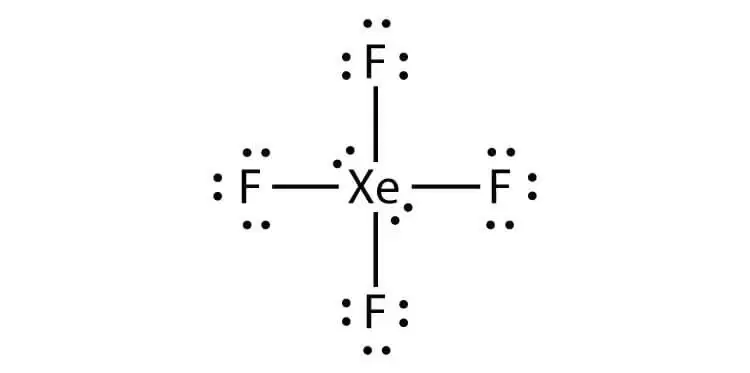
Determine symmetrical and polarity of XeF4!
How does the interaction between molecules occur in the infusion liquid mixture (water + potassium chloride)....
Dipole ions because they are formed from water which is polar covalent bond and pottasium chloride which is an ionic compound
Dipole ions because they are formed from water, which is nonpolar covalent bond, and pottasium chloride, which is an ionic compound
Dipole-dipole force because it is formed from water and pottasium chloride which are polar covalent bond
Dipole-dipole force because it is formed from water and pottasium chloride which is an ionic compound
Two correct statements about the air components of nitrogen gas and methane gas are....
The interaction between nitrogen gas and methane gas is dipole dipole force
The bond in compound N2 is formed from polar molecule and methane gas is nonpolar molecules
Methane is polar molecules and nitrogen gas is polar molecules
The interaction between nitrogen gas and methane gas is London force
An image of the intermolecular interactions that occur in porcelain cleaning mixtures is (water and HCl).... (atomic number H = 1, O = 8, Cl = 17)


The intermolecular force between water and carbon dioxide gas is...
Explain the intermolecular force between water and hydrogen peroxide!
Water and hydrogen peroxide is polar molecule and the intermolecular force between this compound is dipole-induce force.
The intermolecular force between water and hydrogen peroxide is ion-polar molecule
The intermolecular force between water and hydrogen peroxide is form ion and have hydrogen bonding
Determine notation and shape of molecule for BrF5! Atomic number Br = 35 and F = 9.

