
NEW
Font size
 Worksheets
Human Geography Quiz
Total questions: 39
Worksheet time: 20mins
Define the term 'Death rate'.
Death rate is a measure of the number of deaths in a given population, typically expressed per 1,000 individuals per year.
Death rate is the number of births in a given population, typically expressed per 1,000 individuals per year.
Death rate is the rate at which a population increases, typically expressed as a percentage.
Death rate is the average age at which individuals in a population die.
Define the term 'Natural increase'.
Natural increase refers to the growth of a population when the number of live births exceeds the number of deaths in a given time period.
Natural increase refers to the decline of a population when the number of deaths exceeds the number of live births in a given time period.
Natural increase refers to the growth of a population due to immigration exceeding emigration.
Natural increase refers to the stabilization of a population when the number of live births equals the number of deaths.
Define the term 'Population Distribution'.
Population distribution refers to the way in which people are spread across a given area or region. It can be described in terms of density, patterns, and the demographic characteristics of the population.
Population distribution is the study of how resources are allocated among different regions.
Population distribution refers to the migration patterns of people from rural to urban areas.
Population distribution is the analysis of birth and death rates in a specific region.
Population growth affects the global community by:
Increasing resource demand and environmental stress
Decreasing resource demand and environmental stress
Having no impact on resource demand and environmental stress
Only affecting local communities
Large numbers of people are moving to cities because:
they seek better job opportunities.
they prefer rural life.
they want to avoid urban areas.
they are forced by the government.
What is a 'Language Family'?
A group of languages related through descent from a common ancestral language
A collection of words with similar meanings
A set of languages spoken in the same geographic area
A classification of languages based on their writing systems
Explain the concept of 'Ethnic Group'.
Ethnic groups are communities of people who share a common cultural background, language, ancestry, or history. They often have distinct traditions, customs, and social practices that differentiate them from other groups. Ethnic identity can be a significant aspect of an individual's self-concept and can influence social interactions, community dynamics, and political affiliations.
Ethnic groups are defined solely by geographical boundaries and have no cultural or historical significance.
Ethnic groups are primarily based on economic status and wealth distribution within a society.
Ethnic groups are temporary social constructs that change every few years based on political trends.
What is meant by 'Culture Region'?
Culture Region refers to a geographical area defined by the shared cultural traits, practices, and values of the people living in that area.
Culture Region is a term used to describe a political boundary between two countries.
Culture Region is a concept related to the economic activities predominant in a specific area.
Culture Region refers to the climate and weather patterns of a particular geographical location.
Describe 'Cultural Diffusion'.
Cultural diffusion is the spread of cultural beliefs and social activities from one group to another. It can occur through various means such as trade, migration, and communication, leading to the exchange of ideas, customs, and technologies between different cultures.
Cultural diffusion is the isolation of cultural beliefs and social activities within a single group, preventing the exchange of ideas, customs, and technologies.
Cultural diffusion is the process of a single culture dominating and eradicating other cultures, leading to cultural uniformity.
Cultural diffusion is the preservation of cultural beliefs and social activities without any influence from external sources.
What are the elements of Culture?
Language, norms, values, and symbols
Only language and symbols
Technology and economy
Art and music only
What influences may change a culture?
Geographical factors
Economic factors
Social interactions
All of the above
The term 'Unitary system' is defined as:
A system where power is divided between central and regional authorities.
A system where a single central government holds all the power.
A system where power is shared equally between central and local governments.
A system where local governments have more power than the central government.
The term 'Federal system' is defined as:
A system where power is divided between a central authority and constituent political units.
A system where power is concentrated in a central authority.
A system where power is held by a single individual.
A system where power is distributed among various economic classes.
Define the term 'Autocracy'.
A system of government by the whole population or all the eligible members of a state, typically through elected representatives.
A system of government in which one person possesses unlimited power.
A political system in which the supreme power lies in a body of citizens who can elect people to represent them.
A form of government in which a deity is recognized as the supreme civil ruler.
Oligarchy is defined as a form of government in which power is held by:
a single individual
a small group of people
the entire population
elected representatives
Democracy is defined as:
A system of government by the whole population or all the eligible members of a state, typically through elected representatives.
A system where a single ruler has absolute power.
A form of government where the military holds the power.
A system where religious leaders control the government.
A market economy is defined as:
An economic system where supply and demand determine prices.
An economic system controlled by the government.
An economic system where prices are set by a central authority.
An economic system that does not involve any trade.
Define the term 'Mixed Economy'.
An economic system combining private and public enterprise.
An economic system based solely on private enterprise.
An economic system based solely on public enterprise.
An economic system without any government intervention.
Define the term 'Command Economy'.
An economic system where supply and price are regulated by the government rather than market forces.
An economic system based on private ownership and free markets.
An economic system where the means of production are owned by the public and operated for the welfare of all.
An economic system that relies on customs, history, and time-honored beliefs.
Name 2 forms of Autocratic Governments?
Monarchy and Dictatorship
Democracy and Republic
Oligarchy and Theocracy
Federal and Unitary
In a market economy system, what kind of benefits do people receive?
Increased government control
Limited consumer choices
Economic freedom and efficiency
Fixed pricing
In a command economy system, what kind of benefits do people receive?
Guaranteed employment and income
High levels of personal freedom
Market-driven prices
Minimal government intervention
Define the term 'Natural Resource'.
Natural resources are materials or substances that occur in nature and can be used for economic gain or to support life. They include resources like water, minerals, forests, and fossil fuels.
Natural resources are man-made materials that are created for economic gain.
Natural resources are substances that are artificially synthesized in laboratories.
Natural resources are only found in urban areas and are used for recreational purposes.
Define the term 'Free Trade'.
Free trade is an economic policy that allows goods and services to be traded across international borders with minimal government intervention, tariffs, or restrictions.
Free trade is a policy that restricts the exchange of goods and services between countries.
Free trade is a system where countries impose heavy tariffs on imported goods.
Free trade is an agreement between countries to only trade within their own borders.
Define the term 'Pollution'.
Pollution is the introduction of harmful substances or products into the environment, causing adverse effects on living organisms and the ecosystem.
Pollution is the process of photosynthesis in plants.
Pollution is the natural cycle of water evaporation and precipitation.
Pollution is the method of conserving wildlife habitats.
Human geography includes:
Physical landscapes and climate
Cultural landscapes and human activities
Biological processes and ecosystems
Astronomical phenomena and space exploration
A religion is an organized collection of _______, cultural systems, and world views that relate humanity to an order of existence.
beliefs
rituals
traditions
myths
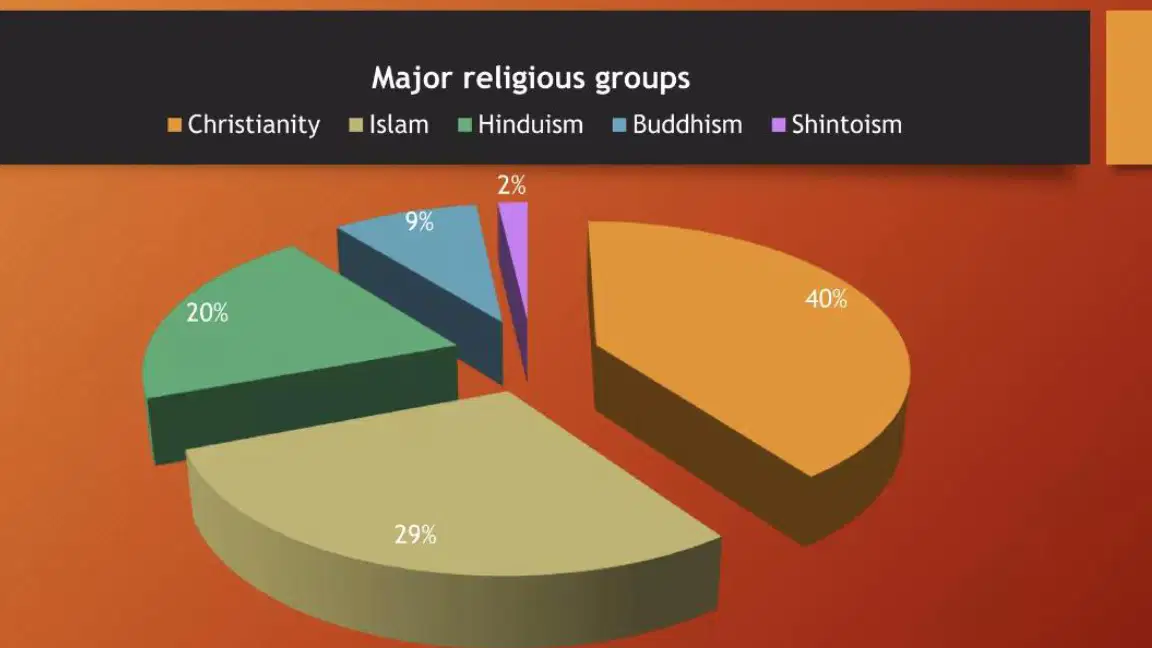
What percentage of the world's population follows Christianity according to the chart?
20%
29%
40%
9%
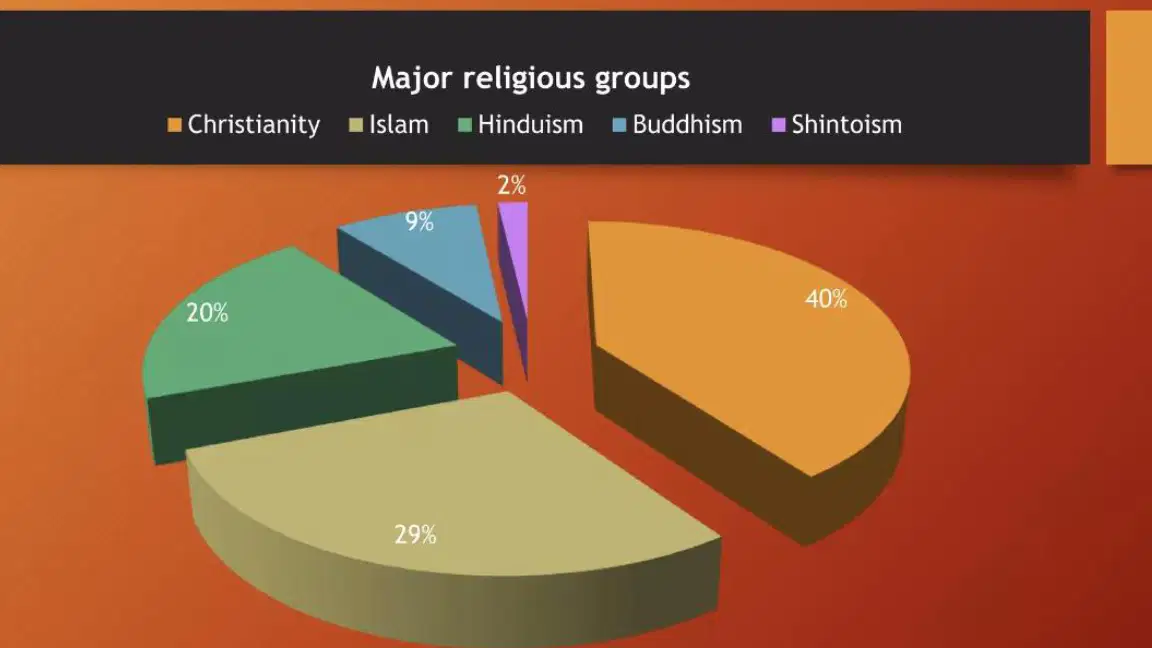
Which religious group has the second largest percentage according to the chart?
Islam
Hinduism
Buddhism
Shintoism
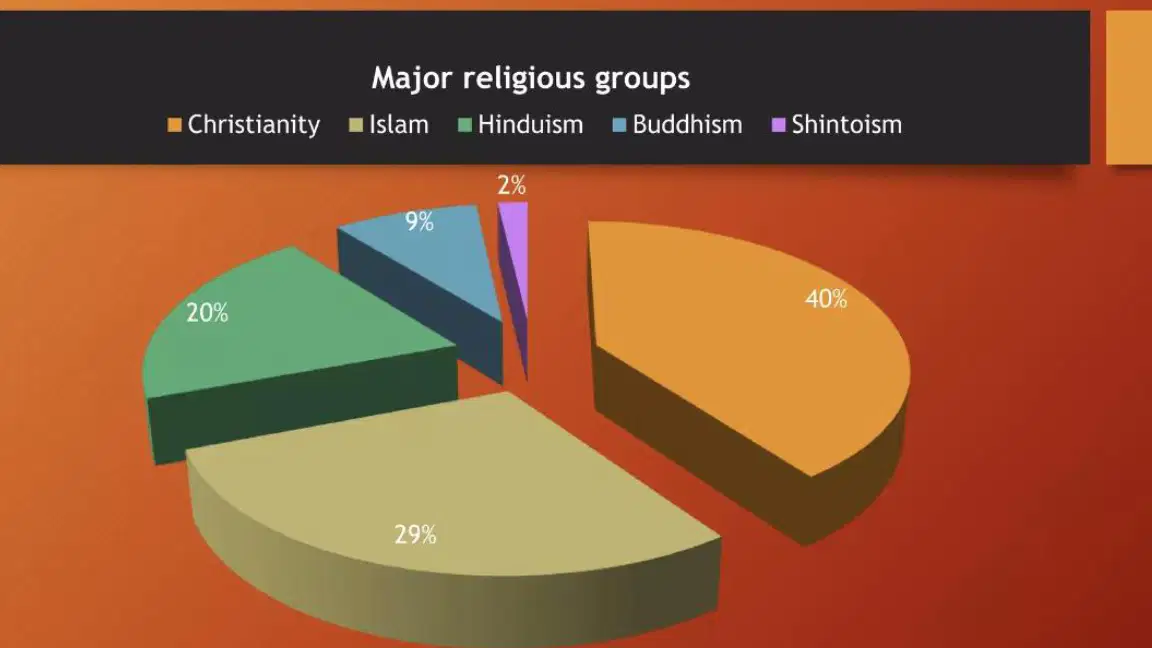
What percentage of the world's population follows Islam according to the chart?
20%
29%
40%
9%
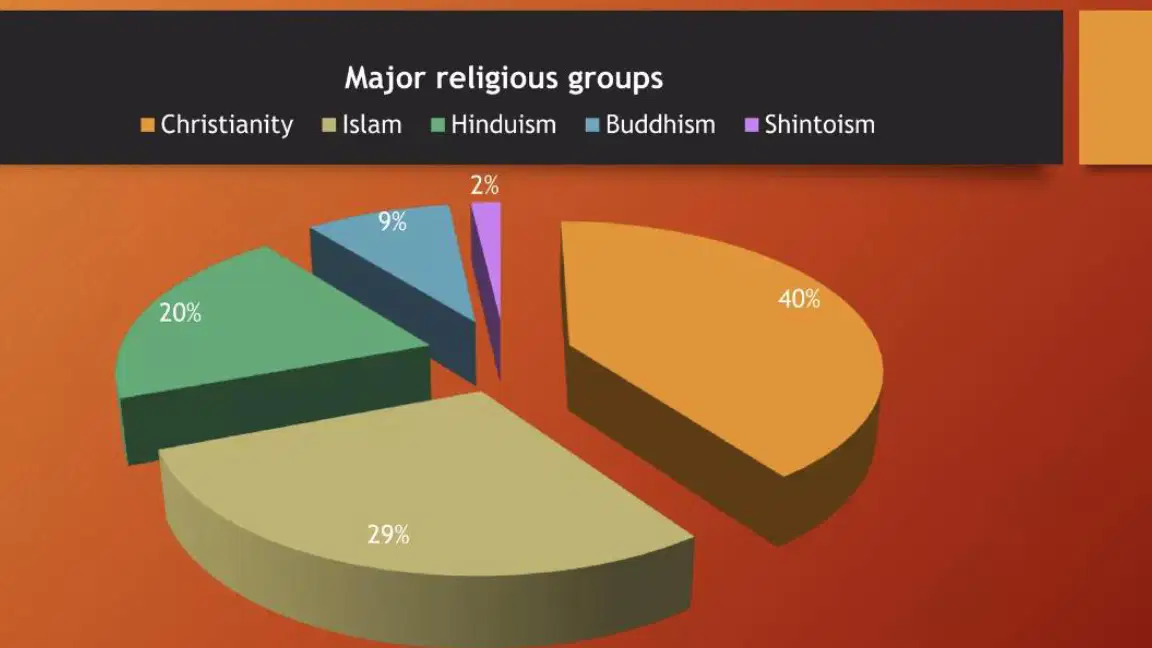
What percentage of the world's population follows Buddhism according to the chart?
2%
9%
20%
29%
An economic system is:
a system of production, resource allocation, and distribution of goods and services within a society or a given geographic area.
a political ideology that advocates for a classless society.
a method of social organization that prioritizes individual freedom over collective equality.
a financial market where stocks and bonds are traded.
In a Command Economic System, who controls the economy?
The government
Private individuals
Non-governmental organizations
International bodies
True or False: In a command economic system, the government does NOT regulate prices and wages.
True
False
What is a characteristic of a mixed economic system?
Only the government makes economic decisions.
Only individuals make economic decisions.
Both the government and individuals make economic decisions.
Economic decisions are not made by anyone.
A _______ is the system by which a state or community is governed.
government
economy
education
culture
What is a social class?
A group of people with similar levels of wealth, influence, and status
A type of government system
A form of economic policy
A cultural festival
Which of the following is NOT a common social class category?
Upper
Middle
Lower
Elite
What is the scientific study of language called?
Linguistics
Biology
Chemistry
Physics

