Wayground logo

Free Printable Worksheets

Font size

S
M
L
XL
Worksheets

Energy Review

Total questions: 38

Worksheet time: 43mins

Name
Class
Date
1.

When you eat fruits and vegetables, chemical bonds are releasing stored energy, this is...

a)

a. thermal energy

b)

b. sound energy

c)

c. electrical energy

d)

d. chemical energy

2.
Which of the following is a conversion from light energy to chemical energy?
a)
a. turning on a stove to heat dinner
b)
b. turning on a lamp
c)
c. growing an apple tree
d)
d. making toast in a toaster
3.
After an energy conversion, you end up with the same total amount of energy as the original amount of potential energy. Which of the following laws explains this rule?
a)
a. law of energy changes
b)
b. law of conservation of energy
c)
c. law of power and energy
d)
d. law of potential energy
4.

The ability to do work

a)

A. chemical energy

b)

B. Friction

c)

C. electrical energy

d)

D. Energy

5.
a.  Energy stored in the nucleus of an atom.
a)
A. Sound Energy
b)
B. Potential Energy
c)
C. Nuclear Energy
d)
D. Thermal energy
6.
Energy from light waves.
a)
Radiant Energy 
b)
Chemical Energy 
c)
Nuclear Energy 
d)
Radiation 
7.

A student is holding the end of a pendulum. The student releases the pendulum. What energy transfers are taking place?

a)

potential energy is transferred to kinetic energy

b)

chemical energy to thermal energy

c)

mechanical energy to chemical energy

d)

kinetic energy is tranferred to potential energy
8.
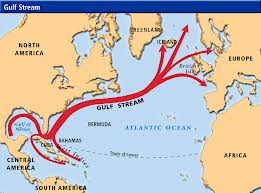
The Gulf Stream is a current that brings warm ocean water from the south to the north.
a)
conduction
b)
convection
c)
radiation
9.
Walking on the warm sand sand with your bare feet.
a)
conduction
b)
convection
c)
radiation
10.
Which direction will the heat flow while this person holds a hot cup of tea?
a)
from the cup to her hand
b)
from her hand to the cup
c)
no heat is transferred
11.
Which direction will the heat flow while this ice cap melts?
a)
there is no heat transfer
b)
from the icecap to the water
c)
from the water to the icecap
12.
Heat transfers from an area of ____temperature to an area of ___ temperature.
a)
high to low
b)
low to high
c)
high to high
13.
High temperature is connected to:
a)
Low kinetic energy.
b)
High kinetic energy.
c)
Zero net energy.
d)
Equal kinetic energies.
14.

A roller coaster car moves on a roller coaster track through positions w, x, y, and z. At what position will the roller coaster car most likely have the greatest kinetic energy?

a)

W

b)

X

c)

Y

d)

Z

15.

A material that reduces the flow of heat is a(n)

a)

conductor

b)

insulator

c)

metal

d)

radiator

16.
 How many joules of heat are needed to raise the temperature of 10.0 g of aluminum from 22°C to 55°C, if the specific heat of aluminum is 0.90 J/gx°C?    
a)
297 Joules
b)
0.003 Joules
c)
297 J/gx°C
d)
0.003 J/gx°C
17.
What  is the formula to calculate heat energy required to raise the temperature of any substance?
a)
Q=mc∆t
b)
Q=mc
c)
Q= ½mv
d)
m=QC
18.
The energy of moving particles
a)
heat
b)
thermal energy
c)
school
d)
temperature
19.
The flow of thermal energy from warmer objects to cooler objects 
a)
Ice Cold
b)
Heater
c)
Heat
d)
Convection 
20.

Which sentence explains why a cold metal spoon placed in a pot of boiling water becomes hot?

a)

Thermal energy is transferred from the spoon to the water by conduction

b)

Thermal energy is transferred from the water to the spoon by conduction.

c)

Thermal energy in the water is transformed into kinetic energy in the spoon by convection.

d)

Thermal energy in the spoon is transformed into kinetic energy in the water by convection.

21.
What is the difference between heat and temperature?    
a)
a.  Temperature measures the motion of molecules, and heat is the energy of that motion
b)
b.  Temperature is measured by a thermometer, and heat is measured by a barometer
c)
c.  Heat is measured in calories, and temperature is measured in joules
d)
d.  Heat is caused by the sun, and temperature is caused by conditions in the atmosphere
22.
A 0.40 kilogram bird is flying at a constant speed of 8.0 m/s. What is the bird's kinetic energy ?
a)
3.2 J
b)
4.2 J
c)
2.0 J
d)
12.8 J
23.
A 60.0 kg person walks from the ground to the roof of a 74.8 m tall building. How much gravitational potential energy does she have at the top of the building?
a)
43982.4 J
b)
63982.3 J
c)
43962.4 J
d)
83942.4 J
24.

Gravitational potential energy depends on the strength of gravity, ________ and ________ of the object.

a)

height and mass

b)

friction and movement

c)

mass and movement

d)

height and friction

25.

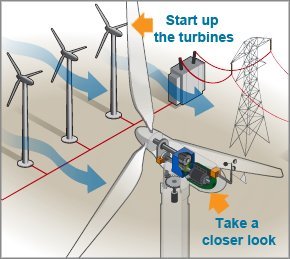
What is the energy conversion when a wind turbine turns to provide energy to a power supply?

a)

electrical to potential

b)

potential to kinetic

c)

kinetic to electrical

d)

nuclear to heat

26.

Name the Energy Conversion of a dryer.

a)

Chemical→ Thermal and Light

b)

Electrical → Elastic, Heat and Sound

c)

Gravitational → Nuclear, Sound and Heat

d)

Electrical → Heat, Kinetic and Sound

27.

The mechanical energy of a boulder rolling down a steep hill ____.

a)

doesn’t exist

b)

 increases

c)

decreases

d)

remains constant

28.

When a ball is dropped it bounces until it eventually stops.  Why does this happen?

a)

Some of the ball’s energy is lost.

b)

Some of the ball’s energy is converted to other forms, such as thermal and sound.

c)

All of the ball’s energy is eventually converted to potential energy when the ball stops bouncing.

d)

All of the ball’s energy is eventually converted to kinetic energy when the ball stops bouncing.

29.
You move a 12-newton box up a 6-meter ramp. In order to find out how much power you created, what would you need to know?
a)
The mass of the box
b)
The slope of the ramp 
c)
The direction the box moved
d)
How long the task took
30.
A kid applies a force of 70 N to a ball over 1.1 meters. How much work did he do on the ball? 
a)
77 J
b)
7.7 J 
c)
0.7 J 
d)
770 J 
31.
You do 90 joules of work in 30 seconds. How much power have you generated?
a)
30 watts
b)
3 watts
c)
120 watts
d)
270 watts
32.
You move an 8-newton weight five meters in 4 seconds. How much power have you generated?
a)
160 watts
b)
10 watts
c)
6.4 watts
d)
17 watts
33.
Work divided by time equals...
a)
energy
b)
power
34.
Force multiplied by distance equals...
a)
work
b)
power
35.
Work is done on an object when the object moves in the SAME direction in which the force is applied.
a)
True
b)
False
36.
Power is the RATE at which work is done. 
a)
True
b)
False
37.
Which of the following is true about work?
a)
It measures how quickly an object accelerates
b)
It measures how much effort is applied over a distance.
c)
It measures the change of an object's rate of speed.
d)
It measures how much time it takes to move an object.
38.

A 100 N force is applied to move an object a horizontal distance of 5 meters at constant speed in 10 seconds. How much power is done?

a)

50J

b)

50W

c)

500J

d)

500W