
Font size
 Worksheets
Unit 4- The Periodic Table
Total questions: 106
Worksheet time: 2hrs 33mins
Who created the Periodic Table?
Albert Einstein
Dmitri Mendeleev
Isaac Newton
Marie Curie
What is the purpose of the Periodic Table?
To list all known planets
To arrange all known elements by trends and groups of similar characteristics
To display all known animals
To organize all known languages
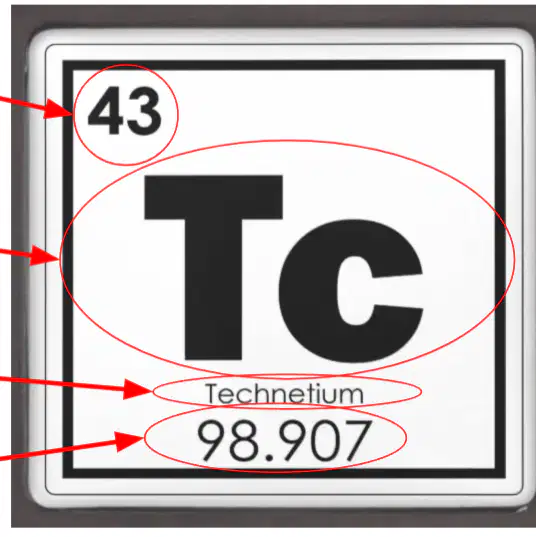
What does the number 43 represent in the element box for Technetium?
Atomic Number
Atomic Mass
Element Name
Symbol
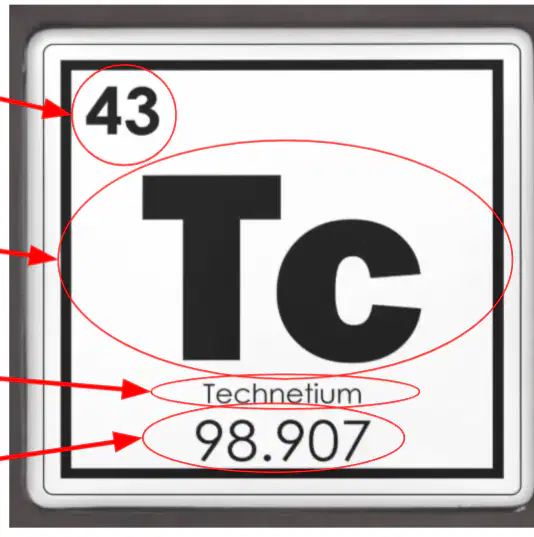
What is the symbol for the element Technetium?
Tc
Tm
Te
Th
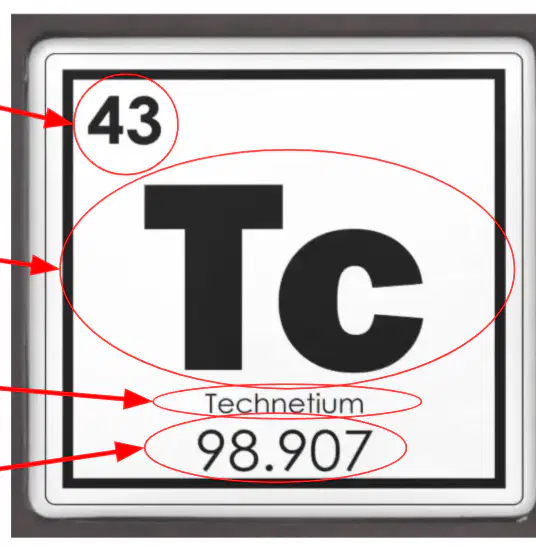
What is the atomic mass of Technetium as shown in the element box?
98.907
43.000
99.000
97.907
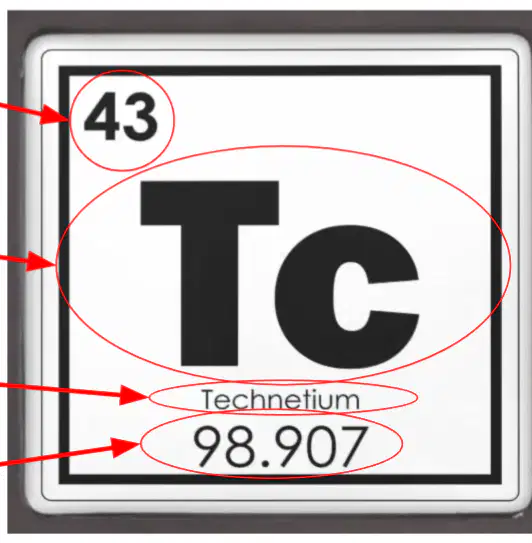
Which part of the element box indicates the name of the element?
Technetium
Tc
43
98.907
What does the Periodic Table organize elements by?
Atomic mass
Atomic number
Element symbol
Chemical properties
What does the Atomic Mass represent in an element box?
The number of protons
The number of electrons
The weighted average of all isotopes
The chemical symbol
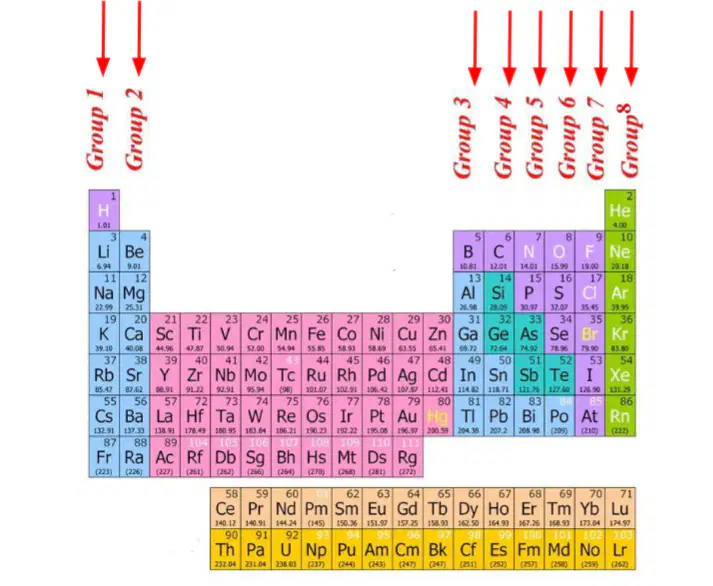
What is the name of the first group in the periodic table?
Halogens
Noble Gases
Alkali Metals
Alkaline Earth Metals
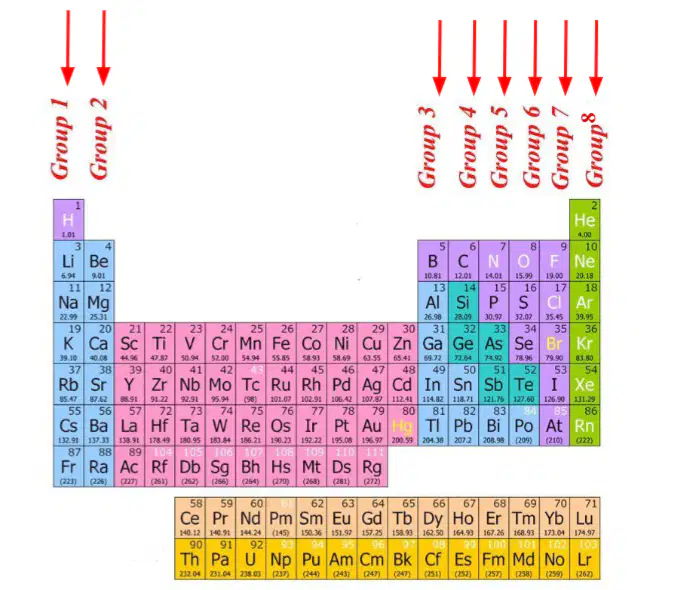
Which group in the periodic table contains the noble gases?
Group 1
Group 2
Group 8
Group 4
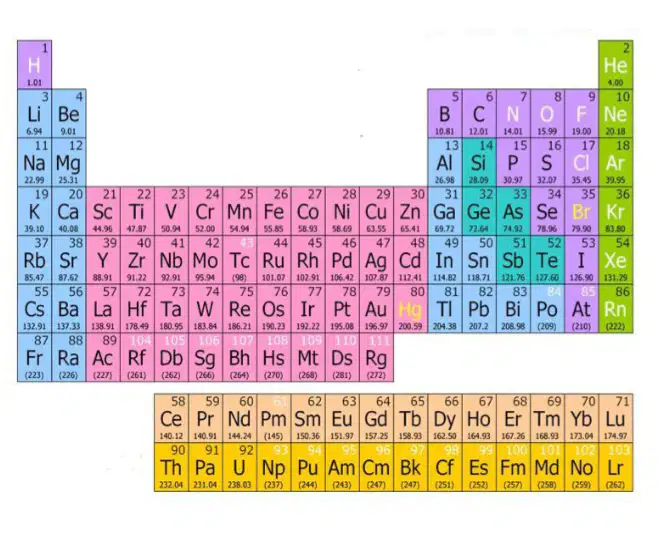
Which element is located in Period 2 and Group 1 of the periodic table?
Sodium
Lithium
Potassium
Rubidium
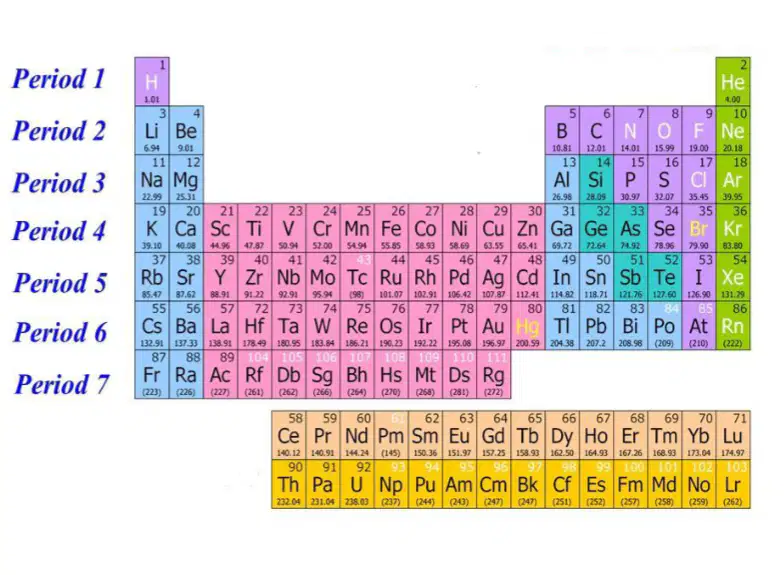
How many periods are there in the periodic table?
5
6
7
8
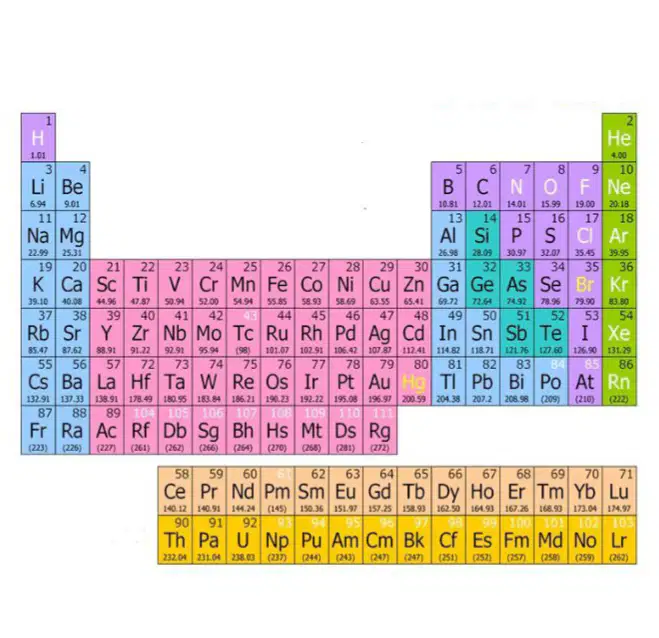
Which element is found in Period 4 and Group 2?
Calcium
Magnesium
Strontium
Barium
Which of the following is a family of elements in the periodic table?
Noble Gases
Noble Metals
Rare Earth Elements
Heavy Metals
What is the family name for elements like sodium and potassium?
Alkaline Earth Metals
Transition Metals
Alkali Metals
Halogen Gases
Which family of elements is known for being very unreactive?
Halogen Gases
Noble Gases
Alkali Metals
Transition Metals
What are the columns in a Periodic Table called?
Periods
Groups
Families
Rows
What are the rows in a Periodic Table called?
Groups
Families
Periods
Columns
What term is used for elements that are grouped together by their similarities in chemical properties?
Periods
Groups
Families
Rows
Which element is located in Period 3 and Group 16 of the periodic table?
Tellurium
Selenium
Sulfur
Oxygen
What is the family name for elements like fluorine and chlorine?
Halogens
Alkali Metals
Noble Gases
Transition Metals

The nucleus of an atom contains which subatomic particles?
protons and electrons
protons and neutrons
electrons and neutrons
protons, electrons, and neutrons

In a neutrally charged atom, which two subatomic particles are equal in number?
protons and neutrons
all subatomic particles are equal in number
neutrons and electrons
protons and electrons
Which subatomic particle is counted to determine the type of element the atom represents?
proton
neutron
electron
boron
Particles in an atom that have no charge are
negatrons
electrons
neutrons
protons
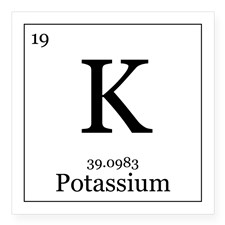
How many neutrons are in an atom of "K"?
29
19
58
20
Adding or subtracting neutrons from an atom means it is now a(n)...
ion
mixture
isotope
neutral atom
Adding or subtracting electrons from an atom means it is now a(n)...
ion
mixture
isotope
neutral atom
Can the mass number of an atom change?
yes, if its number of protons changes
yes, if its number of neutrons changes
yes, if its number of electrons changes
no, it always stays the same
Select all that is true: We cannot change an atom's number of protons because...
protons = atomic number and we can't change an element into another element
changing the number of protons an atom has would mean it has changed into another element
because protons have no mass
we can change the number of neutrons, not protons
Which subatomic particle contains "no" mass?
Protons
Neutrons
Electrons
Atoms
How many groups are in the North American Periodic Table (the one we study)?
8
18
10
20
Select all that apply: The atomic mass on the Periodic Table...
is a decimal
is protons + neutrons of a specific atom
is larger than the atomic number
takes into account the abundance of each isotope of an element
Atomic mass is a decimal because...
It is the weighted average of all isotopes of an element
Atomic mass is protons + neutrons, and there can be 0.5 of a neutron
It needs to be rounded to find the number of neutrons
Making it a fraction would be too hard


Elements that are mostly dull, brittle, not malleable or ductile, and poor conductors of heat and electricity are referred to as _______________.
Metals
Nonmetals
Metalloids
When a metal can allow heat or electricity to flow through it, we say it is ___________.
lustrous
malleable
ductile
conductive
Most metals are ....
Cations
Anions
Most non-metals are...
Anions
Cations
Metals normally form
negative ions
positive ions
non metals normally form ...
negative ions
positive ions
Metals like to
give away electrons
gain electrons
non metals like to
gain electrons
give away electrons
Group 2 elements form what type of ion charge?
2+
2-
1+
1-
Group 7 elements form
1- cations
1- anions
2- anions
2+ cations
How can you tell isotopes of the same element apart?
By their color
By their mass number
By their chemical symbol
By their atomic number
What is an isotope?
A different element with the same number of protons
Versions of the same element with the same number of protons but a different number of neutrons
Elements with the same number of neutrons and protons
A molecule with a different number of electrons
What does the number next to the isotope mean? (e.g., "Carbon-14")
The number of electrons in the isotope
The atomic number of the isotope
The mass number of the isotope
The number of protons in the isotope
How can you tell isotopes of the same element apart?
They have a different number of protons
They have a different number of electrons
They have a different number of neutrons
They have a different atomic number
Why is atomic mass considered to be the "weighted average"?
A) It considers the most common isotope only.
B) It averages the mass of all isotopes equally.
C) It takes into account the abundance of each isotope.
D) It is the sum of protons and neutrons.
How is atomic mass calculated?
Add the mass of each isotope.
Multiply the mass of each isotope by its abundance, and add them together.
Subtract the mass of each isotope from its abundance.
Divide the mass of each isotope by its abundance.
What is the difference between atomic mass and mass number?
Atomic mass is the total number of protons and neutrons, while mass number is the average mass of all isotopes.
Atomic mass is the average mass of all isotopes, while mass number is the total number of protons and neutrons.
Atomic mass and mass number are the same.
Atomic mass is the number of electrons, while mass number is the number of protons.
What is the isotope notation for carbon with 8 neutrons?
12C or carbon-12
14C or carbon-14
13C or carbon-13
15C or carbon-15
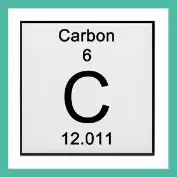
How many neutrons does a regular atom of carbon have?
8
7
6
5

What does a Lewis-Dot Structure depict?
The number of protons in an element
The number of valence electrons in an element
The atomic mass of an element
The number of neutrons in an element
What are valence electrons important for in an atom?
Determining the color of the atom
Determining how the atom might bond with other atoms
Determining the size of the atom
Determining the weight of the atom
Where are valence electrons located?
Innermost ring/energy level
Outermost ring/enery level
Inside the nucleus
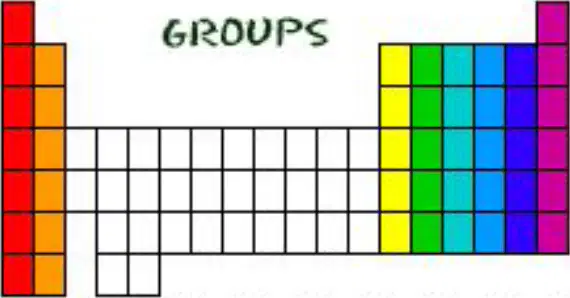
What does the group number of an element in the periodic table represent?
The number of protons in the element
The number of valence electrons in the element
The atomic mass of the element
The number of neutrons in the element
How many valence electrons do elements in Group 1 have?
1
2
8
4
Which group has elements with 8 valence electrons, except for Helium?
Group 8
Group 1
Group 2
Group 3
What is unique about Helium's valence electrons compared to other elements in Group 8?
It has 2 electrons
It has 8 electrons
It has 1 electron
It has 4 electrons
What do all elements in a group have in common regarding valence electrons?
They have the same number of valence electrons
They have different numbers of valence electrons
They have no valence electrons
They have twice the number of valence electrons
What rule governs the behavior of atoms in bonding?
The Duet Rule
The Octet Rule
The Triple Rule
The Double Rule
Why does Na bond with Cl to make NaCl?
Because Na has 7 valence electrons and Cl has 1.
Because Na has 1 valence electron and Cl has 7.
Because both Na and Cl have 8 valence electrons.
Because Na and Cl do not share electrons.
Which group on the Periodic Table contains elements with a full valence shell, thus making them inert (unreactive)?
Alkali Metals
Halogens
Noble Gases
Transition Metals
What do you draw along with the element symbol in a Lewis-Dot Structure?
Atomic number
Number of protons
Correct number of valence electrons
Number of neutrons
How should you draw the valence electrons around the element symbol in a Lewis structure?
Clockwise
Randomly
Counter-clockwise
In a straight line
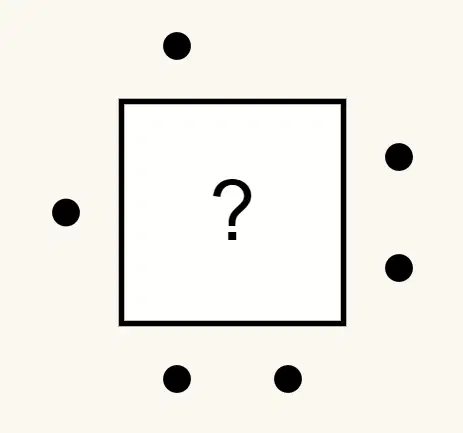
This could be the dot diagram of
Mg
Cl
C
O
What is an ion?
An atom with a neutral charge
An atom that has lost or gained electrons
An atom with more protons than electrons
An atom with more electrons than protons
What happens to the charges in an ion?
They cancel each other out
They become neutral
They do not cancel each other out
They become positive
What is a cation?
An atom that has gained an electron and is negative in charge
An atom that has lost an electron and is positive in charge
An atom that has gained a proton and is positive in charge
An atom that has lost a proton and is negative in charge
What is an anion?
An atom that has lost an electron and is positive in charge
An atom that has gained an electron and is negative in charge
An atom that has lost a proton and is positive in charge
An atom that has gained a proton and is negative in charge
How can you remember the charge of a cation?
Cations are negative
Cations are neutral
Cations are PAWsitive
Cations are negative and positive
Are most elements on the Periodic Table metals or nonmetals?
Metals
Nonmetals
Metalloids
Gases
How many electrons do atoms want in their valence shell to be stable?
2
4
6
8
Atoms are compared to humans because they always want to take the path of:
Most resistance
Least resistance
No resistance
Maximum resistance
What does an atom with 3 valence electrons prefer to do?
Gain 5 more electrons
Lose 3 electrons
Gain 3 electrons
Lose 5 electrons
What is the first step in finding ion notation?
Determine ionic charge
Find out how many valence electrons your atom has
Figure out the path of least resistance
Look at the atomic mass
What happens when an atom loses an electron?
It becomes more negative
It becomes more positive
It stays the same
It becomes neutral
What is the purpose of figuring out the path of least resistance for an atom?
To determine its atomic mass
To find out if it should gain or lose electrons to achieve an octet
To calculate its density
To measure its temperature
What must be considered regarding electrons when drawing Lewis-Dot Structures for ions?
The number of protons
Electrons that have been transferred (gained or lost)
The atomic mass
The number of neutrons
Where should the ionic charge be placed in a Lewis-Dot Structure?
Inside the brackets
Next to the element symbol
Outside the brackets
Above the element symbol

Why are ions formed?
To make our lives difficult
Because atoms want to be stable
Because atoms have the same number of protons and electrons
Because atoms gained neutrons

Which Scientist created this model?
Democritus
Chadwick
Bohr
Rutherford
What experiment led Thomson to his discovery?
gold foil experiment
cathode ray tube experiment
none, he had a thought experiment
bombarding of alpha particles
Which scientist used the gold foil experiment in his discovery?
Bohr
Thomson
Rutherford
Chadwick
What model of the atom came about first.


The idea of atomos (uncuttable or indivisible bits of matter) was first stated by:

Which scientist theorized, but incorrectly stated, that all atoms of an element were identical and were indivisible?

What atomic theory is considered the planetary model?
Dalton
Bohr
J. J. Thomson
Quantum model
Who founded the electron?
Thomson
Rutherford
Bohr
Chadwick
Who founded the proton?
Thomson
Rutherford
Bohr
Chadwick
Who founded the neutron?
Thomson
Rutherford
Bohr
Chadwick

