
 Worksheets
G11 Biology Term 3 Exam Review
Total questions: 26
Worksheet time: 13mins
The organelle responsible for modifying, sorting, and packaging proteins is
Mitochondria
Golgi Apparatus
Ribosome
Nucleus
Which of the following is NOT a function of the plasma membrane?
Regulating the movement of materials into and out of the cell
Providing structural support
Controlling cellular respiration
Allowing cell communication
In cellular respiration, the majority of ATP is produced during
Glycolysis
The Citric Acid Cycle
Oxidative Phosphorylation
Pyruvate Oxidation
Which of the following molecules is the final electron acceptor in oxidative
phosphorylation?
NADH
ATP
Oxygen
Carbon dioxide
Which type of signaling involves hormones traveling through the bloodstream to
reach target cells?
Paracrine
Endocrine
Autocrine
Synaptic
The process in which glucose is broken down to pyruvate in the cytoplasm is
called
Glycolysis
The Calvin cycle
The Krebs cycle
Oxidative phosphorylation
What happens to an animal cell in a hypertonic solution?
It swells and bursts
It stays the same
It shrinks
It undergoes mitosis
The main function of ribosomes is
Energy production
Lipid synthesis
Protein synthesis
DNA replication
Which of the following organelles contains hydrolytic enzymes to break down
waste and cellular debris?
Golgi apparatus
Lysosome
Ribosome
Mitochondria
10. A ligand binds to a receptor, triggering a signal transduction pathway. This is an
example of:
Passive transport
Cell communication
Cellular respiration
DNA replication
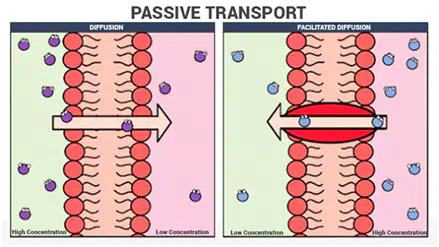
What is passive transport?
Moves molecules from high to low concentration without energy
Moves molecules from high to low concentration with ATP
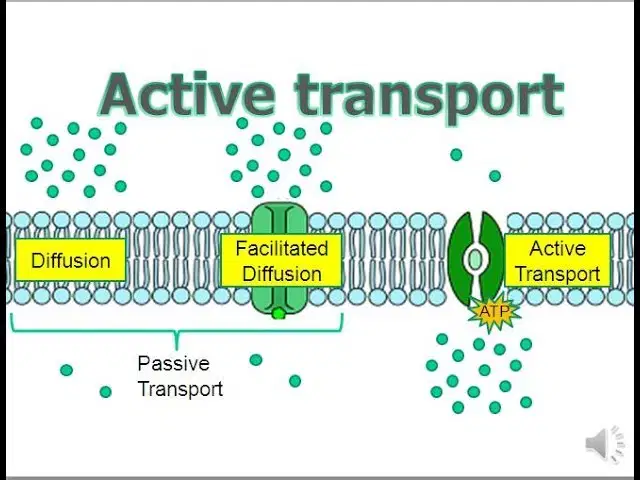
What is active transport?
Moves molecules from high to low concentration without energy
Moves molecules from high to low concentration with ATP
Which is a form of passive transport?
Diffusion
Sodium-potassium pump
Which is a form of active transport?
Diffusion
Sodium-potassium pump
What is the role of ATP in cellular respiration?
The main energy currency of the cell to power cellular processes
The type of sugar released by cells
What is a "selectively permeable membrane"?
Allows some molecules through but regulates others
Allows all molecules through
Allows no molecules through
How does temperature affect enzyme activity?
High temperatures can denature enzymes, reducing their function.
High temperatures can improve enzyme function
Temperatures have no affect
The movement of molecules from high to low concentration without energy is
called
diffusion
homeostasis
cytoplasm
endocytosis
The cell structure responsible for energy production is the
mitochondria
enzyme
ATP
ribosome
A small molecule that binds to a receptor and starts a signaling pathway is called
ligand
cytoplasm
osmosis
ribosome
The process where water moves across a selectively permeable membrane is
called
osmosis
diffusion
homeostasis
endocytosis
The part of the cell where glycolysis takes place is the
cytoplasm
ligand
ribosome
enzyme
What happens to ATP production in the absence of oxygen?
ATP production stops completely.
The cell switches to fermentation, producing less ATP.
The electron transport chain (ETC) works normally.
More ATP is produced through aerobic respiration.
Match the process of cell signaling to one of its three main stages: Reception
A ligand binds to a receptor, activating a signaling pathway
A series of chemical reactions relay the signal inside the cell.
The cell responds by activating a gene or protein.
Match the process of cell signaling to one of its three main stages: Transduction
A ligand binds to a receptor, activating a signaling pathway
A series of chemical reactions relay the signal inside the cell.
The cell responds by activating a gene or protein.
Match the process of cell signaling to one of its three main stages: Response
A ligand binds to a receptor, activating a signaling pathway
A series of chemical reactions relay the signal inside the cell.
The cell responds by activating a gene or protein.

