
 Worksheets
Topic 9: Enzymes as Catalysts
Total questions: 19
Worksheet time: 14mins
Which of the following is a type of catalysis involving the formation of a covalent bond between the enzyme and the substrate?
Specific acid/base catalysis
Covalent/nucleophilic catalysis
Electrophilic catalysis
General acid/base catalysis
What type of catalysis involves the donation or acceptance of a proton by the enzyme?
Covalent/nucleophilic catalysis
Electrophilic catalysis
Specific acid/base catalysis
Mandelate racemase
Which enzyme is known for its role in the conversion of carbon dioxide and water to bicarbonate and protons?
Mandelate racemase
Carbonic anhydrase
Lysozyme
Chymotrypsin
Which enzyme is involved in the breakdown of bacterial cell walls?
Carbonic anhydrase
Lysozyme
Mandelate racemase
Proteases
Which of the following is an example of a protease enzyme?
Mandelate racemase
Lysozyme
Chymotrypsin
Carbonic anhydrase
What determines the substrate specificity of serine proteases?
Catalytic triad
Binding pocket
Intermediate formation
Transition state stabilization
What is the common feature of all serine proteases?
Catalytic triad of Ser, His, Asp
Acid base catalysis
Redox reactions
Formation of a covalent bond

What type of catalysis is described by Step 1
General Acid Catalysis
General Base Catalysis
Specific Acid Catalysis
Specific Base Catalysis
What type of catalysis is described by Step 2
General Acid Catalysis
General Base Catalysis
Specific Acid Catalysis
Specific Base Catalysis
Blank occurs when the enzyme active site stabilizes the transition state of the reaction by forming electrostatic interactions with the substrate. The electrostatic interactions can be ionic, ionic-dipole, dipole-dipole, or hydrophobic interactions. Hydrogen bonding is one of the most common electrostatic interactions formed in the active site.
(a)
This type of catalysis involves abstraction of electrons or transfer of electron density from the substrate to the catalyst
(a)
Many enzymes that function by the induced fit model also utilize strain distortion within their catalytic mechanism. Within the unbound state they remain in a low catalytic state, however the interaction with the substrate induces the destabilization of the enzyme active site or may induce blank within the substrate causing the initiation of the catalytic activity of the enzyme.
(a)
Select which mechanism(s) listed that are employed by the enzyme lysozyme:
Acid–base catalysis
Covalent catalysis
Metal ion catalysis
Proximity and orientation effects
Preferential binding of the transition state complex
An uncatalyzed reaction has a rate of 4.2 × 10^–7 sec^–1. When an enzyme is added the rate is
3.2 × 10^4 sec^–1. Calculate the rate enhancement caused by the enzyme.
Which of these amino acid groups would not make a good nucleophilic catalyst?
amino
imidazole
methyl
imidazole
hydroxyl
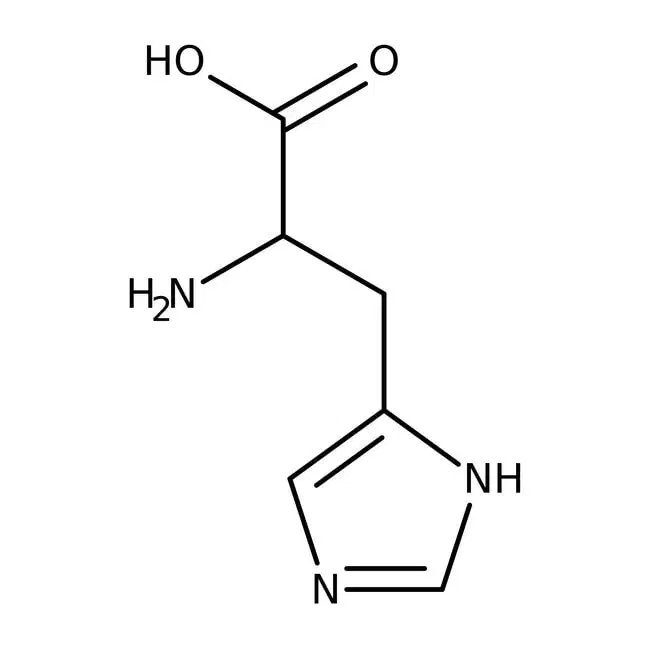
The imidazole side chain of histidine can function as either a general acid catalyst or a
general base catalyst because
the imidazole group has a pKa in the physiological pH range.
in the physiological pH range, the nitrogen in the ring can be easily
protonated/deprotonated.
one guanidino group is protonated, and the other is deprotonated at physiological pH.
the imidazole group is a strong reducing agent at physiological pH.
A new serine protease was discovered that preferentially cleaves a peptide bond adjoining a
negatively charged side chain. Which of the following is true?
It likely reacts much slower than chymotrypsin.
The specificity pocket would mimic that of trypsin.
It likely reaction much faster than chymotrypsin.
The specificity pocket is likely lined with amino acids such as Arg and Lys.
The specificity pocket would mimic that of chymotrypsin.
A peptide with the sequence "Glu-Ser-Val-Asp-Lys" will likely be cut next to "Val" rapidly
by _______ and very slowly by _______ . (Enter the words one after another)
(a)
In the lysozome reaction the D ring in NAM is in the ________ conformation
providing a contribution of catalytic energy via the _______ distortion.
half-chair; electrostatic
chair; strain
boat; electrostatic
half-chair; strain
boat; strain

