
 Worksheets
Economics Quiz
Total questions: 50
Worksheet time: 25mins
What is the term for the curve that shows the maximum possible output combinations of two goods or services an economy can achieve when all resources are fully and efficiently utilized?
Economic Systems
Comparative Advantage
Production Possibilities Frontier
Economic Questions
Which concept refers to the ability of an entity to produce a good or service at a lower opportunity cost than others?
Economic Systems
Comparative Advantage
Production Possibilities Frontier
Economic Questions
What are the fundamental questions that every economic system must answer?
What to produce, how to produce, and for whom to produce
How to maximize profit, how to minimize cost, and how to increase demand
What resources to use, how to allocate resources, and how to distribute income
How to increase efficiency, how to reduce waste, and how to improve quality
Why are economies around the world growing more market oriented?
Due to increased government control
Because of technological advancements
As a result of cultural traditions
Due to a decrease in global trade
How much can an economy produce with the resources available?
Unlimited production
Limited by resource availability
Determined by consumer demand
Based on historical data
Can you actually save time by applying economic principles to your family chores?
No, it complicates tasks
Yes, it increases efficiency
Only if you hire help
It depends on the size of the family
Why is ‘experience’ a good teacher?
It provides theoretical knowledge
It offers practical insights
It is always correct
It is easy to forget
Why is ‘fast food’ so fast?
Because it is cooked slowly
Due to pre-preparation and quick service
Because it is made from scratch
Due to complex cooking methods
What are the three questions that all economic systems must answer?
What to produce, how to produce, and for whom to produce
When to produce, where to produce, and why to produce
How much to produce, who will produce, and where to sell
What to sell, how to sell, and who will buy
Which of the following best describes a pure market economy?
An economy where the government makes all decisions
An economy based on supply and demand with little government control
An economy where traditions dictate production
An economy that combines elements of market and planned economies
What is a key problem of a pure centrally planned economy?
Lack of government intervention
Inefficiency and lack of innovation
Overproduction of goods
Excessive competition
How do mixed economies differ from traditional economies?
Mixed economies rely solely on customs and traditions
Mixed economies have no government intervention
Mixed economies combine elements of market and planned economies
Mixed economies are based entirely on supply and demand
Which of the following is a type of economic system?
Political system
Educational system
Economic system
Social system
What is a pure market economy?
An economy controlled by the government
An economy with no government intervention
An economy based on traditional practices
An economy transitioning to a new system
Which economic system combines elements of both market and planned economies?
Pure market economy
Mixed economy
Traditional economy
Transitional economy
What type of economy is characterized by customs and traditions?
Market economy
Transitional economy
Traditional economy
Pure centrally planned economy
Which of the following is one of the three economic questions all economies must answer?
What is the price of goods?
How will goods be distributed?
What goods and services will be produced?
When will goods be sold?

What is the second economic question that economies must address?
How will they be produced?
Where will they be sold?
Why will they be produced?
When will they be produced?
For whom will goods and services be produced is an example of which type of economic question?
Distribution question
Production question
Consumption question
Allocation question
What is an economic system?
A set of mechanisms and institutions that resolves the what, how, and for whom questions.
A method of calculating taxes.
A type of government policy.
A financial market strategy.
Which of the following is a standard used to distinguish among economic systems?
The color of currency.
Who owns the resources?
The number of banks.
The type of climate.
What decision-making process is used in economic systems?
To determine the weather.
To allocate resources and products.
To create new languages.
To design clothing.
What types of incentives guide economic decision makers?
Cultural traditions.
Types of incentives.
Random guesses.
Historical events.
In a pure market economy, who owns all the resources?
The government
Private individuals
Non-profit organizations
International bodies
What is the basis for the coordination of economic activity in a pure market economy?
Government regulations
Prices generated in free, competitive markets
Social welfare programs
International trade agreements
In a pure market economy, where does the income derived from selling resources go?
To the government
To non-profit organizations
Exclusively to each resource owner
To international aid
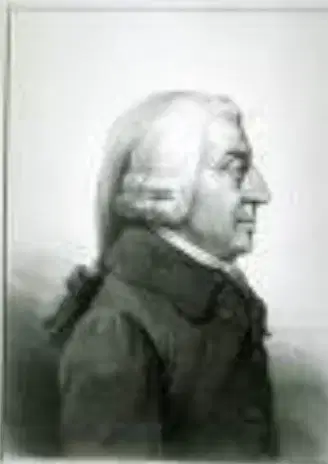
Who is the economist associated with the concept of the "Invisible Hand"?
John Maynard Keynes
Adam Smith
Karl Marx
Milton Friedman
What are the two things that create the "Invisible Hand" according to Adam Smith?
Government regulation and taxation
Self-interest and competition
Supply and demand
Innovation and technology

Which of the following is a problem associated with pure market economies?
Easy enforcement of property rights
Abundance of public goods
Difficulty enforcing property rights
Lack of externalities
What is a challenge faced by some people in pure market economies?
Excess resources to sell
Few resources to sell
Equal distribution of resources
Unlimited resources to sell
What do some firms attempt to do in pure market economies?
Promote competition
Monopolize markets
Provide public goods
Eliminate externalities
Which of the following is typically absent in pure market economies?
Private goods
Public goods
Externalities
Monopolies
In a command economy, who owns all the resources?
Private individuals
Corporations
Government
Non-profit organizations
What is another term sometimes used for a command economy?
Capitalism
Socialism
Communism
Feudalism
In a command economy, how is production coordinated?
By market demand
By central plans of government
By individual entrepreneurs
By international trade agreements
What type of planners are used in a command economy?
Invisible market forces
Decentralized planners
Visible central planners
Automated systems
Which of the following is a problem associated with command economies?
High consumer priority
Little freedom of choice
Efficient central planning
Abundant environmental protection
In a command economy, what is often the result of central planning?
Increased efficiency
Consumer satisfaction
Inefficiency
Resource abundance
What happens to resources owned by the state in a command economy?
They are efficiently utilized
They are sometimes wasted
They are privately owned
They are always conserved
Which issue is commonly linked to command economies regarding the environment?
Environmental damage
Environmental conservation
Sustainable development
Green technology advancement
What type of economy is the United States considered to be?
Command economy
Mixed economy
Traditional economy
Socialist economy
Why is the United States considered a mixed economy?
Because all resources are owned by the government
Because the government does not regulate the private sector
Because resources are privately owned and the government regulates the private sector
Because it relies solely on market forces
What is a transitional economy primarily shifting from?
Central planning
Competitive markets
Privatization
State-owned enterprises
What does a transitional economy involve converting?
Private enterprises into state-owned enterprises
State-owned enterprises into private enterprises
Competitive markets into central planning
Privatization into central planning
What is the process of converting state-owned enterprises into private enterprises called?
Nationalization
Centralization
Privatization
Globalization
What largely shapes a traditional economy?
Technology and innovation
Government policies
Custom or religion
Market demand
What plays a significant role in economic activity in a traditional economy?
Family relations
International trade
Technological advancement
Corporate investments
What do the images depict?
People waiting for a concert
People in a bread line during an economic crisis
People at a sports event
People at a political rally
What is the purpose of the production possibilities frontier?
To show the maximum possible output combinations of two goods
To determine the price of goods in a market
To illustrate the demand curve for a product
To calculate the profit margin of a company
What can cause the production possibilities frontier to shift?
Changes in consumer preferences
Technological advancements
Fluctuations in stock prices
Variations in weather patterns

