
 Worksheets
Vascular Villains
Total questions: 15
Worksheet time: 5mins
What is the most common primary vascular tumor of the retina?
Retinoblastoma
Hemangioblastoma
Choroidal melanoma
Retinal cavernous hemangioma
Von Hippel-Lindau disease is associated with which intraocular vascular tumor?
Choroidal hemangioma
Retinal capillary hemangioblastoma
Retinoblastoma
Uveal melanoma
What is the typical fundoscopic appearance of a retinal capillary hemangioblastoma?
Large pigmented lesion with drusen
Bright red-orange vascular lesion with feeder vessels
White, calcified mass with exudation
Small yellow lesions with a honeycomb pattern
Sturge-Weber syndrome is associated with which intraocular vascular tumor?
Retinal hemangioblastoma
Choroidal hemangioma
Retinal cavernous hemangioma
Choroidal melanoma
Von Hippel-Lindau (VHL) disease follows which pattern of inheritance?
Autosomal recessive
Autosomal dominant
X-linked recessive
Mitochondrial inheritance
Which chromosome is affected in Von Hippel-Lindau (VHL) disease?
Chromosome 17
Chromosome 3
Chromosome 9
Chromosome 22
What is the characteristic feature of a retinal cavernous hemangioma on fluorescein angiography (FFA)?
Early hyperfluorescence with leakage
"Grape-like" clusters with autofluorescence in late phases
Hypofluorescence with blocked choroidal flow
Rapid dye washout
Which of the following conditions is NOT associated with the Von Hippel-Lindau gene mutation?
Retinal hemangioblastoma
Choroidal melanoma
Pheochromocytoma
Renal cell carcinoma
Which laser treatment is commonly used for small retinal capillary hemangioblastomas?
Argon laser photocoagulation
Cryotherapy
Plaque radiotherapy
Vitrectomy
Which condition often requires a combination of laser photocoagulation and systemic therapy?
Sporadic retinal hemangioblastoma
Retinal capillary hemangioblastomas in Von Hippel-Lindau disease
Choroidal hemangioma
Retinal cavernous hemangioma
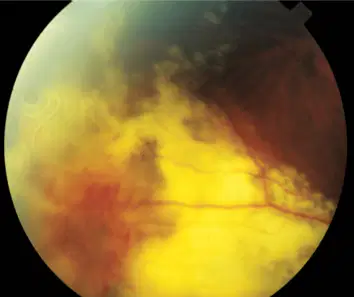
most likely diagnosis?
retinoblastoma
wet AMD
hemangioblastoma
Coats disease
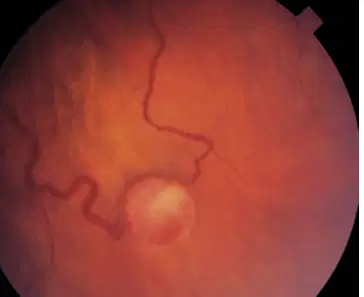
diagnosis ?
hemangioblastoma
cavernous hemangioma
retinoblastoma
melanoma
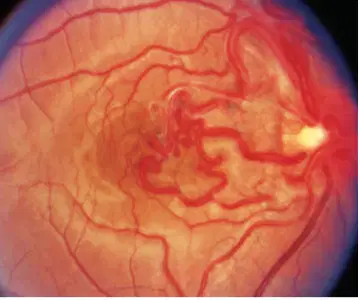
diagnosis?
CRVO
Hypertensive retinopathy
racemose angioma
cavernous hemangioma
What is the role of OCT in evaluating retinal vascular tumors?
Detects subretinal fluid and cystoid macular edema
Directly visualizes tumor vasculature
Differentiates benign from malignant tumors
Confirms genetic mutations
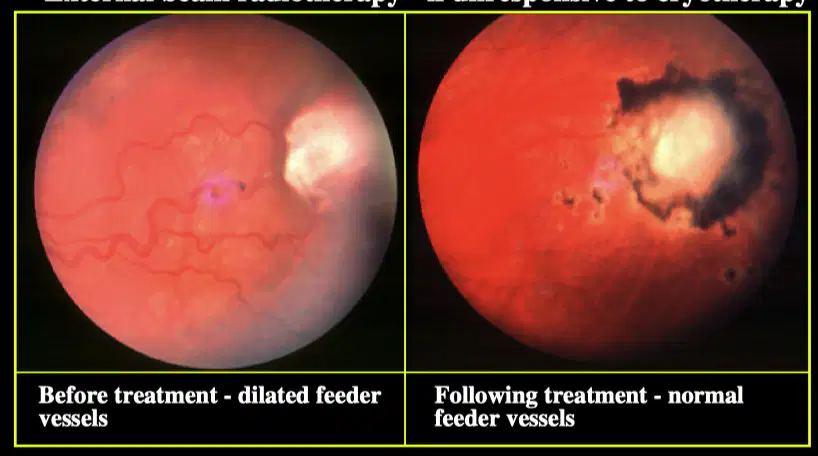
Treatment option for retinal capillary hemangioma ?
argon laser
cyrotherapy
external beam radiotherapy
all above

