
 Worksheets
Waves Study Guide
Total questions: 50
Worksheet time: 25mins
What is a wave?
A disturbance that transfers energy through matter or space
A type of particle
A solid object
A chemical reaction
Which type of wave transfers Radiant (Light) energy?
Transverse
Longitudinal
Mechanical
Seismic
What is required for Mechanical/Longitudinal waves to travel?
A medium
Vacuum
Light
Sound
Sound waves travel via which type of waves?
Transverse waves
Longitudinal waves
Surface waves
Electromagnetic waves
How is frequency measured?
Hertz (Hz)
Meters (m)
Seconds (s)
Amperes (A)
The relationship between wavelength and frequency is:
Direct
Inverse
Unrelated
Equal
What is the definition of reflection in the context of waves?
The bouncing back of a wave when it hits a surface through which it cannot pass.
The bending of waves around obstacles.
The spreading of waves as they pass through a narrow opening.
The change in direction of waves as they pass from one medium to another.
What is the definition of diffraction in the context of waves?
The bouncing back of a wave when it hits a surface through which it cannot pass.
The bending of waves around obstacles.
The spreading of waves as they pass through a narrow opening.
The change in direction of waves as they pass from one medium to another.
What is the definition of refraction in the context of waves?
The bending of waves as they pass from one medium to another
The reflection of waves off a surface
The absorption of waves by a medium
The scattering of waves in different directions
Which application uses sound waves to detect underwater objects and ocean depth?
Sonar
Radar
Ultrasound
Echolocation
Which application uses radio waves to detect objects such as airplanes and boats?
Sonar
Radar
Ultrasound
Echolocation
Echolocation is a biological sonar used by which animals?
Bats and dolphins
Lions and tigers
Elephants and rhinos
Eagles and hawks
Resonance is a phenomenon that occurs when a system is driven at its natural frequency. Which of the following is an example of resonance?
A singer breaking a glass with their voice
A car accelerating on a highway
A person walking on a sidewalk
A book falling off a shelf
What is the relationship between pitch and frequency?
Direct
Inverse
Not Related
Inequality
Fill in the blank: A lower pitch results from a lower frequency and a higher pitch results from a ______ frequency.
higher
lower
medium
constant
How are amplitude and loudness related?
Amplitude and loudness are directly proportional.
Amplitude and loudness are inversely proportional.
Amplitude affects loudness but they are not directly proportional.
Amplitude and loudness are unrelated.
What happens during constructive interference?
Waves cancel each other out
Waves amplify each other
Waves change direction
Waves lose energy
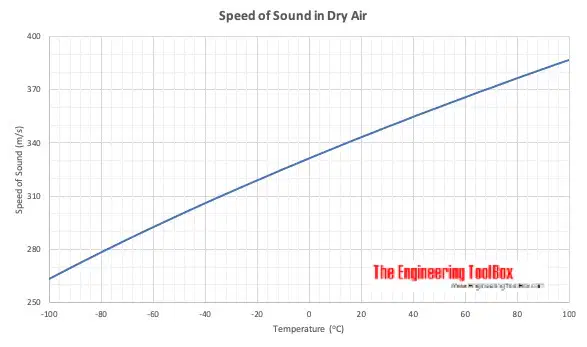
What is the speed of sound in air at room temperature (20oC)?
Approximately 400 meters per second
Approximately 300 meters per second
Approximately 500 meters per second
Approximately 343 meters per second
Which of the following is an example of a transverse wave?
Water wave
Seismic P-wave
Light wave
Sound wave
What happens during destructive interference?
Waves amplify each other
Waves cancel each other out
Waves change direction
Waves increase in frequency
What is the primary factor that affects the speed of sound in a medium?
Weight
Shape
Color
Temperature
Which phenomenon occurs when waves overlap and combine to form a new wave pattern?
Reflection
Refraction
Interference
Diffraction
What is the term for the highest point of a wave?
Amplitude
Crest
Frequency
Trough
In general, the more energy a wave has the greater its amplitude.
True
False
Since sound is a mechanical wave it does not need a medium to travel through.
True
False
Which of the following is transferred during the movement of a wave?
matter
speed
mass
energy
Which of the following is NOT a medium through which a mechanical wave can travel?
vacuum (i.e. empty space)
solid
liquid
gas

This figure shows a_____________.
compressional wave
transverse wave
decibel scale
electromagnetic wave

In the figure shown, point B is called a___________.
rarefaction
amplitude
trough
crest

In the figure shown, point D is called__.
diffraction
trough
crest
compression
The amplitude of a wave is _______.
the distance between the crest and the rest position of the wave
the distance the wave moves in one second
the distance equal to one wave length
the distance the wave moves in one time period
The number of cycles or waves passing a particular point every second is the _________.
amplitude
pitch
reverberation
frequency
Sound travels fastest in a ___________.
solid
liquid
gas
both a and c
Often you can see the lightning before you hear the thunder because__________.
sound waves travel slower than light waves
sound waves travel faster than light waves
When sound travels through air, the particles _________.
vibration along the direction the wave travels
do not vibrate
vibrate but not in any fixed direction
vibrate perpendicular to the direction wave

Which wave is pictured?
Transverse
Longitudinal
Electromagnetic
Light
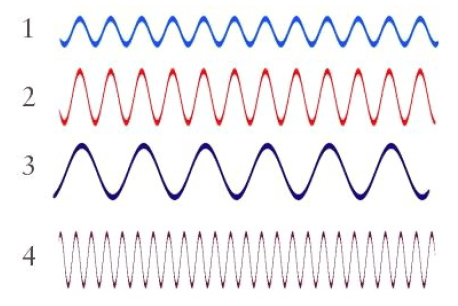
Which wave in the diagram has the greatest frequency?
1
2
3
4
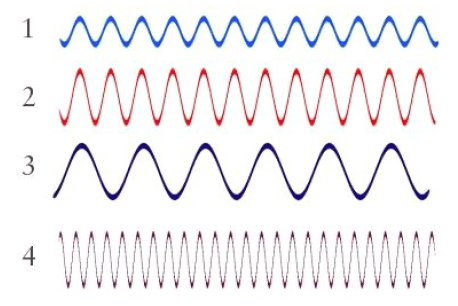
Which wave in the diagram has the longest wavelength?
1
2
3
4
Longitudinal waves move __________ to the energy of the wave (select all that apply).
Parallel
Perpendicular
At a 90 degree angle
In the same direction
Transverse waves move __________ to the energy in the wave (select all that apply).
Parallel
Perpendicular
At 90 degree angle
In the same direction
Which property of a wave determines its pitch?
Frequency
Amplitude
Speed
Wavelength
What is the term for the distance between two consecutive crests in a wave?
Wavelength
Period
Amplitude
Frequency
Which type of wave requires a medium to travel?
Radio wave
Mechanical wave
Electromagnetic wave
Light wave
Which property of a wave determines its loudness?
Amplitude
Frequency
Wavelength
Speed
What happens to the wavelength of a sound wave if its frequency increases?
It becomes zero
It stays the same
It increases
It decreases
What is the term for the lowest point of a wave?
Amplitude
Frequency
Trough
Crest
What happens to the speed of sound as the temperature of the medium increases?
It decreases
It stays the same
It becomes zero
It increases
What happens to the speed of sound when it travels from air into water?
It decreases
It increases
It becomes zero
It stays the same
What is the term for the region in a longitudinal wave where particles are spread apart?
Compression
Trough
Crest
Rarefaction
What is the term for the region in a longitudinal wave where particles are close together?
Compression
Trough
Crest
Rarefaction

