
 Worksheets
microeconomics review
Total questions: 109
Worksheet time: 2hrs 12mins
A monopsonist is
A single supplier to the market
A supplier of labour in a competitive market
A monopolist in the labour market
A single buyer in a market

The diagram shows a labour market for airline pilot. which of the following is most likely to have caused the changes shown
A reduction in prices of foreign holiday
An increase in the minimum wage
An increase in the prices of aircraft fuel
A relaxation in the qualifications required to be a pilot
Unions that represent specific tasks/jobs such as electricians and carpenters are known as
Industrial unions
Craft/trade unions
Which of the following is NOT a goal of unions?
Better wages/pay
Shorter shifts/working hours
More control for workers in the company/business
Job security
Railroad workers, steelworkers, and farm workers would be considered members of which type of union?
Industrial union
Craft/trade union

Define Shortage
more people want an item than is available for purchase
more items available for sale than people want to purchase

If the government set the price at $700, would that be a price ceiling or floor?
(a)
When a price ceiling is imposed in a market:
A surplus results
Sellers of the product are made better off
A shortage results
Quantity supplied is greater than the quantity demanded
At the price, neither a surplus or a shortage exists
equilibrium
consumer surplus
producer's surplus
dead weight
A (a) is a maximum price sellers are allowed to charge for a good. It's an upper limit for the price.
This is the minimum price buyers are required to pay for a good. It's a lower limit for the price.
equilibrium
shortage
price floor
price ceiling
Which of these best defines equilibrium in a market?
a situation in which quantity supplied is greater than quantity demanded
a situation in which quantity demanded is greater than quantity supplied
a situation in which quantity supplied and quantity demanded are equal
a situation where a minimum price is set
A situation in which the quantity supplied is greater than the quantity demanded is
(a)
A situation in which quantity demanded is greater than quantity supplied is
(a)
Which of the following demonstrates price equilibrium?


Which of these demonstrates a surplus of goods?


Which of these demonstrates a shortage of goods?


Mr. Sherman goes to the ticket booth to buy tickets for a Lakers game. Mr. Sherman is told that the game is sold out and no tickets are available. Which best explains why there are no basketball tickets available?
A new type of television set uses 3-D images. many stores will have large quantities of the older style televisions. What will happen to the price of these older televisions?

Which business structure is owned and operated by a single individual?
Sole Proprietorship
Corporation
Partnership
Limited Liability Company
Which business structure is a legal entity separate from its owners?
Sole Proprietorship
Corporation
Partnership
Limited Liability Company
Which business structure involves two or more individuals sharing ownership and responsibilities?
Sole Proprietorship
Corporation
Partnership
Limited Liability Company
Which business structure requires a formal agreement between the owners?
Sole Proprietorship
Corporation
Partnership
Limited Liability Company
Which business structure provides limited liability protection to its owners and allows for pass-through taxation?
Sole Proprietorship
Corporation
Partnership
Limited Liability Company
“To form my business, I used all of my savings and borrowed from the bank, and I’m personally liable for all of the debts.” This is an example of which of the following forms of business ownership:
Partnership
Sole proprietorship
Corporation
Cooperative
John, Robert, and Charles were college friends who wanted to start a business. John has creative ability, Robert’s expertise is selling, and Charles’ expertise is management. However, each has limited capital. The ideal business ownership for these young men is a
(a)
What do you call the people who own shares of a corporation?
(a)
What are the two distinct characteristics of a corporation?
They are owned by shareholders
They have a Board of Directors
They are easy to form
They can be dissolved in an owner dies
If all of the individuals who own a business share unlimited liability for the business's losses, these individuals are part of a (n)
private corporation
general partnership
"S" corporation
"C" corporation
The American Red Cross is an example of a(n) corporation.
hybrid
nonprofit
"S"
"C"
Wendy's sells the right to operate its restaurants to individuals who meet the company's criteria. The arrangement between Wendy;s and these individuals is an example of
a partnership agreement
multi-level marketing
licensing
franchising
Which of the following industries is an example of a monopoly?
utilities/water
department stores
auto industry
commercial airlines
A market that has a few sellers of basically the same goods.
Perfect Competition
Pure Monopoly
Monopolistic Competition
Oligopoly
Market failure occurs whenever
free markets fail to distribute resources efficiently.
goods fail to arrive at a market in a timely fashion.
government builds infrastructure.
voluntary exchange in a market fails to result in a sale.
In a market that is in Perfect Competition, you would normally find ___
few barriers to entry- easy to enter/exit the market
difficulty in entering the market
government regulations restricting new producers
high taxes and fees making it too expensive to enter
In an oligopoly, when a few producers join forces publicly to control pricing and production levels (btw: it's illegal in the US)
COLLUSION
CARTEL
TRUST
FEDERATION
Coke and Pepsi are the main producers and control the soda market. This is an example of:
Oligopoly
Monopoly
Monopolistic Competition
Perfect Competition

When buying produce at the grocery store, many people shop around for the best deal, because when it comes down to it, an apple is an apple. This is an example of:
monopoy
monopolistic competition
oligopoly
perfect competition

Nike signed Michael Jordan in 1984 in order to get more young people to buy Nike instead of Converse or adidas. They tried to show their shoe was cool and therefore superior. This is-
monopoly
monopolistic competition
oligopoly
perfect competition
An organization of workers dedicated to protecting members' interests and improving wages, hours and working conditions for all.
Labor Union
Workers Rights
Worker Strikes
Collective Bargaining
The negotiation of wages and other conditions of employment by an organized body of employees
(a)
(a) is when workers refuse to work in order to force an employer to meet their demands.
A formal complaint against an employer
Grievance
Strike
Breakout
Protest
What was one important result of the Toronto Typographical Union strike?
Higher taxes
Legalization of unions
End of strikes
More arrests
What did Prime Minister John A. Macdonald do after the strike?
Supported the employers
Passed the Trade Union Act
Ignored the issue
Arrested more workers
One main reason employers opposed unions before 1872 was:
Fear of worker empowerment
Need for more profits
Lack of knowledge about unions
Government pressure
What is the Rand Formula mainly about?
Health benefits for workers
Automatic deduction of union dues from workers' wages
Reduction of working hours
Government funding for unions
What impact did public demonstrations and marches have on the 1872 strike?
They weakened the union's cause
They led to stricter laws against unions
They generated public support and pressured the government
They resulted in immediate wage increases

Using the pizza store graphic, what market structure best fits the pizza industry?
Monopoly
Oligopoly
Perfect competition
Monopolistic competition
Car producers are an example of
monopoly
oligopoly
monopolistic competition
pure / perfect competition
In Monopolistic Competition you would find that purchases are made generally based on __
supply/demand
brand loyalty
price
price of substitute products
What form of business ownership is subject to the least taxation and government regulation?
(a)
A private held coporation may change into a public corporation because it wants:
Limited liability
To raise additional finance
Unlimited liability
To avoid takeover
Which of the following is a drawback for an entrepreneur setting up a business as a sole proprietorship?
Profit is shared
Financial accounts are kept private
Limited liability
Unlimited liability
What is a Cooperative?
A person, partnership, or corporation engaged in commerce, manufacturing, or a service; profit seeking enterprise or concern.
A farm, business, or other organization that is owned and run jointly by its members, who share the profits or benefits.
A form of business organization in which the owners have shares in a separate legal entity that itself can own assets and borrow money.
A form of business organization similar to a partnership but offering its owners the advantage of limited financial liability.
A government license that gives the inventor of a new product the exclusive right to produce and sell it.
market power
economies of scale
patent
license
What are some examples of price discrimination
senior citizens discounts
sale ads
commercials
milk pricing
A disadvantage to a corporation is that
decision making is no longer controlled by the original entrepreneur
bond holder have first claim to a corporation's profits.
dividends are taxed twice, once as a corporate income and once as personal income.
stockholders demand and get large dividends if any profits are made
Measures the advantages of producing one additional unit of a good or service
variable costs
marginal benefit
Marginal cost
Economies of Scale
The quantity of good and services a producer is willing to produce at different prices
(a)
The difference between the revenues earned by a business and the costs of operating the business
Capitalism
economic decision making
scarcity
profit
Labour can be defined as ______
man-made goods used in production of goods and services
money used to purchase goods and services
all human efforts directed towards the production of goods and services
the human that co-ordinates all other factors of production.
Market is any means through which ________
buyers and sellers can exchange goods and services
goods and services can be produced
sellers can exchange goods with each other
buyers can exchange goods with one another
(a) is defined a market where employers and employees determine wage payment.
Demand for labour is ________
the total number of workers, employers are willing and able to employ at a given wage rate and at a particular time.
the total number of workers that are willing and able to work at a particular time.
the total number of workers that are unable to find job.
the total number of workers that want to work and cannot find job.
Wage payment is the _______
payment given to labour for work done or service rendered
payment given to labour for job not done.
money paid to labour for service not rendered
All of the above
The total numbers of people in an economy who are of working age and who are willing and able to work is called ________
demand for labour
labour
employers
supply of labour
The demand for labour curve slopes______
downward
upward
backward
frontward
Which statement about the supply of labour is the most accurate
Trade unions only seek to raise the wages of their members
The supply curve of labour of an economy can be affected by the migration policy of the country
The supply of an individual unit of labour slopes upward continuously
The supply of skilled is not greatly affected by barriers to entry into the market
If the demand for McDonald's hamburgers rose, which of the following diagrams would display the likely impact on the demand for McDonald's workers
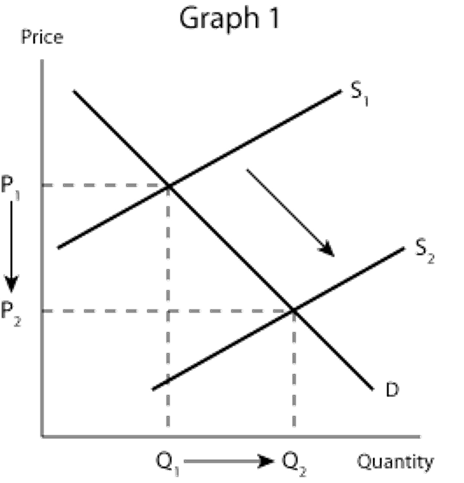
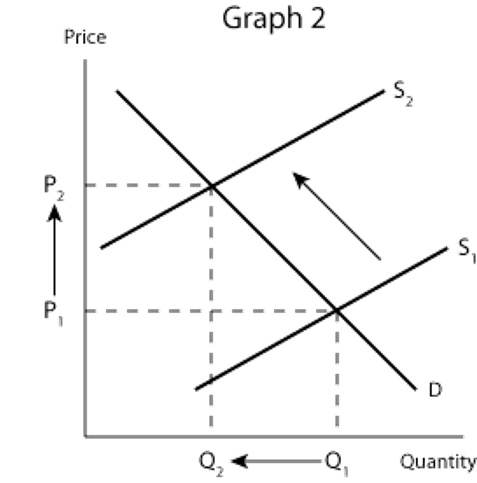
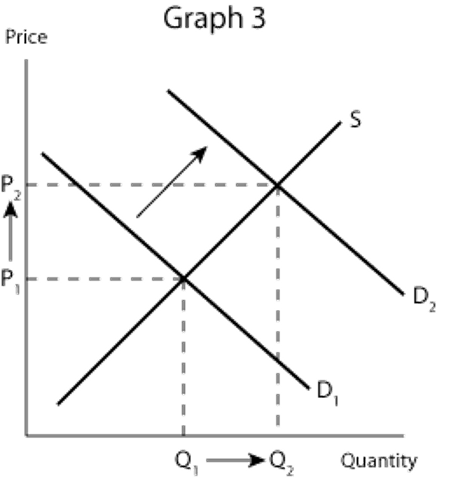
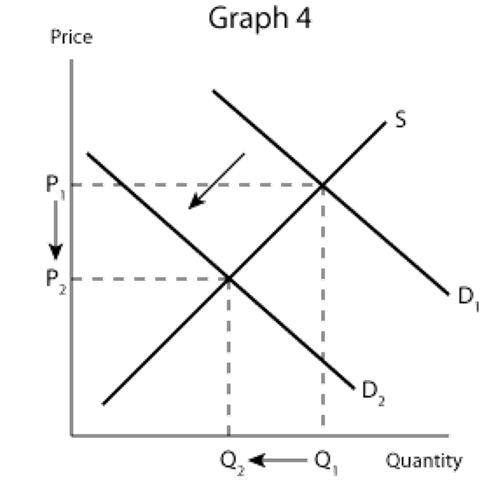
The main reason why the supply curve for labour is upward sloping is because ...
... as the wage rate falls, an increasing number of people are prepared to work
... as the wage rate rises, an increasing number of people are prepared to work
... as the wage rate falls, an increasing number of people believe they can do the job
... as the wage rate rises, fewer people feel they can do the job
What are some pros of raising minimum wage?
Allows people to make above poverty
Make people lose their Jobs
Allow people to afford basic needs
Makes businesses more money
A market in which goods or services are bought and sold illegally.
Black Market
Free Market
Command Economy
Communism
The price where the quantity demanded and the quantity supplied are equal. The price where neither shortages nor surpluses exist.
(a)


What would be created if a binding price floor was imposed at $15.00?
A shortage of 10 units
A surplus of 10 units
A shortage of 5 units
A market clearing quantity of 15 units
When a price ceiling is in place keeping the price below the market price, which is true of the quantity demanded & quantity supplied?
Quantity Demanded is greater
Quantity Supplied is greater
Quantity Demanded equals Quantity supplied
An organization of workers who join together and act as a group
(a)
Practice of contracting with an outside company to provide goods or services
labor productivity
outsourcing
insourcing
human capital
The lowest legal wage allowed for one hour of work.
(a)
The knowledge and skills that enable workers to be productive.
(a)
The rates of pay for a specific job or work performed.
human capital
wage rate
labor productivity
derived demand
The value of the goods or services that a laborer can produce in a set amount of time.
Production
Wages
Value
Labor Productivity

Usually, when there is high demand (want) for ownership of a particular company or a product made by that company, what happens to the price of that company’s stock?
goes up
goes down
stays the same

When you own part of a company, this means you own ________ of that company.
dividend
asset
stock
bankrupt

An institution where stocks are bought and sold
After-hours trading
Stock Market
Trades
Stock Trade
The lowest price at which one share of the stock was traded on a given day
Last
52-week low
Low
Close

When a company earns a profit, sometimes those profits are distributed to the company’s shareholders. This means those shareholders are paid a -.
(a)

to use money in hopes of making a profit
(a)

the uncertain chance of a possible loss
invest
risk
loss
bankrupt
What is the meaning of "Volume" in the stock market?
A) The total value of shares traded in a given time period
B) The number of stock exchanges in a given time period
C) The number of shares that was traded in a given time period
D) The profit made from trading shares in a given time period

