
Font size
 Worksheets
UNIT-3
Total questions: 20
Worksheet time: 11mins
What is particle size distribution and why is it important?
Particle size distribution refers to the color of particles in a sample.
Particle size distribution only affects the aesthetic quality of materials.
Particle size distribution is irrelevant to material processing.
Particle size distribution is the measurement of the sizes of particles in a sample, and it is important for determining material properties and processing behavior.
Describe the difference between crushing and grinding.
Crushing and grinding are the same process.
Grinding is used for breaking down large rocks into boulders.
Crushing is the process of breaking materials into larger pieces, while grinding reduces them to a finer powder.
Crushing involves mixing materials, while grinding separates them.
What are the common methods used for screening particles?
Condensation
Evaporation
Sieving, filtration, sedimentation, and centrifugation.
Magnetization
Tara is working on a project about size reduction equipment. She needs to list three types of size reduction equipment and their uses.
Blenders - used for mixing liquids.
1. Crushers - used for breaking down large rocks. 2. Grinders - used for reducing materials to finer particles. 3. Mills - used for processing grains into powder.
How does the shape of particles affect their flow properties?
Particle shape has no effect on flow properties.
All particles flow the same regardless of shape.
The shape of particles affects their flow properties by influencing packing, inter-particle interactions, and friction.
Only particle size determines flow behavior.
Explain the concept of specific surface area in relation to particle size.
Specific surface area increases as particle size decreases.
Specific surface area is unrelated to particle size.
Larger particles have a higher specific surface area.
Specific surface area decreases as particle size increases.
What is the role of a jaw crusher in size reduction?
To grind materials into a fine powder
The role of a jaw crusher in size reduction is to crush large rocks into smaller, manageable sizes through compressive force.
To separate minerals from ores
To heat rocks for melting
Define the term 'screening efficiency' and its significance.
Screening efficiency is the effectiveness of a screening process in identifying relevant items or individuals.
Screening efficiency is the total number of items processed in a screening.
Screening efficiency measures the cost-effectiveness of a screening process.
Screening efficiency refers to the speed of a screening process.
What factors influence the choice of size reduction technique?
Packaging materials
Material properties, desired particle size, production capacity, energy efficiency, cost, and end-use application.
Transportation logistics
Temperature control methods
Describe the principle of operation of a ball mill.
A ball mill separates materials using a series of vibrating screens.
A ball mill grinds material by rotating a cylindrical drum with balls that impact and grind the material.
A ball mill operates by heating materials until they melt and fuse together.
A ball mill uses a magnetic field to levitate and crush materials.
What is the importance of moisture content in solid flow properties?
Moisture content is only relevant for liquids, not solids.
Moisture content has no effect on solid materials.
Moisture content is important as it directly impacts the flowability, cohesion, and handling characteristics of solid materials.
Higher moisture content always improves flowability.
How do you determine the average particle size from a distribution?
Measure the total volume of particles.
Count the number of particles and divide by size.
Calculate the weighted mean of particle sizes.
Use the largest particle size as the average.
What are the advantages of using a hammer mill for size reduction?
Limited material handling
Increased maintenance requirements
Advantages of using a hammer mill include versatility, efficiency, uniform particle size, ability to handle various materials, and ease of maintenance.
High energy consumption
Explain the difference between dry and wet screening methods.
Dry screening uses water for separation.
Wet screening is faster than dry screening.
Dry screening is more effective for fine particles.
Dry screening is a method that separates materials without water, while wet screening uses water to aid in the separation process.
What is the significance of the Reynolds number in solid flow?
It indicates the viscosity of the solid material.
The Reynolds number is significant in solid flow as it determines the flow regime and influences particle behavior in fluids.
It determines the density of the fluid.
It measures the temperature of the fluid.
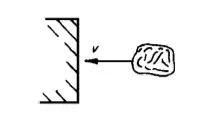
What is the principle involved in this size reduction?
(a)

What is the formula for angle of repose?
cos(h/r)
inverse of cos(h/r)
tan(h/r)
inverse of tan(h/r)
What is the impact of particle size on the reactivity of materials?
Particle size does not affect reactivity.
Smaller particles generally have a higher surface area, leading to increased reactivity.
Reactivity is solely determined by the chemical composition of the material.
Larger particles react faster than smaller ones.
How can the efficiency of a milling process be evaluated?
Efficiency cannot be measured.
By measuring the energy consumption and the size reduction achieved.
By the speed of the milling equipment only.
By the amount of noise produced during milling.

