
NEW
Font size
 Worksheets
Quizziz #07: Energy, Power, Momentum & Impulse
Total questions: 50
Worksheet time: 3hrs 47mins
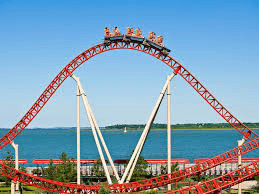
When a roller coaster is at the top of a hill it has
high potential energy
high kinetic energy
low potential energy
equal amounts of kinetic and potential energy
A soccer player kicks a ball with 20 Newtons of force causing it to travel 100 meters. How much work is done on the ball?
200 J
80 J
5 J
2000 J
Two workers use 100 N of force to move a sofa 2 meters in 2 seconds. How much power is required?
100 watts
400 watts
104 watts
50 watts
A girl weighs 400 N. She runs up a flight of stairs of height 5 m in 4 seconds. Her power is:
320 W
400 W
500 W
2 000 W
A force of 4.6 N moves a 2.7 kg box a distance of 3.3 m in 6.8 s. How much power is exerted?
2.23 W
6.03 W
17.4 W
278.7 W


Energy of an object or a particle due to its motion.
Potential
Kinetic
Elastic
Thermal
How do you solve for power?
tFd
tW
Convert time into seconds.
All of the above
If 68 watts of power is produced in 18 seconds, how could we find work?
F÷d
F×d
P÷t
P×t
You want to find the power of a light bulb and the given time is 1 hour. What must you do before entering the time into a formula?
multiply the number of minutes once
multiply the number of minutes twice
divide the number of minutes by 60 once
divide the number of minutes by 60 twice
You want to find the power of a microwave. You are given the time in minutes. What must you do before entering the time into a formula?
multiply the number of minutes by 60 once
multiply the number of minutes by 60 twice
divide the number of minutes by 60 once
divide the number of minutes by 60 twice
How do you solve for work?
F×d
Convert distance to meters.
Both F×d and P×t
All of the above

This seesaw is an example of a simple machine called a lever.
It helps you do work by
changing the size of the force exerted
changing the distance over which the force is exerted
changing the direction in which the force is exerted
none of the above

The doorknob is an example of a simple machine known as a __________________, that makes work easier by using ___________________ to multiply a force.
wedge, direction
wheel and axle, distance
wheel and axle, direction
pulley, distance
Machines are never 100% efficient because
all of the input work is converted to output work by the machine
some of the input work is used to overcome friction
a machine will always produce more work than is exerted on it
none of the above
The formula to calculate power is
P = timework
What is the power of a device that can perform 1500 J of work in 25 seconds?
1500 watts
0.016 watts
60 watts
37,500 watts

Which point has the most potential energy?
G
F
B
A

A 6kg cat misjudges a jump and falls 5 meters. How much gravitational potential energy does the cat have? (The cat is fine by the way.)
294 J
180000 J
1225 J
3920000 J

A 50kg (100lb) person is running at 7m/s (about 16 mph). How much kinetic energy do they have?
1225 J
180000 J
294 J
3920000 J

If you increase your work and decrease your time, you will have
more power
less power
same amount of power
power rating can not be determined


The more mass an object has, the ________ kinetic energy it has.
more
less
none of the above
all of the above
The momentum of an object depends upon the object's ___________&_____________.
size and shape
mass and speed
mass and veloctiy
mass and energy

The best definition of momentum shown below is

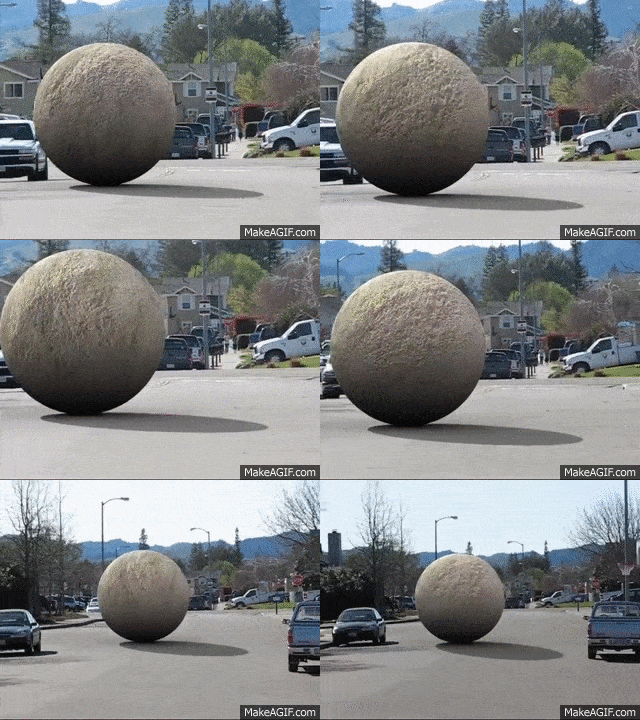
A 50 kg ball rolls east down the street at 5 m/s. Calculate the momentum of the ball.
55 kg*m/s east
10 kg*m/s east
250 kg*m/s east
500 kg*m/s east
An impulse depends on
weight and force
force and time
electric charge and time
none of these
An object having a pi of 30kg m/s has ended with a pf of 40 kg m/s. What impulse caused this?
2kg m/s
10kg m/s
70kg m/s
5kg m/s
An object has pi of 20 kgm/s and then pf of 30 kgm/s. If it took 2s, what is the force?
10N
4N
5N
50N
An object with 20kgm/s is stopped by a force of -20N, how long does it take to do this?
2s
1s
4s
5s
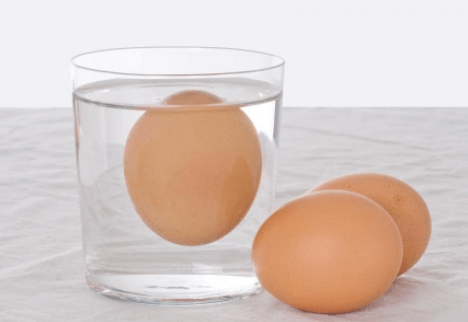
An egg gets dropped from a height of 0.1 meters and cracks. A second egg gets dropped from the same height but this time it lands on a glass of water and does not break. In terms of force and time, the second egg must have experienced...
more force, but less time
less force, but more time
more force, and more time
less force, and less time
The air bag on a car reduces the force experienced by the driver, by extending the time of impact.
True
False
In an equation Impulse is represented with the letter...
I
M
J
P
You find that an objects final momentum is 45kg m/s, and the impulse that caused this was 45kg m/s, what must have been the objects initial momentum?
45kg m/s
0 kg m/s
22.5kg m/s
need more information
In an elastic collision...
objects bounce off each other
objects stick together
objects stick together for a while then separate
one object flips over the other
In an elastic collision...
only momentum is conserved
only energy is conserved
both momentum and energy are conserved
neither momentum nor energy are conserved
In a completely inelastic collision...
objects bounce off each other
objects stick together
objects stick together for a while then separate
one object flips over the other

